
Tax department launches support campaign for household businesses

On March 12, a conference was held in Hanoi to discuss solutions for improving tax declaration and compliance among business households. The event was jointly organised by the Vietnam Government Portal and the Tax Department under the Ministry of Finance.
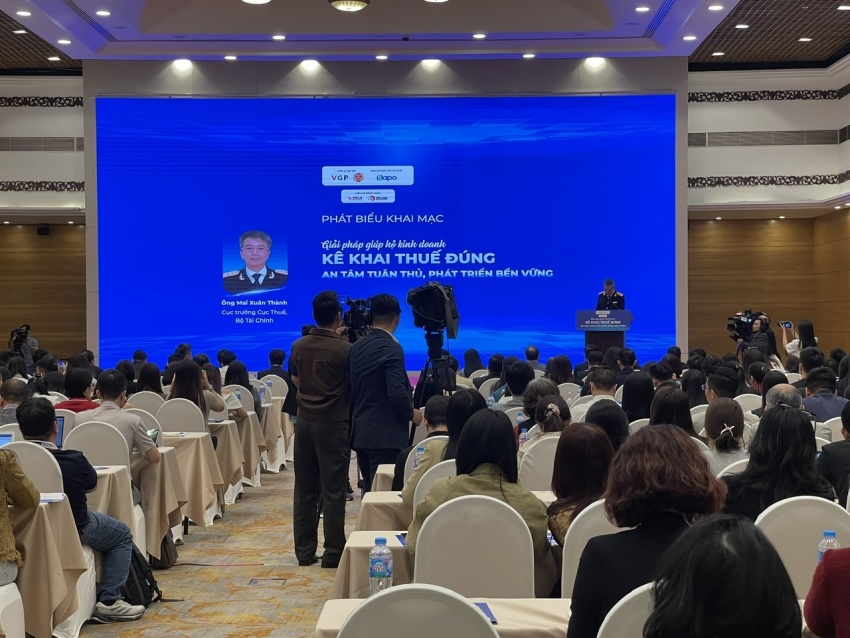 |
| Mai Xuan Thanh, head of the Tax Department, delivers his address at the conference. Photo: Bich Thuy |
The conference took place during a crucial transition in tax management policies for household and individual businesses. Since January 1, the fixed-rate tax payment method has been replaced by a declaration mechanism based on actual revenue.
The government's issuance of Decree No. 68/2026/ND-CP on tax policy and tax management for business households is considered a significant milestone in the modernisation of tax administration. The decree aims to build a transparent, fair business environment aligned with the development requirements of the digital economy.
The event also marked the launch of a nationwide campaign providing 15 days of support for household businesses ahead of the first-quarter 2026 tax declaration period. The initiative, led by the Tax Department, aims to help household businesses access new policies promptly, prepare complete data, and fulfil their tax obligations correctly from the first declaration period.
The conference attracted 200 representatives of business households in Hanoi, along with online participation from thousands of tax officials and business households across 34 provincial-level locations and more than 350 grassroots-level sites nationwide.
In his opening remarks, Nguyen Hong Sam, general director of the Vietnam Government Portal, said the household business sector plays a crucial role in the economy and serves as a dynamic force in the country's digital transformation and digital economy development.
"The transition from a fixed-rate tax mechanism to a revenue-based tax method aims to enhance transparency in tax administration while laying the groundwork for household businesses to gradually standardise operations, improve management capacity, and achieve sustainable development," he said.
Mai Xuan Thanh, head of the Tax Department, added that the tax sector is implementing a series of comprehensive solutions to support business households during the transition. These include strengthening professional guidance, providing support documents, and promoting the application of technology in electronic tax declaration and management.
"The objective is to ensure that business households can fulfil their tax obligations conveniently, transparently, and in accordance with regulations from their first declaration, while contributing to building a fair and modern business environment," he said.
Tran Trong Tuyen, chairman of Sapo Technology JSC, said, "Digital transformation in business administration and tax management will help household businesses monitor revenue closely, optimise operations, and create a foundation for sustainable development in the digital economy."
According to the Vietnam Tax Consulting Association, policy implementation must ensure that legal regulations are not applied retroactively in a way that is unfavourable to taxpayers – a principle considered crucial in strengthening trust and encouraging households to declare actual revenue.
Bui Trung Kien, vice chairman of the Vietnam E-commerce Association, said, "In a booming e-commerce market, standardising business data and ensuring transparent tax compliance will help household businesses enhance reputation, expand scale, and participate more deeply in the digital economy."
 | New tax incentives to benefit startups and SMEs Newly-issued Decree 20 introduces a package of tax exemptions and reductions, creating a more favourable legal and financial environment for startups and small and medium-sized businesses. |
 | Banking sector targets double-digit growth The banking sector is poised for strong profit growth in 2026, driven by improving margins, tighter credit risk control and recovering loan demand, with many institutions targeting on-year increases of 10-20 per cent. |
 | Fuel import tariffs temporarily cut to zero until April 30 The government has temporarily cut preferential import tariffs on several petroleum products to zero, aiming to help businesses secure supply and stabilise the domestic fuel market amid global energy disruptions caused by Middle East tensions. |
What the stars mean:
★ Poor ★ ★ Promising ★★★ Good ★★★★ Very good ★★★★★ Exceptional
 Tag:
Tag:Related Contents





Latest News




More News
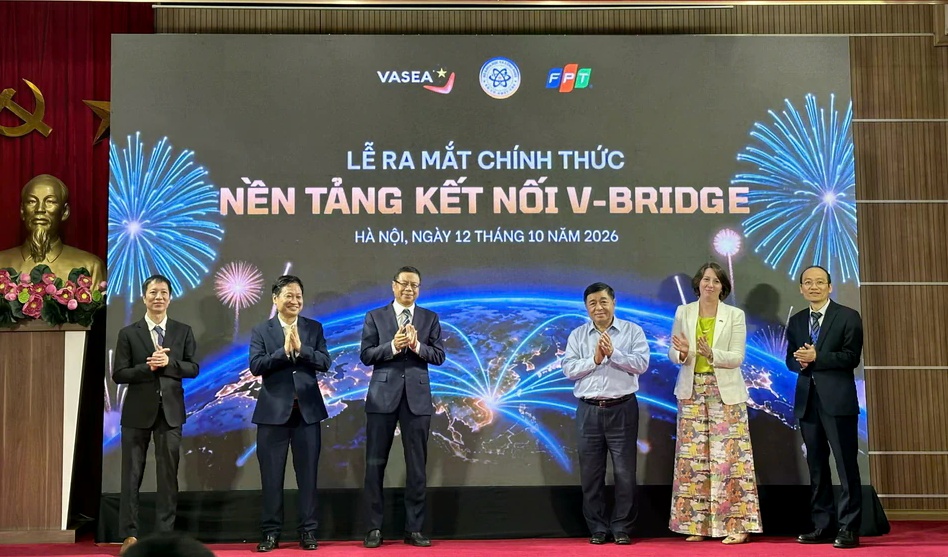
- Vietnam-Australia forum boosts AI and digital technology cooperation (October 13, 2026 | 11:30)
- Digital transformation shifts focus to added value (October 09, 2026 | 18:00)
- Melatec Dental Clinic - accompanying international clients on their smile care journey (October 09, 2026 | 17:25)
- 12 localities achieve double-digit growth in first nine months (October 09, 2026 | 17:00)
- CYE 2026 announces top 5 finalists (October 09, 2026 | 16:55)
- Robotics inspires Vietnam’s next generation of engineers (October 08, 2026 | 15:18)
- Vietnam among fastest AI adopters, Pearson-AWS study finds (October 07, 2026 | 12:26)
- Ho Chi Minh City Oncology Hospital signs MoU with Novartis Vietnam (October 07, 2026 | 10:36)
- Expanding education partnerships to drive mutual growth (October 06, 2026 | 16:04)
- VTG 2026 to showcase textile and footwear innovation in Ho Chi Minh City (October 06, 2026 | 16:00)







 Mobile Version