
Strengthening supply chains through trade promotions and customs reform

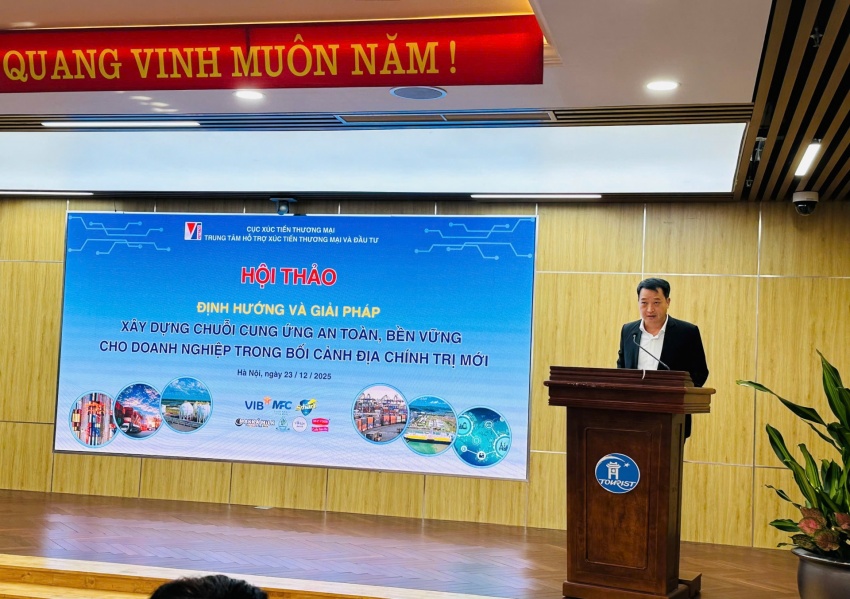 |
| Bui Quang Hung, deputy general director of VIETRADE |
Speaking at a meeting on December 23, Bui Quang Hung, deputy general director of VIETRADE, said that the global economy and trade are undergoing profound, complex, and structural changes. Strategic competition among major economies continues to intensify, prolonged conflicts, and rising trade protectionism, supply chain fragmentation, and tighter standards on the environment, labour, and traceability are hitting the circulation of goods.
For Vietnam, a highly open economy with total import-export turnover several times larger than GDP, the effects of the new geopolitical context have become increasingly evident. Vietnamese enterprises are facing challenges such as dependence on a limited number of markets and sources of raw materials, risks of trade remedies and origin fraud, and mounting pressure to meet increasingly intense standards imposed by major markets on environmental protection, emissions, social responsibility, and sustainable development.
Hung said that viewed from another perspective, the global trend towards restructuring and diversifying supply chains is also opening up important opportunities for Vietnam. "Many multinational corporations and importers are seeking new partners and safe, stable production locations capable of meeting high standards and making long-term commitments. This presents an opportunity for Vietnamese enterprises to expand markets and gradually move deeper into regional and global value chains, increase value, and enhance their position," he said.
In this context, trade promotion plays a particularly important role, extending beyond support for market and partner searches to become a strategic instrument for shaping and consolidating safe and sustainable supply chains.
"Modern trade promotion needs to be closely linked with the timely provision of market information, early risk warnings, and support for enterprises in understanding requirements related to standards, origin, and sustainability. Moreover, it should foster stronger linkages between domestic enterprises and reputable international buyers, distributors, and supply chains," he added.
Hung said as the focal agency for trade promotion, VIETRADE identifies its core mission as accompanying enterprises in adapting to the new context.
"Through organising supply chain and sector-based trade connectivity programmes in key markets, supporting enterprises' participation in specialised trade fairs and exhibitions linked to supply chains, promoting digital transformation in trade promotion, and strengthening cooperation with international partners and industry associations to share information, experience and best practices on sustainable supply chain development, VIETRADE aims to help enterprises enhance resilience and long-term competitiveness," he said.
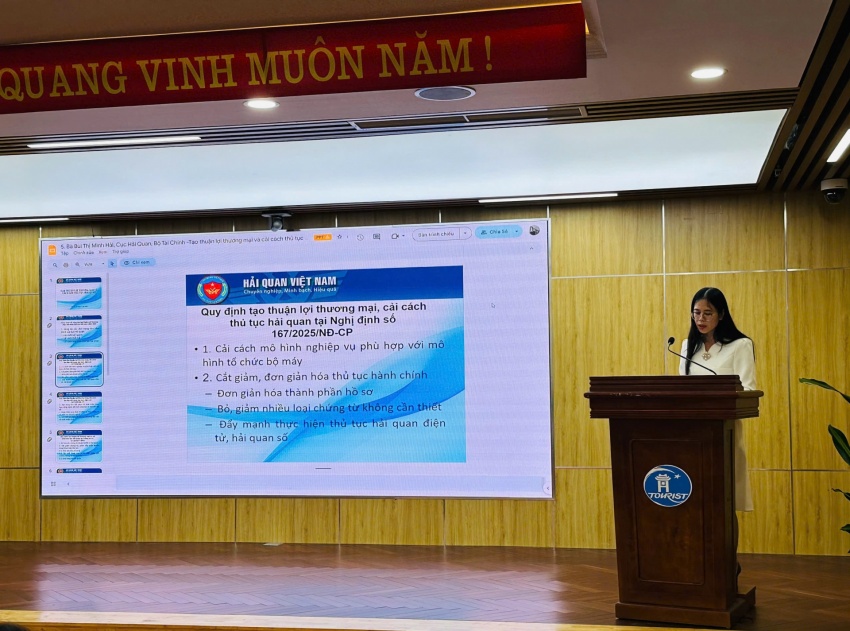 |
| Bui Thi Minh Hai from the Customs Department |
From the perspective of state management in customs, Bui Thi Minh Hai from the Customs Department, noted, "Trade facilitation and customs procedure reform are among the key pillars supporting enterprises' more effective participation in global supply chains. The Customs Department's reform priorities in 2025 focused on three main areas: internal reform, institutional reform, and reform of customs processes and procedures."
These include cutting and simplifying administrative procedures, and accelerating the implementation of electronic and digital customs. Many legislation amendments aim to support science and technology development, innovation, and digital transformation.
Hai recommended, "Importers and exporters should adjust internal management processes in line with electronic and digital customs procedures, standardise data, records, and documentation related to import-export goods, enhance legal compliance capacity, internal governance and risk management, and invest in upgrading IT infrastructure to enable effective data connectivity with customs authorities."
Another notable topic discussed at the workshop was “trade zoning”, which experts and businesses viewed not merely as a shift in export markets but as a fundamental change in market approach. Trade zoning includes three layers: geographical diversification, moving from dependence on one or two markets to a multi-market approach; distribution channel diversification, shifting from focusing on intermediaries to multidimensional distribution platforms; and value upgrading, transitioning from exporting raw goods to products with clear stories, traceability and branding.
Analysing the reality that Vietnamese products are often high quality but low-priced, while many foreign products command higher prices, Nguyen Van Tho, chairman of MFC Global, attributed this to Vietnamese goods being sold largely at raw-material prices, without brand ownership, control over distribution channels or access to consumer data. In contrast, foreign products are sold based on brand value, compelling product stories, well-controlled distribution systems, and direct access to consumers.
"In this context, multidimensional e-commerce platforms can serve as effective tools to help small- and medium-sized enterprises and cooperatives gradually reach consumers directly, both domestically and internationally, better control product value, and expand market space," he said.
“Trade zoning is a necessary step for Vietnamese enterprises to survive and enhance their position in the global supply chain. When Vietnamese products gain control over markets, their value will be recognised in line with their true quality,” Tho said.
 | Manufacturing deals bring stronger supply chains closer Supply chain diversification is fueling mergers and acquisitions in the manufacturing and industrial sector as companies look to acquire Vietnamese-based assets. |
 | Vietnam urges to shore up supply-chain resilience amid global uncertainty Vietnam's growing role in global supply chains is reshaping its labor market, with new ILO findings underscoring both the scale of its workforce integration and the policy challenges ahead. |
 | As global green supply chain reshapes, will Vietnam be left behind? Green finance is reshaping how capital flows into construction worldwide, but it is also reshaping who gets to participate. As emissions standards tighten across leading markets, Vietnam's traditional cost-based advantages are giving way to a new competition defined by technology and low carbon performance. |
What the stars mean:
★ Poor ★ ★ Promising ★★★ Good ★★★★ Very good ★★★★★ Exceptional
 Tag:
Tag:Related Contents




Latest News

More News
- Quang Tri province to tighten delayed power projects (October 13, 2026 | 10:34)
- $600 million Ho Chi Minh City - Long Thanh expressway expansion under pressure (October 09, 2026 | 16:00)
- Hung Yen’s regional GDP beats expectations (October 09, 2026 | 15:25)
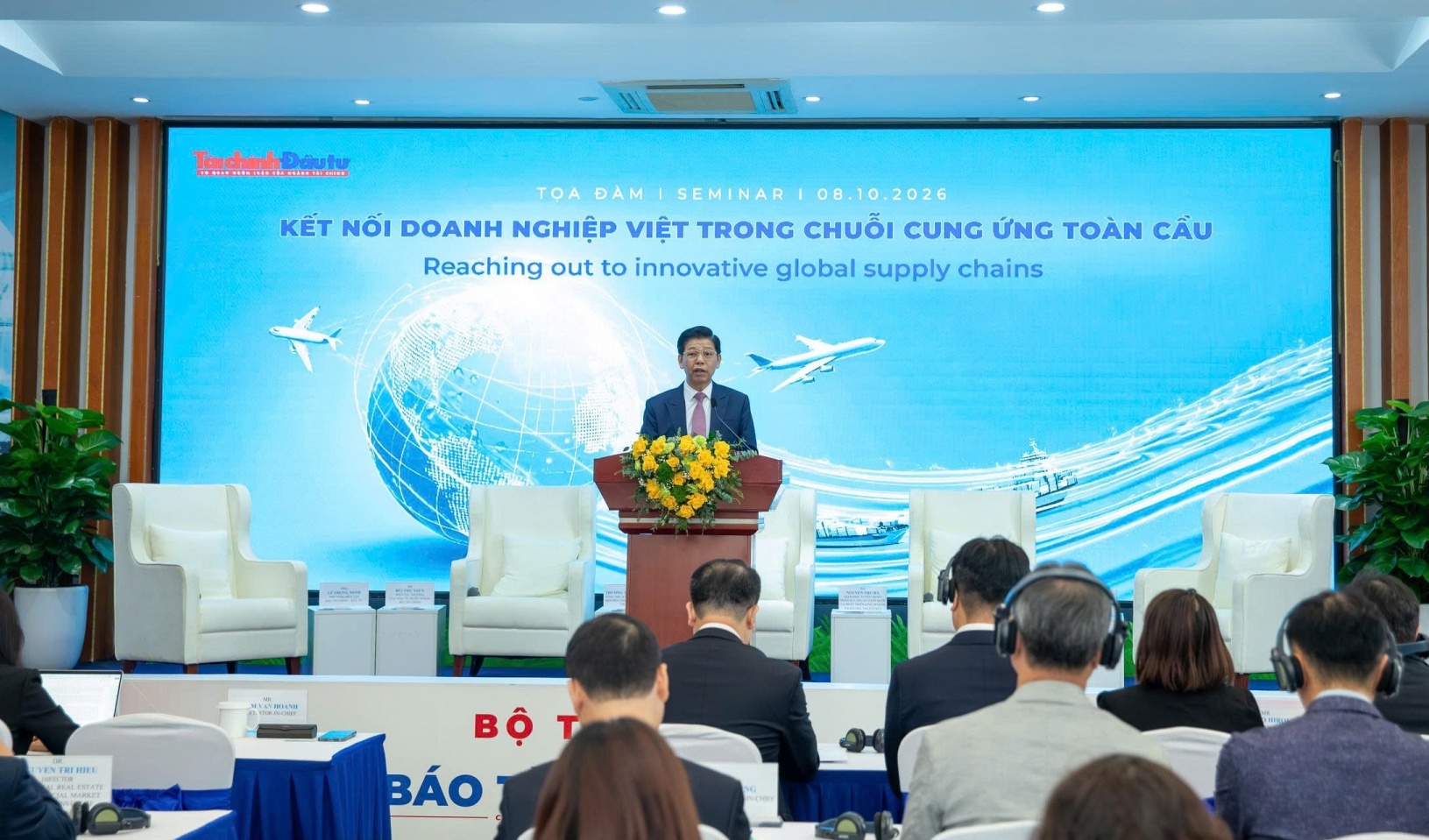
- VIR seminar focuses on taking domestic suppliers into global supply chains (October 08, 2026 | 14:50)
- Building Vietnam’s next chapter of FDI growth (October 08, 2026 | 12:15)
- Vietnam to foster links between foreign and domestic sector (October 08, 2026 | 11:00)
- Vietnam shifting focus to building high-quality FDI ecosystem (October 08, 2026 | 10:45)
- VIR seminar to explore innovative global supply chains in Hanoi (October 07, 2026 | 12:04)
- Vietnam’s registered FDI surpasses $50 billion in nine months (October 07, 2026 | 10:30)
- Samsung Electro-Mechanics to add $1.85 billion semiconductor investment in Thai Nguyen (October 06, 2026 | 18:23)






 Mobile Version