
Siemens: Energy security overtakes climate goals in global transition

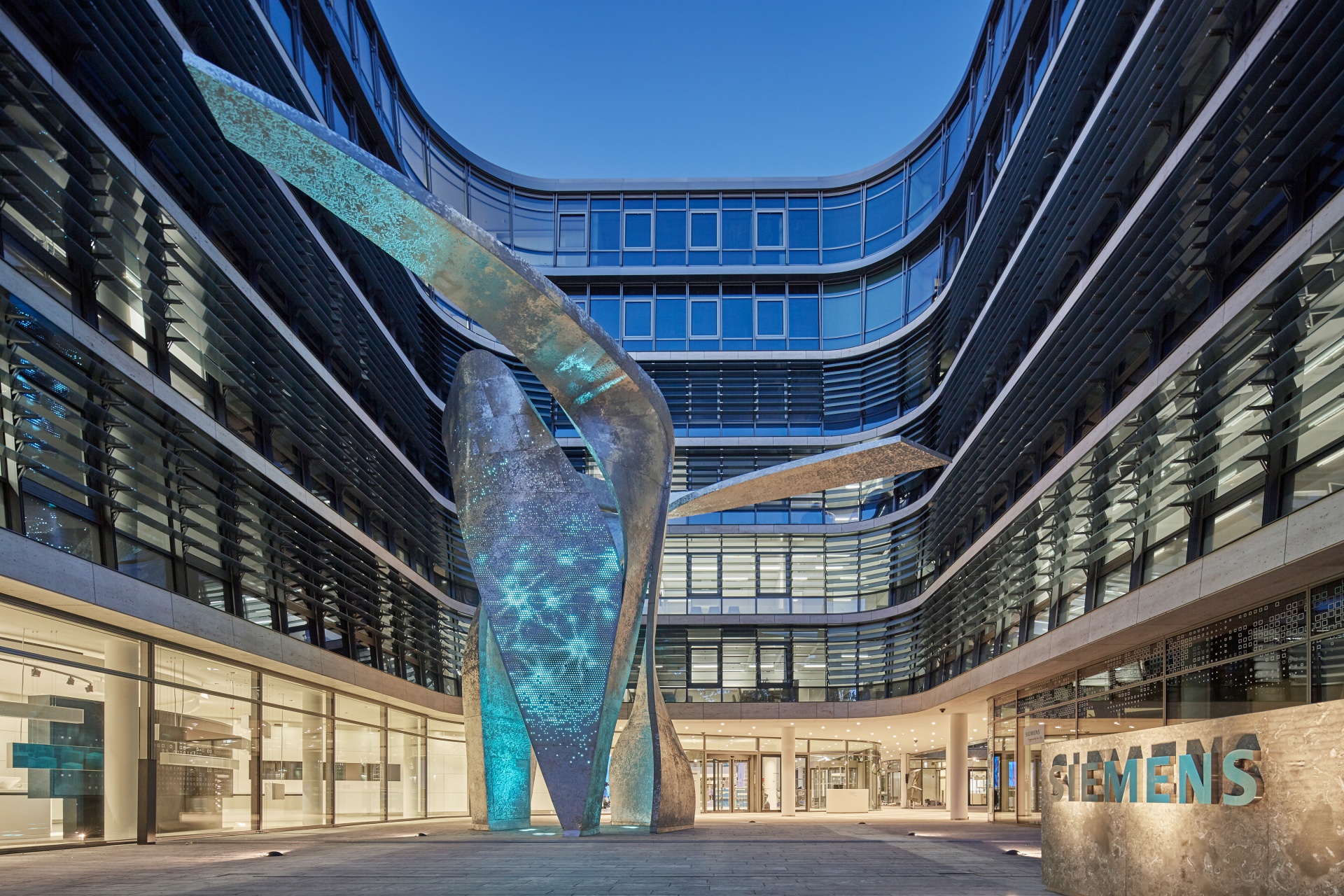
The biennial Siemens Infrastructure Transition Monitor, released on October 27, surveyed 1,400 senior executives across 22 countries and finds that governments and businesses are increasingly prioritising resilience and self-sufficiency over multilateral climate goals. The report highlights a growing focus on securing domestic energy supply, modernising industrial systems, and strengthening national infrastructure to withstand global disruptions.
 |
Senior leaders now view a resilient energy supply as the top governmental priority among infrastructure transition goals – up from third place in 2023.
National energy independence and proactive climate risk management have also risen sharply in importance.
According to the report, rising global instability is fuelling market and supply chain volatility. To reduce the risk of energy being used as a geopolitical tool, governments are focusing on security, self-reliance, and preparedness alongside climate mitigation.
The study underscores a clear shift – from a multilateral clean-energy vision towards one rooted in sovereign resilience and regional production.
With mounting pressure on public and private energy systems amid overlapping climate, geopolitical, and market challenges, it finds that energy resilience is now seen as a critical enabler of the clean energy transition – not a trade-off against it.
Matthias Rebellius, managing board member of Siemens AG and CEO of Smart Infrastructure, noted that the infrastructure transition is entering a new phase whereby national goals of energy security are overtaking global collaboration on decarbonisation.
“As systems face mounting climate and energy disruptions, resilience is no longer optional – AI, technology, and digitalisation are now critical to this shift. They can empower organisations and governments to manage the complexities of renewable-based systems, ensure reliability, and accelerate the clean energy transition smarter and more sustainably,” he said.
Over three in five (62 per cent) respondents believe future energy systems will rely more on local or regional production than global trade, with key enablers including renewable integration, storage readiness, and advanced grid systems.
Already, over half say resilience (53 per cent) and energy independence (52 per cent) are reaching maturity or are advanced within their countries – signalling a shift in infrastructure priorities is already underway.
With resilience and energy security now taking precedence, confidence in achieving global climate goals is starting to fall.
Accordingly, more than half (57 per cent) of global executives expect increased investment in fossil fuels over the next two years, and just 37 per cent of businesses now believe they will meet their 2030 decarbonisation targets – down from 44 per cent in 2023.
With confidence in climate goals declining and 2026 strategies in development, the report highlights that failure to embed resilience into energy planning risks both economic and environmental fallout.
At a time when governments are recalibrating their net-zero strategies alongside welfare and growth agendas, Siemens underscores that through grid investment and digital innovation, progress towards climate commitments as well as energy resilience can be accelerated.
As national energy strategies evolve, digital technologies remain at the heart of the infrastructure transition.
Digitalisation ranks as the second most important factor in accelerating the clean energy transition for industries – just behind expanding energy storage – with AI expected to have the greatest positive impact.
Respondents believe that AI is helping to make critical infrastructure more resilient (66 per cent) and report that their organisations are using AI to help decarbonise their operations (59 per cent).
The Siemens Infrastructure Transition Monitor 2025 edition is the second in the series and launches ahead of COP30, which is slated to take place from November 10 to 21 in Brazil.
 | Siemens EDA grants 1,200 software licences to Vietnamese learning institutions Siemens EDA has announced it will be sponsoring 300 software licences in addition to the 900 advanced software licences for chip and circuit board design already granted at leading universities in Vietnam. |
 | Siemens acquires Altair and its AI-powered industrial software Global tech powerhouse Siemens announced on March 26 that it has completed the acquisition of Altair Engineering Inc., an industrial simulation and analysis software provider, for approximately $10 billion. |
 | Siemens unveils next-gen EV charging system for the megawatt era Global tech powerhouse Siemens on October 4 announced the launch of the SICHARGE FLEX product family, its next-generation electric vehicle (EV) distributed charging system, designed to be flexible, reliable, economical, and adaptable. |
What the stars mean:
★ Poor ★ ★ Promising ★★★ Good ★★★★ Very good ★★★★★ Exceptional
 Tag:
Tag:
Related Contents




Latest News



More News
- Consultation workshop refines Vietnam's clean hydrogen strategy (October 04, 2026 | 08:00)
- JBIC considers new financing options for Vietnam’s energy projects (October 03, 2026 | 08:00)
- Vestas to supply 16 turbines for two new Vietnam wind farms (October 01, 2026 | 07:00)
- Inter-sectoral cooperation on Montreal protocol (September 30, 2026 | 17:20)
- EV battery recycling rate proposed at 8 per cent from 2029 (September 29, 2026 | 16:00)
- Bankability remains hurdle for Vietnam's JETP projects (September 29, 2026 | 12:08)
- Binh Minh Plastics extends clean water project to border communities (September 29, 2026 | 10:57)
- Coca-Cola Vietnam expands packaging collection programme (September 25, 2026 | 08:15)
- Pacifico Energy secures sea survey licence for offshore wind project in Lam Dong (September 24, 2026 | 18:02)
- Vietnam secures $221 million in UN development programmes for 2027-2031 (September 23, 2026 | 17:39)








 Mobile Version