
How smart infrastructure and digitalisation power the systemic transition

The world stands at a critical juncture, facing both the profound challenges of environmental degradation and the immense opportunity to build a more sustainable, resilient, and equitable future. Global temperatures continue to rise, extreme weather events are becoming more frequent, and the demand for energy and resources intensifies with a growing global population.
 |
| Dr. Thai-Lai Pham, CEO of Siemens ASEAN and Vietnam |
It is within this complex landscape that the role of infrastructure – the very systems that power our cities, connect our communities, and drive our economies – becomes paramount. At Siemens Smart Infrastructure, we believe that the strategic transformation of these foundational systems is not just an option, but an imperative for securing a livable future.
This is not just about incremental improvements or minor adjustments; it’s about a fundamental and systemic “Infrastructure Transition.” As highlighted in our recent Siemens Infrastructure Transition Monitor 2025, this profound shift is defined by four interconnected pillars: decarbonisation, digitalisation, decentralisation, and resilience.
These aren’t abstract concepts to be debated in academic circles; they are the tangible, actionable pathways to a world that lives within the limits of our planet. Decarbonisation addresses the urgent need to eliminate carbon emissions from our energy systems and industrial processes.
Digitalisation provides intelligent tools and data insights to achieve this. Decentralisation empowers local energy generation and consumption, fostering greater energy independence and efficiency. And resilience ensures that our critical systems can withstand and recover from the inevitable shocks of climate change and other disruptions. Together, these pillars form the strategic framework for a sustainable future.
Digitalisation: The engine of sustainable transformation
At the absolute heart of this infrastructure transition is digitalisation. As the World Economic Forum recently underscored, the integration of advanced technologies like AI, the Internet of Things (IoT), digital twins, and autonomous systems is not merely enhancing business operations; it’s fundamentally reshaping our capacity for sustainability.
Digitalisation provides the essential intelligence layer that transforms inert physical assets – from individual sensors to entire urban networks – into dynamic, responsive, and profoundly resource-efficient systems. This intelligence allows us to move beyond reactive management to predictive optimisation, enabling infrastructure to anticipate needs, adapt to changes, and operate with unprecedented efficiency.
Imagine a building that autonomously optimises its energy consumption based on real-time occupancy data, predictive weather forecasts, and fluctuating energy prices, thereby reducing its carbon footprint by a significant margin. Or consider a city grid that intelligently integrates a diverse array of renewable energy sources, dynamically balancing supply and demand in real-time, preventing energy waste, and ensuring unwavering stability even with intermittent power generation.
These aren’t just futuristic dreams or theoretical models; they are realities being deployed today through sophisticated smart building management systems, intelligent grid solutions, advanced data analytics, and predictive maintenance platforms. Digitalisation makes our infrastructure smarter, more efficient, and ultimately, more sustainable.
Digitalisation, in essence, empowers us to achieve several critical outcomes that are vital for the infrastructure transition. It allows for the optimisation of resource use on an unprecedented scale, leveraging digital twins to create virtual replicas of physical assets for simulation and predictive analytics to manage everything from energy and water to materials with extreme precision.
Furthermore, it is absolutely central to decarbonising operations by enabling smart grids to seamlessly integrate a high percentage of renewable energy, optimising complex industrial processes for minimal emissions, and intelligently managing e-mobility charging infrastructure to balance grid load, thereby significantly reducing overall emissions. Crucially, digitalisation also profoundly enhances resilience; autonomous systems can continuously monitor infrastructure, detect anomalies before they become critical, predict potential failures, and even initiate self-healing protocols, ensuring that critical infrastructure remains robust, secure, and operational even during disruptions or cyber threats.
Smart infrastructure: building a resilient and decarbonised world
The insights gleaned from the Infrastructure Transition Monitor 2025 unequivocally reveal that businesses and governments globally recognise the imperative for change. They understand that investing in smart, sustainable infrastructure is not just an environmental necessity driven by regulatory pressures or ethical considerations, but a strategic economic advantage that fosters innovation, creates new industries, generates high-value jobs, and delivers long-term financial returns. This understanding is driving significant investment and policy shif s worldwide.
At Siemens Smart Infrastructure, our focus is squarely on delivering the innovative technologies and comprehensive solutions that make this transition a tangible reality across several key sectors. We are dedicated to transforming buildings into smart, active participants
in the energy ecosystem, evolving them from mere energy consumers into “prosumers” capable of generating, storing, and sharing clean energy back to the grid. This includes advanced building management systems, energy storage solutions, and integrated microgrids that prioritise occupant comfort while minimising environmental impact.
Simultaneously, we are committed to modernising energy networks through smart grids, enabling them to efficiently manage the increasing complexities of decentralised renewable energy sources, bidirectional energy flow, and dynamic demand response, all while ensuring unwavering reliability and cybersecurity. Our efforts also extend to building robust e-mobility infrastructure, creating the scalable and intelligent charging ecosystems essential for accelerating the widespread adoption of electric vehicles and significantly reducing transportation emissions, from individual cars to entire public transport fleets.
Finally, we are actively supporting industrial decarbonisation by providing advanced solutions that help industries drastically reduce their energy intensity and carbon footprint through strategic electrification, process optimisation, and automation, making industrial operations cleaner and more competitive.
This integrated approach means we’re not just selling individual products or components; we’re partnering with stakeholders, from municipalities and utilities to industrial giants and building developers, to design and implement comprehensive ecosystems that are inherently sustainable by design. We provide end-to-end solutions that combine the real and the digital worlds, enabling our customers to achieve their decarbonisation and resilience goals effectively.
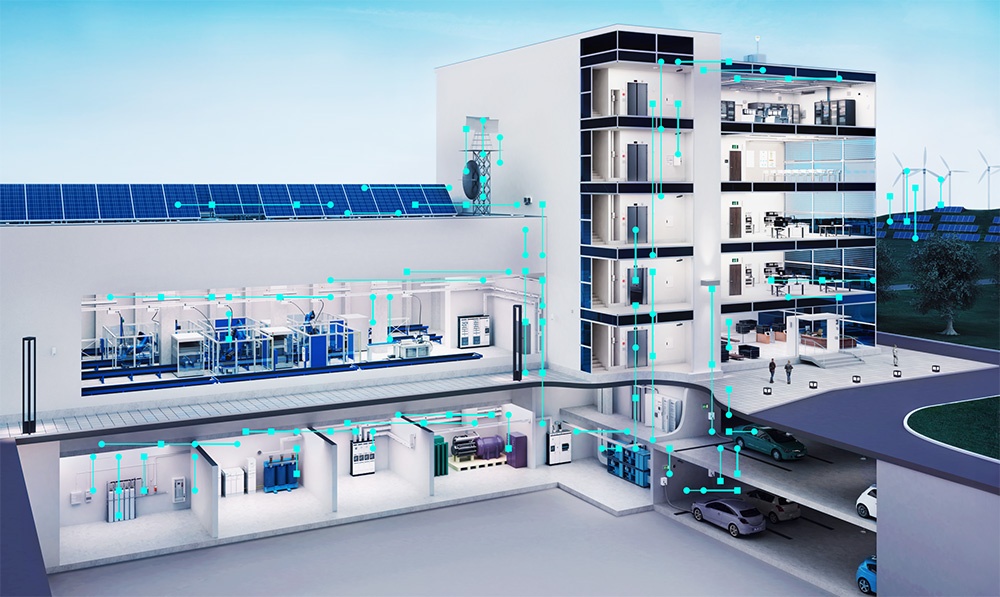 |
| Siemens Smart Infrastructure is delivering comprehensive solutions to tackle carbon emissions |
Collaboration and the human element: A call to action
The sheer scale and complexity of this infrastructure transformation demand unprecedented levels of collaboration. No single entity, whether government, business, or community, can achieve these ambitious goals in isolation. Governments must work to create supportive and stable policy frameworks, incentivise green investments, and streamline regulatory processes. Businesses must innovate, invest in sustainable technologies, and adopt circular economy principles.
Investors must mobilise capital towards green projects, recognising the long-term value. And communities must engage, demand change, and embrace new sustainable practices. Forums like COP30 are not just negotiation platforms; they are vital opportunities for forging these multi-stakeholder partnerships, sharing best practices, and accelerating collective action on a global scale.
Ultimately, the Infrastructure Transition is about far more than just technology and economic metrics; it’s profoundly about people. It’s about creating healthier, more livable cities where air quality is improved and green spaces flourish. It’s about ensuring universal access to clean, affordable energy, lifting communities out of energy poverty. It’s about building resilient communities that can not only withstand the increasing impacts of climate change but also thrive in the face of future challenges. It’s about a future where infrastructure serves humanity and the planet in harmony, supporting well-being and prosperity for all.
At Siemens Smart Infrastructure, we are committed to being a leading partner in this transformative journey. We are continuously developing innovative tech and comprehensive solutions that empower customers and partners to embrace digitalisation, drive decarbonisation, and build truly smart, resilient infrastructure.
The time for decisive action is undeniably now. Together, through collaboration, innovation, and a shared vision, we can unlock the full potential of smart infrastructure to build a sustainable future for generations to come.
 | Siemens and AIT unveil digital switchboard tailored for high-end clients Siemens Vietnam and AIT Corporation have launched the SIVACON S8, a next-generation digital main switchboard, in Ho Chi Minh City. |
 | Harnessing technology for a sustainable future in Vietnam Siemens is driving Vietnam’s green growth through digital innovation. From advanced automation to digital twin technology, the company helps industries boost efficiency, cut emissions, and build resilience. Thai-Lai Pham, president & CEO of Siemens ASEAN & Vietnam, shared with VIR’s Olivia Bui how company global sustainability strategies are shaping Vietnam’s transformation. |
 | Energy efficiency in buildings tops organisations’ infrastructure priorities Energy efficiency in facilities and buildings has emerged as the top infrastructure priority for organisations seeking to leverage it for decarbonisation and competitiveness, up from seventh place in 2023, a recent Siemens survey and study found. |
What the stars mean:
★ Poor ★ ★ Promising ★★★ Good ★★★★ Very good ★★★★★ Exceptional
 Tag:
Tag:Related Contents




Latest News






More News
- KN Holdings honoured for ESG efforts in Vietnam (October 18, 2026 | 11:00)
- APEA 2026 Vietnam honours 65 outstanding leaders and enterprises (October 17, 2026 | 10:00)
- MEXC highlights AI-driven trading and broader market access at TOKEN2049 (October 17, 2026 | 09:00)
- EuroCham confidence index holds at 78.3 despite operational hurdles (October 16, 2026 | 17:27)
- Shrimp and rice firms face rising standards in export markets (October 16, 2026 | 09:00)
- SCG and Prime Group add value to the ecosystem (October 15, 2026 | 15:55)
- Project readiness key to unlocking green finance (October 15, 2026 | 12:35)
- Sovereign AI and human oversight key to secure digital government (October 15, 2026 | 12:32)
- MEXC Ventures partners with Corelia Academy: Bringing digital asset education closer to Vietnamese students (October 15, 2026 | 09:00)
- Global design expertise meets a more sophisticated Vietnam market (October 15, 2026 | 09:00)









 Mobile Version