
Sembcorp powers Vietnam’s transition to low-carbon industrial future

 |
How do you assess Vietnam’s readiness to lead in low-carbon industrial development?
Vietnam is one of Asia’s most dynamic manufacturing economies and is now at a turning point where economic growth must align with climate efforts. With ambitious GDP targets and a net-zero goal by 2050, the country is charting a bold path for sustainable, low-carbon industrial growth. It is also advancing its transition to renewable energy and aiming for a cleaner energy mix by 2030.
This has driven demand for low-carbon IPs powered by renewables and supported by industrial symbiosis, where industries share energy, water, and materials to reduce waste and improve efficiency.
With 20 VSIPs across the country and Sembcorp’s proven expertise in renewables and low-carbon solutions, we see strong potential to scale these solutions. Through pilot projects and close partnerships with local authorities, we are building resilient, future-ready parks that support Vietnam’s green ambitions.
What are the key opportunities and challenges in rolling out low-carbon IPs in Vietnam?
Low-carbon IPs present a strong opportunity for Vietnam to attract environmental, social and governance (ESG)-aligned investment, lower long-term operating costs for tenants, and strengthen its position in decarbonised global supply chains. The main challenges include regulatory restrictions on supplying renewable energy within parks, limited support for developer-owned smart grids, and high upfront costs for green infrastructure. Other critical levers include digitalisation, water and waste circularity, and resource-efficient design.
Despite these challenges, policy frameworks are progressing, and interest from investors and developers remains high. The key now is to enable execution at scale, so that low-carbon industrial development can move from ambition to reality.
What is Sembcorp’s approach to embedding low-carbon practices across the VSIP network?
Our strategy is two-fold, tailored to the development stage of each park. In new parks, we embed low-carbon initiatives from the outset, including solar-ready rooftops, smart grid-ready infrastructure, and site designs that promote industrial clustering and circular resource use. In existing parks, we prioritise asset enhancements such as switching to high-efficiency LEDs, certifying buildings to green standards, and deploying shared utilities that optimise water and energy use.
We are also piloting community solar projects with battery energy storage systems to distribute solar power across tenants through shared infrastructure. Through our in-house energy joint ventures like Vietnam Singapore Smart Energy Solutions and Becamex – VSIP Power Investment and Development JSC, we have the technical and commercial expertise to develop and expand these low-carbon solutions.
Regulatory recognition of energy networks is key to building resilient and future-ready IPs.
How do VSIPs' green features create a competitive advantage for Vietnam in attracting investment?
Sembcorp’s VSIPs support companies’ growing focus on ESG priorities by integrating renewable energy and ESG-enabling technologies within its developments, helping manufacturers meet sustainability goals and reporting standards.
This makes VSIPs attractive to high-value investors seeking to build greener supply chains from the start. A prime example is LEGO Group’s $1 billion factory at VSIP Binh Duong III, which is the company’s most environmentally sustainable factory to date. The project demonstrates that low-carbon industrialisation is possible and commercially viable. Such developments reinforce Vietnam’s position as a competitive and credible investment destination.
What policy priorities should Vietnam focus on to accelerate industrial decarbonisation?
Supportive regulations are crucial. These include allowing park developers or licensed providers to supply renewable energy through on-site solar projects, provide energy-sharing models backed by storage, or sign direct power purchase agreements that allow tenants to draw power from off-site sources.
Regulatory recognition of internal energy networks managed by developers can unlock significant private investment and speed up adoption of integrated energy solutions, lowering government capex burden and delivering smarter, cleaner power to tenants. Rejuvenation of older IPs is also necessary, as many still run on infrastructure that is not optimised for efficiency or sustainability. Incentives for retrofits, digital upgrades, and water circularity can reduce emissions and extend the operational life for these legacy industrial zones.
Regular dialogue between policymakers and industrial developers will help ensure that policies are practical and effective. With these enablers in place, Vietnam can become a regional leader in low-carbon industrial growth.
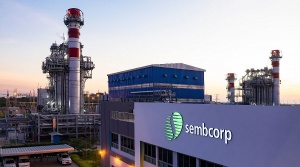 | Sembcorp strengthens VSIP portfolio in Vietnam Sembcorp Development, a wholly-owned subsidiary of Sembcorp Industries (Sembcorp), has announced the addition of three Vietnam Singapore Industrial Parks (VSIP) to its portfolio. |
 | Sembcorp remains a principal driver of Singapore relationship Sembcorp continues to expand in Vietnam with the development of ready-built facilities and its flagship Vietnam-Singapore Industrial Parks. James Ng, director of Sembcorp Infra Services, spoke with VIR’s Thanh Van about its developments in the country. |
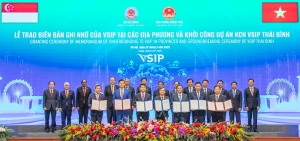 | Sembcorp and Becamex expand VSIP network with new agreements MoUs for prospective VSIPs in Hung Yen, Haiphong, Hai Duong, Binh Duong, and Thai Binh were signed in Hanoi on March 26. |
What the stars mean:
★ Poor ★ ★ Promising ★★★ Good ★★★★ Very good ★★★★★ Exceptional
 Tag:
Tag:Related Contents


Latest News

More News
- MIK Group launches House of MIK in Ho Chi Minh City (October 03, 2026 | 17:00)
- Vietnam hospitality shifts towards integrated mixed-use developments (October 03, 2026 | 10:00)
- Stavian IP accelerates its modern expansion (October 02, 2026 | 14:00)
- ESG for future-ready industrial success (October 02, 2026 | 09:00)
- Green Future Awards honour five leading industrial park developers (October 01, 2026 | 22:20)
- Green transition leaders honoured at Green Future Awards 2026 (October 01, 2026 | 22:10)
- Six developers honoured as Emerging Green Industrial Property Developers (October 01, 2026 | 22:00)
- Why logistics will define the next phase of growth (October 01, 2026 | 09:00)
- Urban Development Law takes effect on October 1 (September 30, 2026 | 17:49)
- Phu My Hung to demolish Lawrence S. Ting Building for new development (September 30, 2026 | 17:43)



Latest News





 Mobile Version