
Nationwide drive targets delayed projects to boost economic growth

Following the National Assembly’s adoption of Resolution No. 29/2026/QH16 on policies to address bottlenecks facing long-delayed projects, thousands of behind-schedule developments, along with vast amounts of frozen land, investment capital and assets, are now undergoing large-scale review and resolution nationwide.
In Phu Tho province, resolving stalled projects has been identified as a key priority in combating waste and unlocking resources to propel socioeconomic development.
Following a comprehensive review, the province has identified 149 delayed projects requiring assessment and resolution.
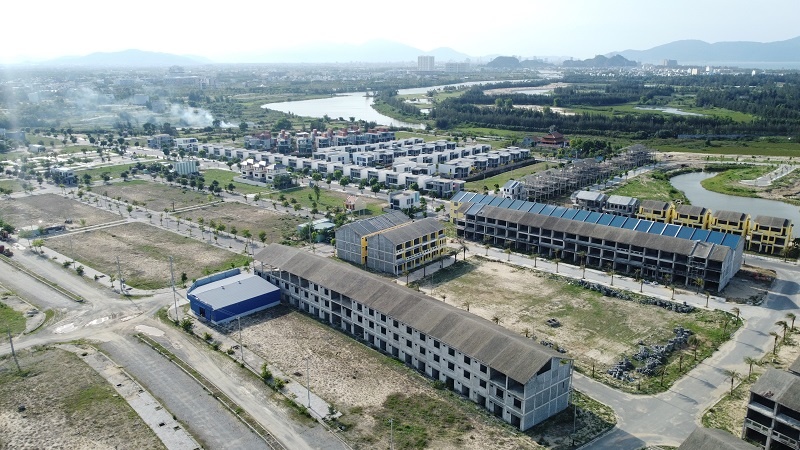 |
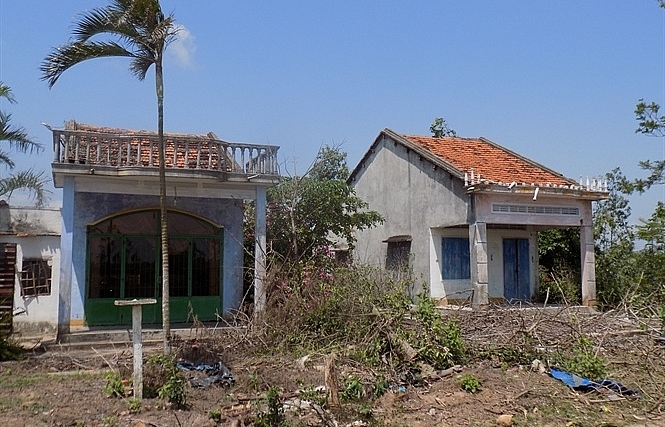
| Thousands of behind-schedule developments are now undergoing large-scale review and resolution nationwide |
To accelerate progress, Phu Tho People's Committee has assigned specific responsibilities to relevant agencies to lead and coordinate reviews and propose solutions for each project.
Based on Resolution No.29/2026/QH16 and government regulations, provincial departments and agencies are focusing on classifying projects, identifying the nature of delays, assigning responsible authorities and establishing completion timelines for each case.
A similar approach is being vigorously implemented in Nghe An province. The provincial Steering Committee for handling delayed projects has identified 87 projects facing difficulties, of which 81 remain unresolved.
Recognising the urgency of unlocking development resources and improving the state management, Nghe An has developed a phased roadmap for addressing these projects.
Under the province’s plan, the 81 projects will be resolved in three phases. The first phase covers 35 projects to be completed by June 15; the second phase includes 21 projects to be finalised by July 30; and the third phase consists of 25 projects scheduled for completion by November 30, 2026.
In Danang, reviews of long-stalled projects and land plots are also being conducted on an urgent basis.
The city has instructed relevant agencies to clarify underlying causes and classify obstacles related to land issues, planning, investment, construction, financial obligations and other related matters to develop appropriate solutions.
Meanwhile, Quang Ninh province is stepping up efforts to address projects facing prolonged difficulties and legal bottlenecks.
The province has focused on reviewing and categorising projects based on specific issues, clearly assigning responsibilities to relevant agencies and requiring all cases to be resolved within 2026.
A determined effort is also underway in Khanh Hoa province, where a dedicated Steering Committee has been established to address 217 stalled projects and state-owned land and property assets, including numerous developments delayed in land utilisation or facing prolonged legal complications.
With a strong commitment to eliminating these delays, many localities have moved beyond reviews and action plans to resolve stalled projects actively, with initial results proving noteworthy.
Ho Chi Minh City stands out as one of the most successful examples. The city has reviewed all 838 stalled projects, developments and land plots, while also completing either the resolution process or establishing a clear course of action for every project under review.
These efforts have helped unlock more than $8.24 billion in investment capital and return nearly 17,000 ha of land to productive use. Beyond the impressive scale of resources released, the results highlight the efficiency of addressing impediments that had persisted for many years.
According to senior economist Nguyen Minh Phong, resolving stalled projects carries particular significance as Vietnam pursues higher economic growth targets. The issue is not merely about dealing with long-standing problems, but also about unlocking resources that have been trapped within the economy.
“Significant resources in the form of land, investment capital, assets and development space remain tied up in long-stalled projects. Once legal, planning, land-related and investment procedural obstacles are removed, these resources can be returned to production and business activities, creating additional room for growth. Therefore, resolving stalled projects should be regarded as one of the key solutions for reducing waste and improving the efficiency of national resource utilisation,” Phong said.
As the ‘stalled-projects’ long-lasting delay is gradually tackled, investment flows will move more freely and wasted resources can once again contribute to development.
This is not only a solution for overcoming difficulties at individual projects and localities, but also an important driver for enhancing the efficiency of national resource allocation and creating a foundation for rapid and sustainable growth in the next stage of development.
 | Hanoi to crackdown on delayed projects The Hanoi People’s Council has urged authorities of the two districts of Ba Vi and Hoai Duc in coordination with the city’s related agencies to intensify the inspection of long-delayed construction projects and revoke the credentials of those which are violating the Land Law. |
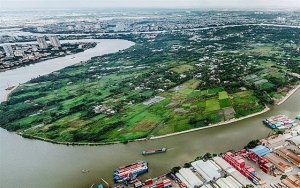 | City to revoke long-delayed projects HCM City authorities are planning to revoke “long-delayed or projects that are no longer feasible” that have affected thousands of home owners who have been asked to move to make way for these projects. |
 | Vietnam’s new special mechanisms for delayed projects Nishimura & Asahi’s Vietnam partner Nguyen Ngoc Phuc outlines key aspects of Vietnam’s newly introduced special mechanisms aimed at resolving long-standing legal bottlenecks affecting delayed real estate and infrastructure projects, with significant implications for developers, investors, lenders, and other stakeholders. |
What the stars mean:
★ Poor ★ ★ Promising ★★★ Good ★★★★ Very good ★★★★★ Exceptional
 Tag:
Tag:
Related Contents







Latest News

More News
- Quang Tri province to tighten delayed power projects (October 13, 2026 | 10:34)
- $600 million Ho Chi Minh City - Long Thanh expressway expansion under pressure (October 09, 2026 | 16:00)
- Hung Yen’s regional GDP beats expectations (October 09, 2026 | 15:25)
- VIR seminar focuses on taking domestic suppliers into global supply chains (October 08, 2026 | 14:50)
- Building Vietnam’s next chapter of FDI growth (October 08, 2026 | 12:15)
- Vietnam to foster links between foreign and domestic sector (October 08, 2026 | 11:00)
- Vietnam shifting focus to building high-quality FDI ecosystem (October 08, 2026 | 10:45)
- VIR seminar to explore innovative global supply chains in Hanoi (October 07, 2026 | 12:04)
- Vietnam’s registered FDI surpasses $50 billion in nine months (October 07, 2026 | 10:30)
- Samsung Electro-Mechanics to add $1.85 billion semiconductor investment in Thai Nguyen (October 06, 2026 | 18:23)









 Mobile Version