
Hanoi breaks ground on 90m-wide mega corridor

On the morning of May 19, Hanoi People’s Committee and leading conglomerate Vingroup broke ground on the National Highway 1A spatial axis project associated with urban renewal and redevelopment, covering the section from Ring Road 1 to the Cau Gie interchange.
The event, attended by National Assembly Chairman Tran Thanh Man, marked a major socioeconomic milestone, and was held coinciding the 136th birthday anniversary of President Ho Chi Minh.
The National Highway 1A spatial axis project, spanning the section from Ring Road 1 to the Cau Gie interchange, has a total length of approximately 36km and passes through 18 wards and communes in Hanoi. Total investment is estimated at over $6.4 billion.
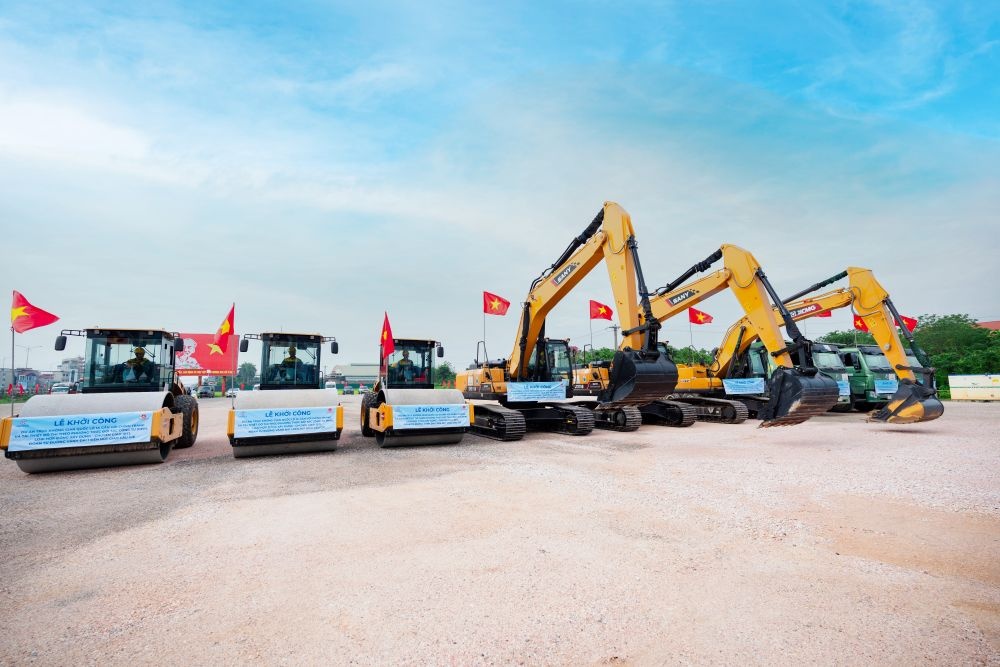 |
| Construction machinery and equipment stand ready for deployment on the National Highway 1A spatial axis project |
The route begins at the connection with Ring Road 1 near the Kim Lien underpass in Kim Lien and Bach Mai wards, and ends at the Cau Gie interchange in Chuyen My commune.
The corridor will be approximately 90m wide, featuring 10 mainline lanes for motor vehicles, six parallel service lanes, and an elevated urban railway line positioned along the central median.
Earlier, Hanoi People’s Committee Chairman Vu Dai Thang signed Decision No.2539/QD-UBND approving the specially selected investor consortium to implement the project under a public-private partnership, build-transfer contract model.
Under the decision, the selected consortium comprises Vingroup, New Life Real Estate Development and Investment Co., Ltd., Hoang Van General Trading Co., Ltd., and Future Investment Research and Development JSC.
Among them, Vingroup serves as the lead investor. Hanoi People’s Committee and the investor consortium aim to complete construction and infrastructure systems by 2027, gradually finalising the capital city’s road transport network in line with long-term development planning.
In addition to expanding urban space and improving travel speeds, the project is expected to help redistribute traffic flows more efficiently between ring roads and urban districts, while strengthening connectivity between Hanoi’s urban core, major southern townships, southern localities and coastal regions.
The project is also expected to drive urban renewal and redevelopment along the National Highway 1A corridor, creating momentum to drive socioeconomic growth in the areas it traverses.
According to the investor, the project will integrate modern surveying, design and operational management technologies. Construction and operations will be digitally monitored through Supervisory Control and Data Acquisition (SCADA) systems, Closed-Circuit Television networks and smart transportation solutions.
Nguyen Viet Quang, CEO of Vingroup, said infrastructure has always played a foundational role in economic growth, spatial expansion and improving residents’ quality of life.
“We hope to contribute to the comprehensive redevelopment of a modern, civilised and synchronised urban development axis, creating a new gateway landscape for southern Hanoi in the future,” Quang said.
The project is a key technical infrastructure work in southern Hanoi, serving as a gateway connecting the capital with the country’s North-South economic corridor.
“Beyond its transportation significance, the project is expected to create a new urban development space for Hanoi that is modern, green and fully integrated, with a century-scale vision aimed at improving residents’ quality of life,” he said.
Under Vietnam’s national development planning, the National Highway 1A-Phap Van-Cau Gie expressway corridor has been identified as a strategic economic corridor linking Hanoi with southern regions and coastal areas, while supporting logistics, supporting industries and multimodal transportation development.
The section from Ring Road 1 to the Cau Gie interchange represents the first phase of the broader National Highway 1A spatial axis project tied to urban renewal and redevelopment across Hanoi.
In the next phase, Hanoi People’s Committee and Vingroup will continue studying an extension from the Le Duan-Dien Bien Phu intersection in Ba Dinh ward to Dai Co Viet street, increasing the road length to approximately 38.8km and linking Hanoi’s historic urban centre with new southern growth poles.
Once completed, the National Highway 1A spatial axis project is expected not only to upgrade transport capacity at Hanoi’s southern gateway, but also to unlock new development potential for urban areas, logistics hubs and service industries along the National Highway 1A-Phap Van-Cau Gie corridor.
The route is expected to become one of the capital’s crucial development axes in the decades ahead.
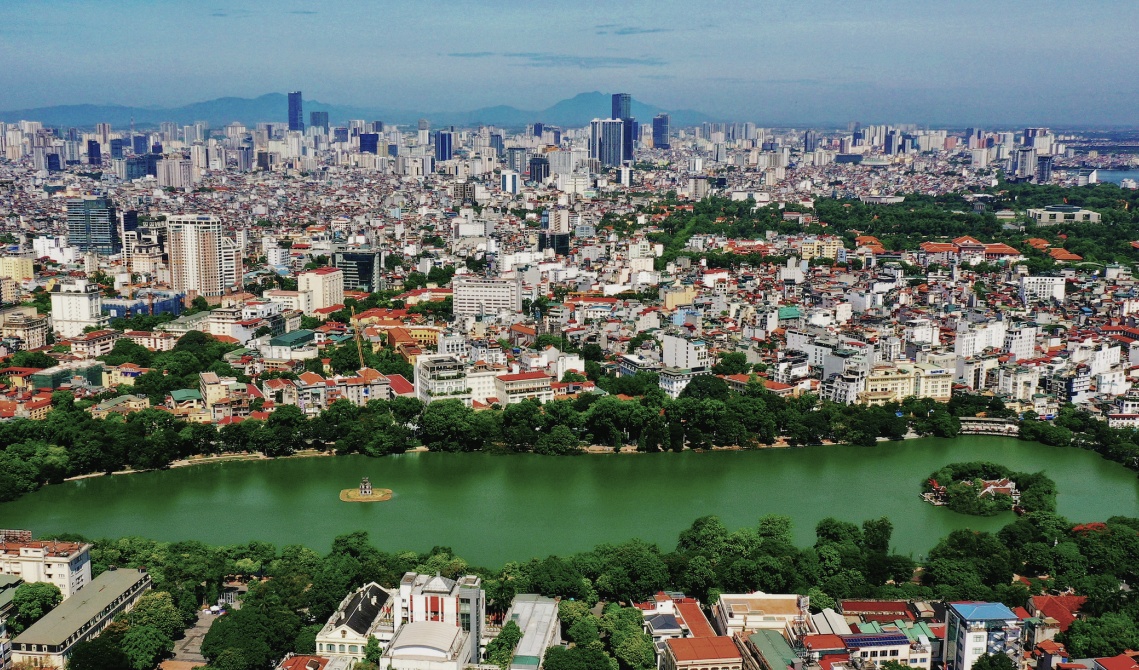
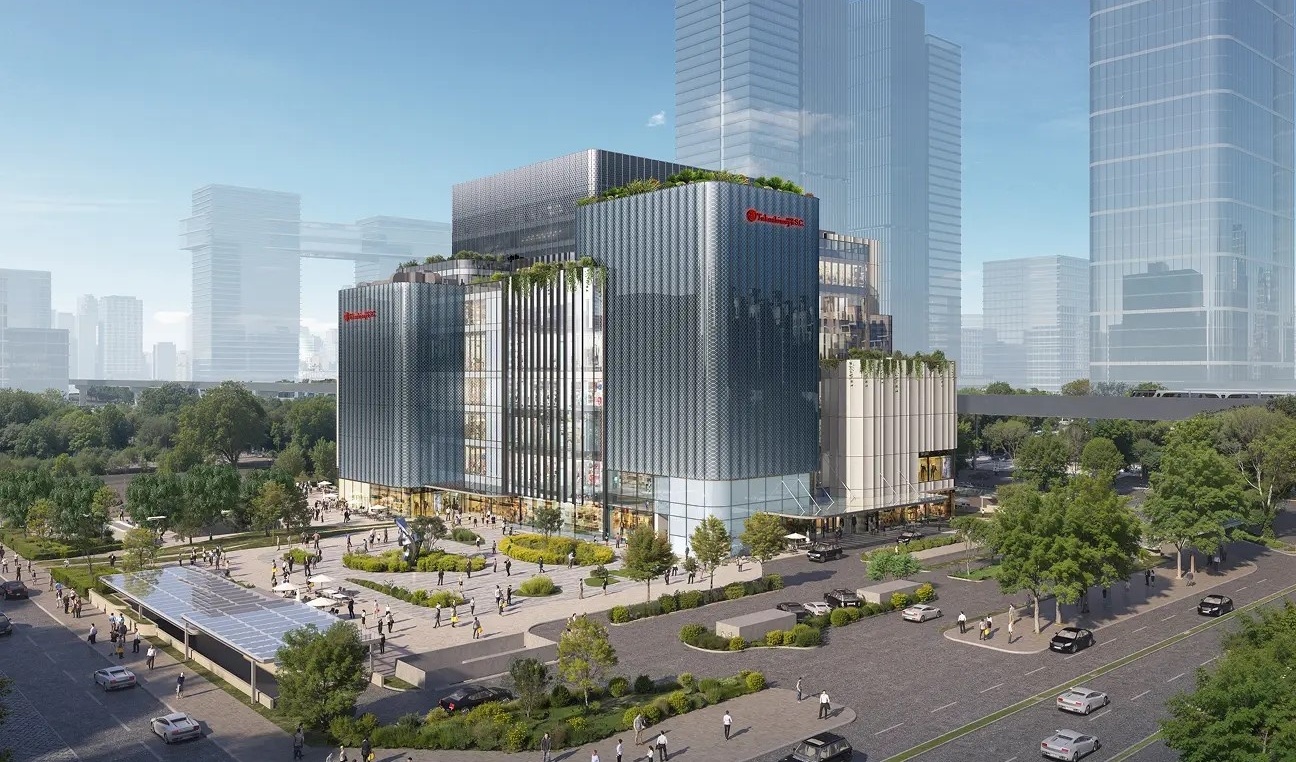
 | Hanoi and Ho Chi Minh City ranked in Global Growth Hub Index Savills said on April 22 that Hanoi and Ho Chi Minh City have been put in its Global Growth Hubs Index, reflecting their increasingly prominent role in the regional value chain. |
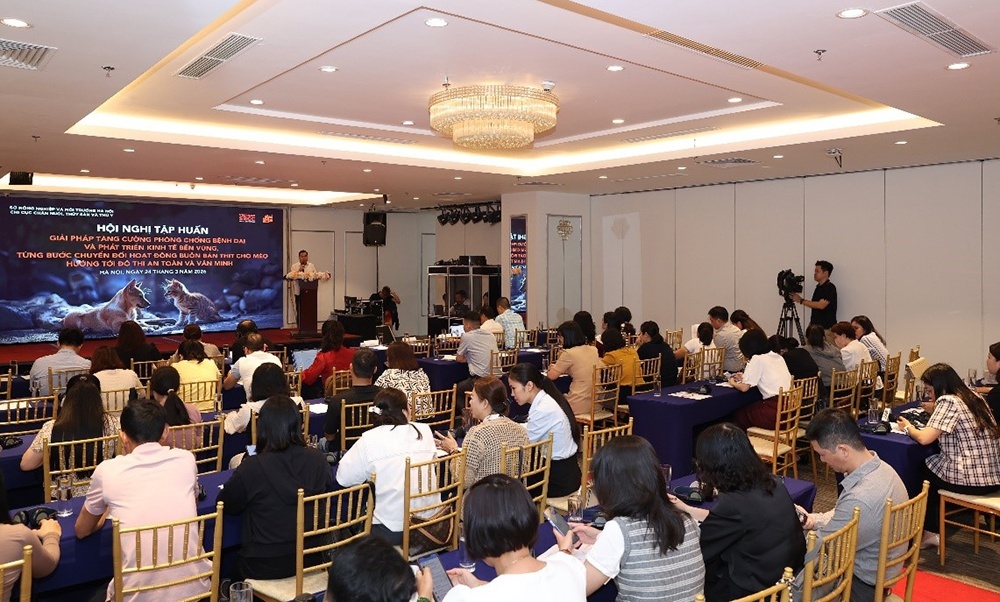
 | Hanoi transition: four dog cat meat traders proactively exit the trade for sustainable careers following training A training initiative is helping dog and cat meat traders in Hanoi transition to more sustainable livelihoods. |
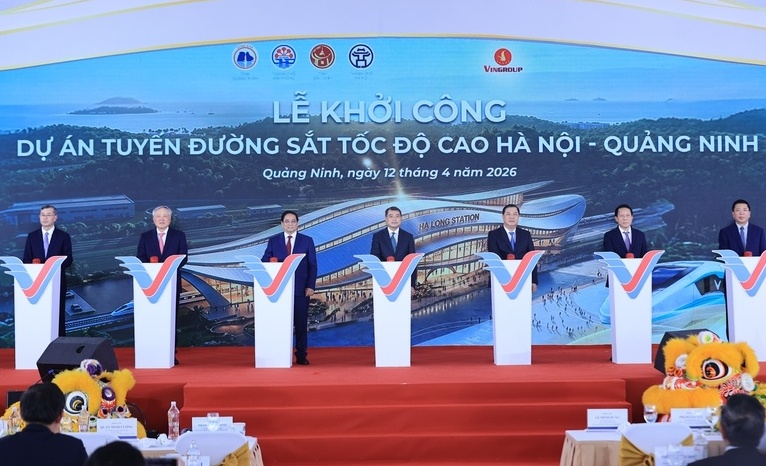
 | Hanoi to host APAC Wind Energy Summit 2026 The APAC Wind Energy Summit 2026 will take place in Hanoi from June 9–11, bringing together global industry leaders to accelerate wind power development across Asia-Pacific. |
What the stars mean:
★ Poor ★ ★ Promising ★★★ Good ★★★★ Very good ★★★★★ Exceptional
 Tag:
Tag:
Related Contents



Latest News

More News
- VIR seminar to explore innovative global supply chains in Hanoi (October 07, 2026 | 12:04)
- Vietnam’s registered FDI surpasses $50 billion in nine months (October 07, 2026 | 10:30)
- Samsung Electro-Mechanics to add $1.85 billion semiconductor investment in Thai Nguyen (October 06, 2026 | 18:23)
- Electronics funding will be won via a capable ecosystem: SGS (October 06, 2026 | 09:00)
- LNG power plant projects risk falling behind schedule (October 03, 2026 | 09:00)
- Pandora opens world’s largest fine jewellery crafting facility (October 02, 2026 | 22:21)
- An Phat 5 Industrial Park positions for new wave of investment in northern Vietnam (October 02, 2026 | 09:00)
- Hanoi to launch portal to ease hurdles for tech businesses (October 01, 2026 | 09:00)
- Foreign investors to be widened for market access (September 30, 2026 | 17:54)
- Phu Quoc Airport planning adjusted to serve APEC 2027 (September 30, 2026 | 17:35)







 Mobile Version