

Foreign investors seek stronger policies

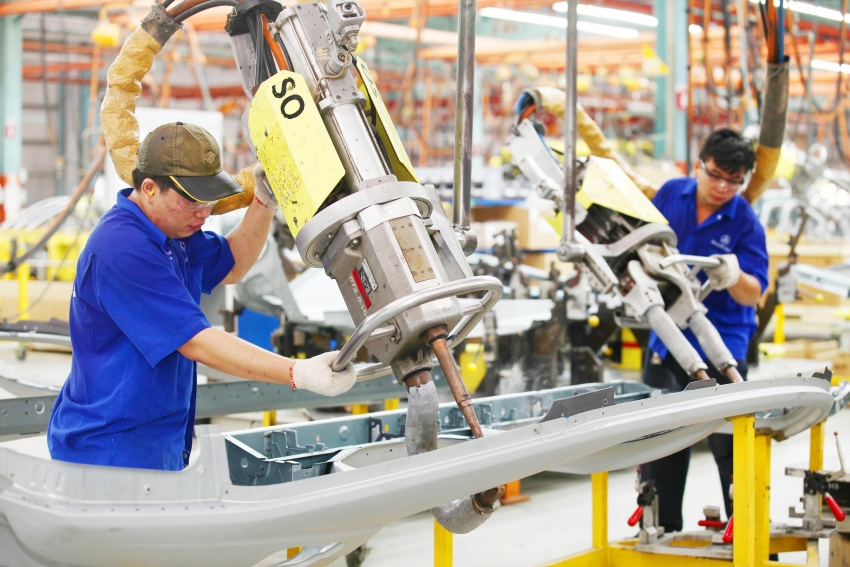 |
The proposals were raised during a working session on May 13 between Nguyen Thanh Nghi, Chairman of the Party Central Committee’s Commission for Policies and Strategies and representatives of ministries, foreign business associations, industry groups, and domestic and foreign-invested enterprises, held within the Vietnam Connect Forum 2026.
Nghi said Vietnam’s development targets for 2030 and 2045 would require the effective mobilisation of both domestic and foreign resources, with the FDI sector continuing to play an important role in growth, exports, and economic restructuring.
He noted that amid intensifying global competition, supply chain restructuring, green transition, digitalisation, and the rapid advancement of AI, Vietnam’s FDI attraction strategy must evolve towards greater efficiency and sustainability.
Foreign investors acknowledged Vietnam’s progress in improving its investment climate over recent years, particularly in infrastructure development and its ability to pull in large-scale projects. However, many business groups said administrative procedures remain one of the most pressing challenges.
Bruno Jaspaert, chairman of EuroCham, suggested that Vietnam consider extending land lease terms to 90 years or more for certain projects, instead of the commonly applied 50-year period.
According to Jaspaert, longer lease terms would provide investors with greater confidence when developing long-term business strategies, particularly for projects requiring substantial capital and lengthy payback periods.
Land-related issues were also highlighted by Virginia Foote, representing AmCham. She noted that many businesses that signed 50-year land leases in previous decades are now facing uncertainty regarding extension conditions as their agreements near expiry.
“If investors cannot clearly predict future conditions, they may hesitate to expand or upgrade projects,” Foote said.
Foreign business representatives also pointed to inconsistencies in policy implementation among localities, which increase costs and operational risks for enterprises.
According to Seck Yee Chung, vice chairman of SingCham, although the issuance of Investment Registration Certificates and Enterprise Registration Certificates has improved, various sub-licences continue to create delays for foreign-invested enterprises.
Regarding mergers and acquisitions, business associations said Vietnam should continue reviewing market access barriers, including regulations related to economic needs tests, to ensure better alignment with international commitments under agreements such as the EVFTA and Comprehensive and Progressive Agreement for Trans-Pacific Partnership.
Beyond administrative reforms, investors also stressed that Vietnam should place greater emphasis on the quality rather than simply the scale of FDI inflows.
Jaspaert said Vietnam should focus more strongly on attracting investment that brings technology, expertise, and added value to the economy, instead of concentrating solely on billion-dollar capital figures.
“The more self-reliant Vietnam becomes, the more effectively it can attract FDI,” he said, adding that the country should prioritise energy development, technology transfer, and human capital improvement.
Denzel Eades, chairman of BritCham, said international capital would play a crucial role in helping Vietnam achieve its ambition of becoming a high-income economy by 2045.
However, he emphasised that global investment capital is highly competitive, meaning Vietnam must continue strengthening transparency, consistency, and predictability in its legal and regulatory framework to remain an attractive destination.
Representing the South Korean business community, Ko Tae Yeon, chairman of KoCham, called on Vietnam to provide stronger support for foreign-invested enterprises, particularly in addressing tax and VAT refund issues.
According to Yeon, delays in handling tax procedures can directly affect corporate cash flows and business operations.
He also stressed the importance of accelerating localisation efforts. While Vietnam’s localisation rate has reached around 20 per cent, he said the figure remains modest relative to the country’s potential and its ambition to participate more deeply in global supply chains.
To improve this, Vietnam needs to narrow technology gaps, strengthen quality control capabilities, and support domestic enterprises in meeting international standards through appropriate investment and policy support, he added.
He also noted that as foreign investors increasingly expand into high-tech sectors such as AI, Vietnam should introduce clearer workforce development policies and establish sandbox mechanisms to help regulators and investors adapt more quickly to emerging business models.
At the working session, representatives of Vietnamese ministries and agencies acknowledged proposals related to administrative reform, land regulations, tax refunds, localisation, and intellectual property protection.
Concluding the event, Nghi said ministries and agencies would continue strengthening dialogue with the foreign business community to improve policies and create more better conditions for foreign-invested enterprises.
He added that enhancing the quality and effectiveness of FDI attraction would be essential to supporting Vietnam’s long-term growth ambitions.
What the stars mean:
★ Poor ★ ★ Promising ★★★ Good ★★★★ Very good ★★★★★ Exceptional
 Tag:
Tag:Related Contents


Latest News

More News
- Vietnam’s registered FDI surpasses $50 billion in nine months (October 07, 2026 | 10:30)
- Samsung Electro-Mechanics to add $1.85 billion semiconductor investment in Thai Nguyen (October 06, 2026 | 18:23)
- Electronics funding will be won via a capable ecosystem: SGS (October 06, 2026 | 09:00)
- LNG power plant projects risk falling behind schedule (October 03, 2026 | 09:00)
- Pandora opens world’s largest fine jewellery crafting facility (October 02, 2026 | 22:21)
- An Phat 5 Industrial Park positions for new wave of investment in northern Vietnam (October 02, 2026 | 09:00)
- Hanoi to launch portal to ease hurdles for tech businesses (October 01, 2026 | 09:00)
- Foreign investors to be widened for market access (September 30, 2026 | 17:54)
- Phu Quoc Airport planning adjusted to serve APEC 2027 (September 30, 2026 | 17:35)
- Nearly 200 foreign-invested enterprises in Vietnam to pay global minimum tax (September 30, 2026 | 17:26)


Latest News




 Mobile Version