

Museums ramp up digital engagement to attract younger audiences

The push aligns with guidance released by the Department of Cultural Heritage for International Museum Day 2026 on May 18, encouraging museums to expand digital engagement and improve accessibility through online and multimedia platforms. The guidance also calls for museums to improve accessibility while expanding international cooperation.
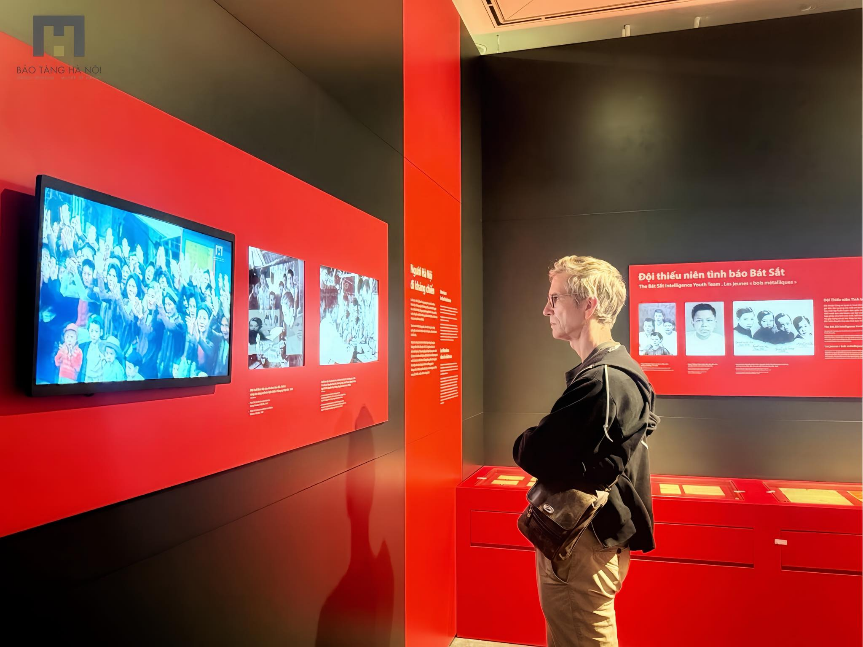 |
| An International visitor watches historical footage. Photo: Vietnam Military History Museum |
According to the International Council of Museums, more than 37,000 museums across around 158 countries and territories participated in International Museum Day activities last year. The 2026 theme, 'Museums Uniting a Divided World', highlights the role of museums in promoting dialogue, accessibility and cross-cultural understanding.
Karinka Siller, a Russian tourist visiting the Vietnam Military History Museum during the April 30 holiday, said the museum’s interactive displays and visual presentation helped make the historical experience more engaging for international visitors.
“I was surprised about some immersive exhibition spaces. The digital screens and visual materials made the exhibitions easier to follow, especially for visitors who may not know much about Vietnam’s military history,” she said.
Siller added that the combination of historical artefacts and visual elements encouraged visitors to spend more time exploring the exhibitions.
“Sometimes in museums, people move quickly from one section to another. Here, I noticed many visitors stopping longer at areas with multimedia presentations and detailed visual explanations,” she said.
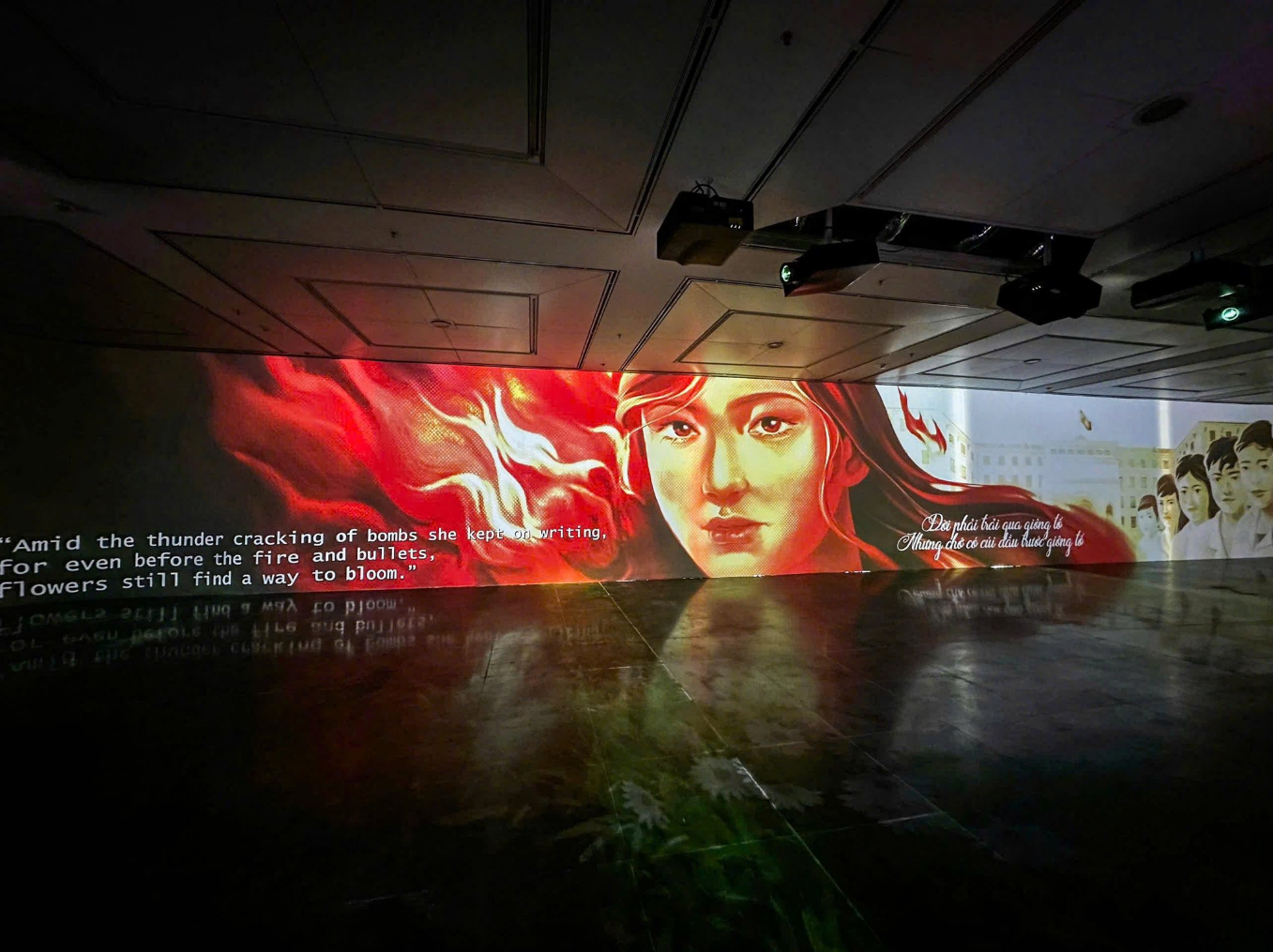 |
| A large LED display presents historical content in Vietnamese and English. Photo: Hanoi Museum |
Museums across Vietnam have gradually expanded the use of QR-based interpretation systems, multimedia displays, virtual exhibitions and 360-degree visualisation tools in recent years. Some institutions have also strengthened their digital presence through social media platforms and online archives aimed at extending audience engagement beyond physical visits.
At the Vietnam Military History Museum, immersive presentation methods are increasingly integrated into exhibition spaces displaying military artefacts and historical materials.
Speaking at a training session on digital applications in museum exhibitions on May 6, Lt. Gen. Truong Thien To said museum work should preserve historical memories while making history more vivid, widely accessible, and better connected to the public, especially younger generations, amid digital transformation.
“Digital transformation is no longer an option, but an inevitable requirement to elevate the military museum system in the digital cultural era,” he said.
He described digital transformation in cultural heritage as an urgent and important task, while calling on museums to adopt a more audience-centred approach and strengthen the application of technology to create more interactive and engaging historical experiences.
At the same event, Assoc. Prof. Dr. Bui Minh Tri said museums globally are shifting from traditional display models towards more interactive and experience-based formats.
“We use technology to awaken history, so every artefact can tell its own story,” he said.
Similar approaches are also being adopted at other museums, seeking to draw in younger audiences and foreign visitors through more interactive formats.
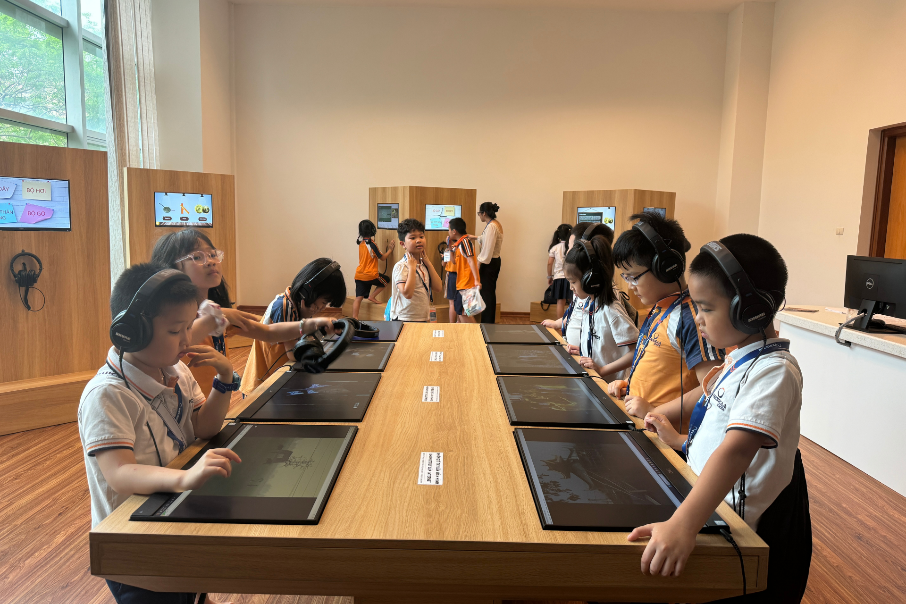 |
| Students experience interactive displays in a multimedia room. Photo: Vietnam Museum of Ethnology |
At the Vietnam Museum of Ethnology, foreign visitors gathered around multimedia displays while scanning QR-linked information introducing Vietnam’s ethnic minority communities. English-language interpretation systems and multimedia materials were widely used across exhibition areas, attracting tourists and student groups.
Several younger visitors were also seen using smartphones to access translated content and additional exhibition materials through QR-linked platforms, reflecting broader changes in visitor behaviour as audiences increasingly expect more interactive and digital experiences.
Speaking at the opening of a cultural exhibition space at the Vietnam Museum of Ethnology on April 11, Prof. Dr. Le Van Loi, president of the Vietnam Academy of Social Sciences, said museums bring scientific and cultural knowledge closer to society through public engagement and educational activities.
“Museums play an important role as cultural and scientific institutions while also being a bridge connecting scientific research with the public,” he said.
In Official Letter No.403/DSVH-QLBT&DSTL issued on March 24, the Department of Cultural Heritage encouraged museums to act as ambassadors for International Museum Day by strengthening connections with communities, schools, and international museum networks.
The document also encouraged museums to expand their digital presence through online platforms and social media to widen public outreach, particularly among younger audiences.
What the stars mean:
★ Poor ★ ★ Promising ★★★ Good ★★★★ Very good ★★★★★ Exceptional
 Tag:
Tag:
Related Contents

Latest News




More News
- Sedona SkyRun concludes latest race above Ho Chi Minh City (August 11, 2026 | 08:00)
- What propelled East West Barbershop into world's Top 10 grooming brands? (August 06, 2026 | 09:22)
- Livelihood Transition Training Conference contributes to rabies prevention and food safety development (July 24, 2026 | 17:14)
- Muong Thanh group launches 2026 mooncake collection (July 24, 2026 | 10:52)
- Pan Pacific launches 2026 mooncake collection (July 24, 2026 | 10:51)
- Vietnamese women step up as drivers of national development (July 15, 2026 | 11:54)
- Italy marks anniversary by celebrating women's eight decades of progress (June 23, 2026 | 17:19)
- Innovation expands reach of cultural identity in Hue (June 17, 2026 | 15:57)
- Fusion marks Global Wellness Day with spa promotions across Vietnam (June 06, 2026 | 14:11)
- Fortune names Citi CEO Jane Fraser the Most Powerful Woman in Business for 2026 (June 02, 2026 | 18:42)


Latest News




 Mobile Version