
From coffee beans to value: Building a more sustainable coffee industry in Vietnam

This was the central message delivered by Binu Jacob, CEO of Nestlé Vietnam and co-chairman of the Vietnam Business Council for Sustainable Development (VBCSD), at the Vietnam Corporate Sustainability Forum (VCSF) 2026 in Hanoi on October 5.
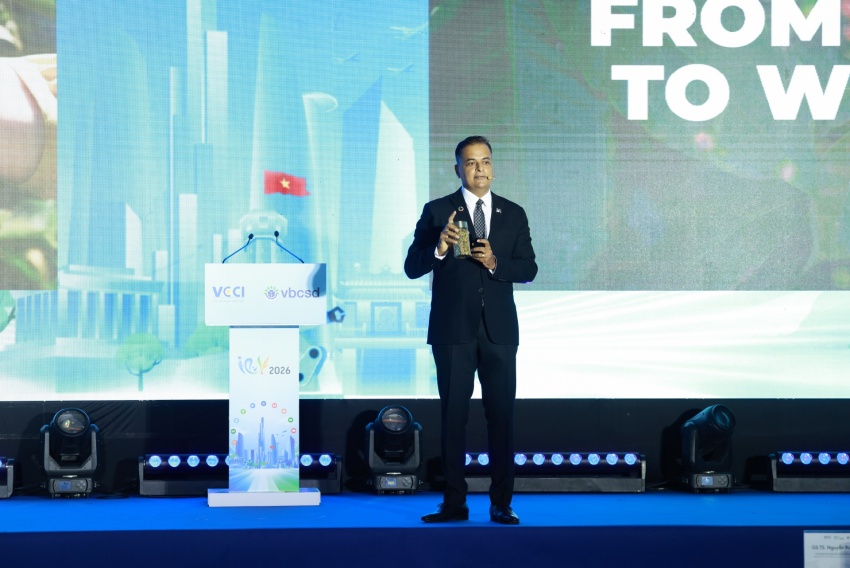 |
| Binu Jacob, CEO of Nestlé Vietnam. Photo: Nestlé Vietnam |
Jacob used a single coffee bean to illustrate a broader economic question: how can Vietnam move from growth driven by volume to growth driven by value, while making that growth more sustainable?
The answer, he argued, lies in upgrading every link in the value chain. “Every big ambition must start small. So let me start with something very, very small. And that’s a coffee bean,” Jacob said, drawing a parallel between the journey of a coffee bean and Vietnam’s efforts to build a stronger and more resilient competitive advantage.
Vietnam has come a long way in coffee production. The country is now the world’s leading Robusta producer and the second-largest coffee exporter, while its coffee productivity per hectare is around three times the global average, according to Jacob.
The industry is also moving further into processing. According to the International Coffee Organization’s August 2026 coffee market report, Vietnam overtook Brazil that month to become the world’s largest exporter of soluble coffee.
Yet most of Vietnam’s coffee export value still comes from green coffee beans. This means the next stage of development will depend less on expanding production and more on increasing the value captured domestically.
“There is no more land left in Vietnam for agriculture. And there’s very, very little water. And the climate is proving to be more and more difficult year-on-year,” Jacob said. “So the answer is certainly not to produce more. The answer is, how do we keep more of that value here in Vietnam?”
Sustainability begins with the farmer
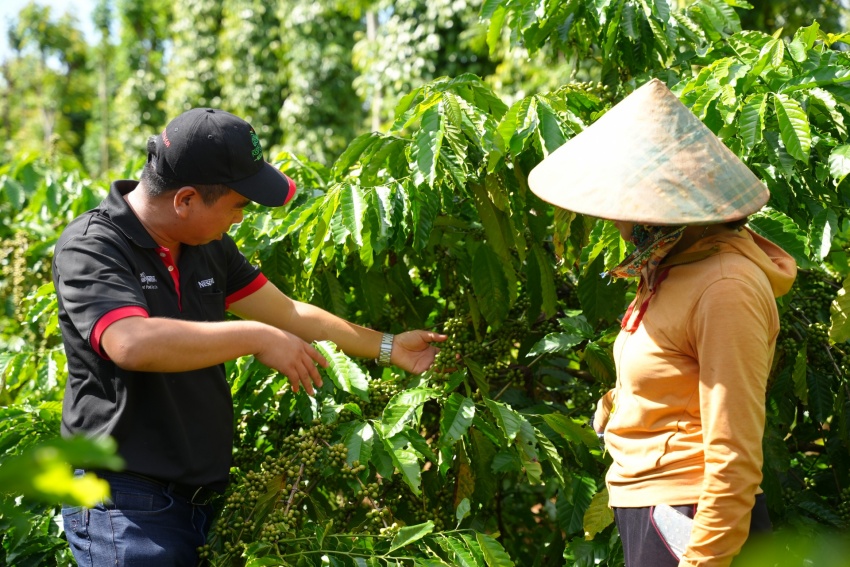
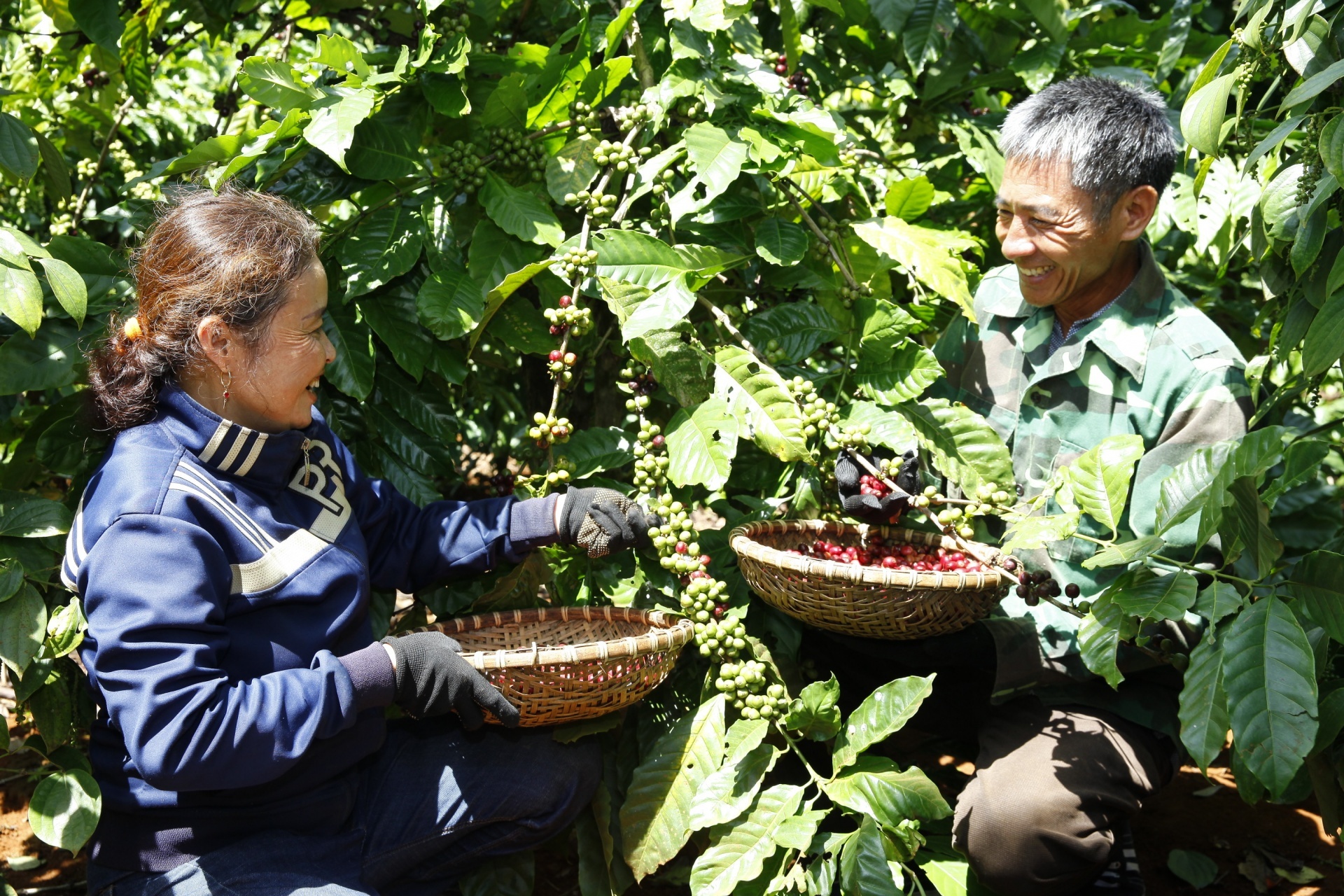
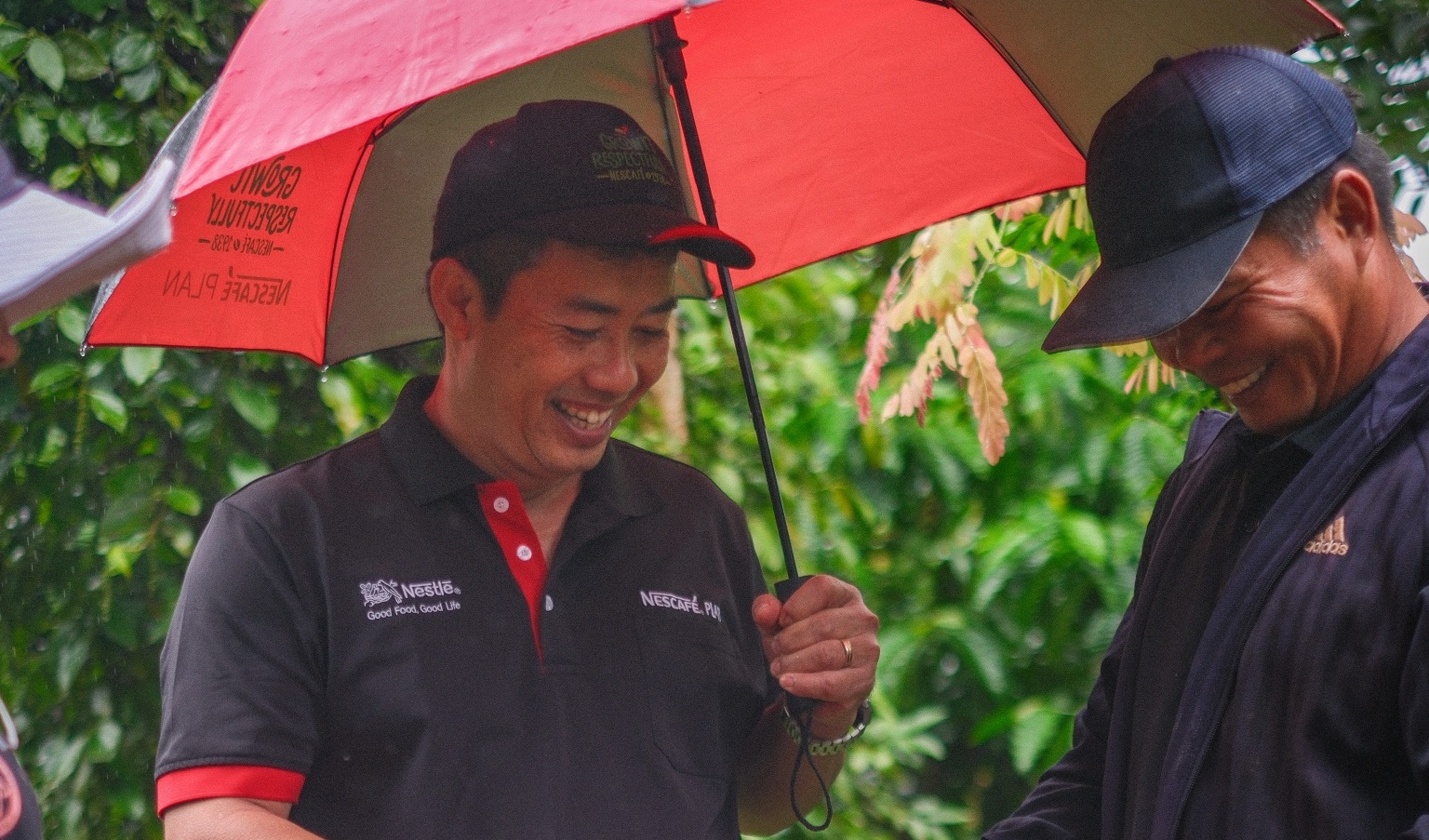
For Jacob, the starting point of that transformation is the farmer. Nestlé Vietnam has worked with coffee-growing communities in the Central Highlands for more than a decade through its NESCAFÉ Plan, focusing on practices designed to improve productivity while protecting the long-term health of farms.
Under the programme, Nestlé says it has worked directly with more than 23,000 farmer households and indirectly reached more than 200,000 farmers through training. More than 100 million high-yielding, disease-resistant coffee plantlets have been distributed to farmers at subsidised rates.
The programme has also promoted regenerative agricultural practices, including water-saving irrigation, the use of organic and microbial fertilisers, and digital farming tools. According to Nestlé, these efforts have contributed to the replanting of more than 100,000 hectares of ageing coffee plantations, while farms participating in its programmes have reduced irrigation water use by 40-60 per cent and the use of chemical fertilisers and pesticides by around 20 per cent.
For farmers, Jacob said, sustainability is ultimately an economic issue rather than simply an environmental commitment. “For them, sustainability is not a commitment, it’s not a target, it’s not a report that they make at the end of the year. For them, sustainability boils down to: is my soil healthy enough?” he said.
A healthy soil supports stronger coffee trees, better water retention, and continued production through dry seasons, while helping preserve agricultural potential for future generations.
Jacob also urged a shift in how farmers are viewed in the wider value chain. “Many of us, when we think of farmers, we think of them as beneficiaries. But I’d like to offer a different perspective: think of the farmer as an entrepreneur, or more precisely, as an agripreneur,” he said.
The farmer, he noted, carries both climate and market risks, while also acting as the coffee value chain’s first quality controller. Quality that is lost at farm level cannot simply be restored through processing later.
 |
| Photo: Nestlé Vietnam |
Adding value beyond the farm
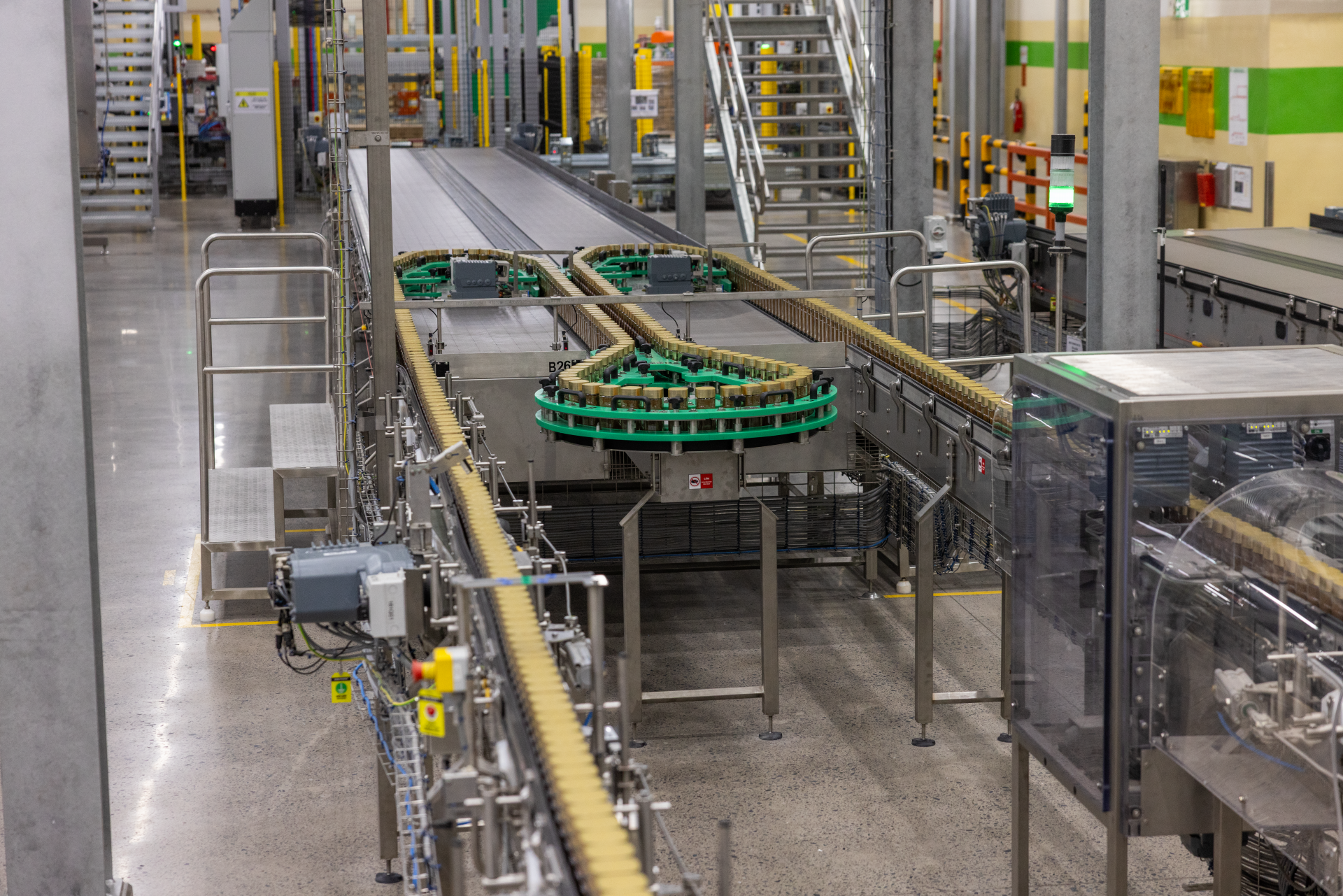
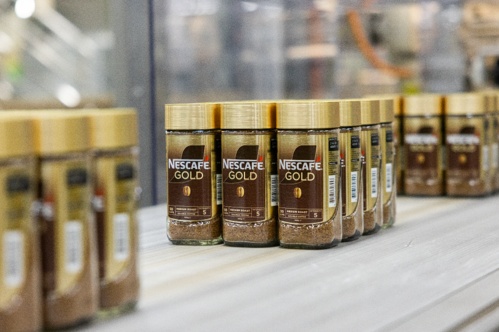
The next stage is to transform more of the coffee inside Vietnam. Nestlé operates a major coffee manufacturing facility in Dong Nai city, which Jacob described as the company’s largest and most diverse coffee factory globally. The facility combines quality control, roasting, extraction, formulation, food safety, automation, packaging, and other technologies to produce coffee products for both domestic and international markets.
This processing can significantly increase the value of Vietnamese coffee. Jacob illustrated the potential by comparing the value of green coffee with increasingly processed products. At current market prices, a kilogramme of green coffee can be more than double in value after roasting, approach three times the value when converted into soluble coffee, and reach around four times the original value when packaged and branded.
The precise economics vary by product and market, but the broader message is clear: processing, branding, technology, and market access can allow Vietnam to capture substantially more value from the same agricultural output.
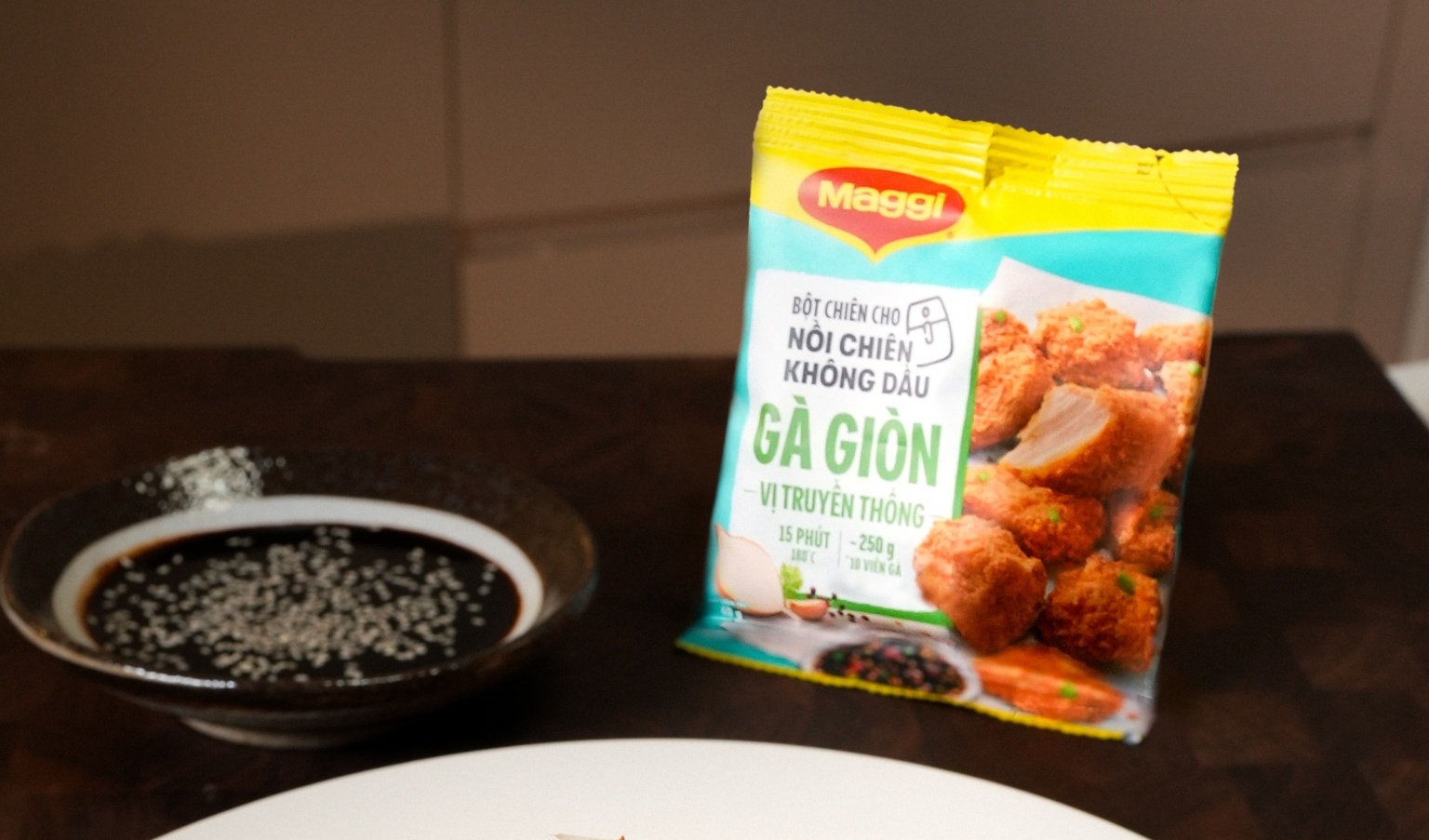
This also creates opportunities beyond large manufacturers. “Whether it’s the packaging, or whether it’s logistics, or whether it is leveraging technical engineering companies to come and set up the factory, there is opportunity for local Vietnamese companies to be part of this value chain and benefit,” he said.
He cited the example of a Hanoi-based logistics supplier that began working with Nestlé around 12 years ago with four trucks and the company as its sole customer. Through the transfer of international practices in areas such as safety, quality, hygiene, and palletisation, the supplier has since expanded to serve five multinational companies and now operates more than 50 trucks.
For Jacob, this illustrates how foreign investment can contribute to domestic capability beyond capital. “From Resolution 10, the expectation from the government is not this any more . The question is not how much capital are you bringing to the country. The question, and rightly so, is how much value are you bringing to the country? How much value are you keeping in the country?” he said.
This approach places supplier development at the heart of the next phase of foreign investment, allowing Vietnamese companies to acquire capabilities that can subsequently be applied across a broader customer base and international markets.
 |
| Photo: Nestlé Vietnam |
Turning global standards into competitive advantage
The final link in the chain is market access. As international markets impose increasingly stringent requirements on sustainability, traceability, and environmental performance, Vietnamese coffee producers will need reliable data and systems to demonstrate where and how their coffee is produced.
The European Union Deforestation Regulation, for example, will require coffee entering the EU market to meet deforestation-free and traceability requirements from the end of 2026.
Jacob said such requirements should not be viewed solely as technical barriers. “If you’re unprepared, this is a huge threat. But if you’re ready, it’s a competitive advantage,” he said.
Digital records of farms and production areas can provide the traceability needed to meet international requirements while becoming an asset that helps Vietnamese coffee gain access to higher-value markets.
This is where sustainability, technology, and competitiveness increasingly converge. “For the value addition to stay here in Vietnam, we need the government, companies like us, the farmers, and the small- and medium-sized enterprises to work together, because every link in that value chain is a critical part of the value addition,” Jacob said.
Nestlé’s experience in Vietnam reflects this longer-term approach. After more than three decades in the country, the company has invested close to $1 billion in Vietnam, with around $500 million invested over the past five years, according to Jacob.
The company’s coffee-related activities, however, point to a broader ambition: linking sustainable agricultural production with domestic manufacturing, supplier development, technology transfer, and access to global markets.
“Growth and sustainability” therefore need not be competing objectives, Jacob argued. They can reinforce each other when improvements in environmental performance also improve productivity, resilience, quality, and market access. “Sustainable farming is not a cost. It’s improvement in productivity, it’s investment for the future of the farm,” he said.
Ultimately, Vietnam’s natural advantages in coffee: its climate, soil, and agricultural expertise, provide only the starting point. Building skills, developing suppliers, adopting technology, and creating trusted systems for traceability can turn those natural advantages into capabilities that are harder for competitors to replicate.
“Nature gives, nature can take away,” Jacob said. “What’s more important and was more difficult to create is created advantage. That created advantage, will depend on the ability of farmers, businesses, domestic suppliers, foreign investors, and policymakers to build the value chain together. “When the value chain moves up, Vietnam moves forward”
What the stars mean:
★ Poor ★ ★ Promising ★★★ Good ★★★★ Very good ★★★★★ Exceptional
 Tag:
Tag:Related Contents






Latest News


More News
- Tien Phong Plastics wins two awards at Green Future Awards 2026 (October 06, 2026 | 11:51)
- Energy transition task force meets to advance Vietnam's grid and storage (October 05, 2026 | 18:59)
- GreenYellow and Vina Paper partner on rooftop solar project (October 05, 2026 | 09:00)
- Consultation workshop refines Vietnam's clean hydrogen strategy (October 04, 2026 | 08:00)
- JBIC considers new financing options for Vietnam’s energy projects (October 03, 2026 | 08:00)
- Vestas to supply 16 turbines for two new Vietnam wind farms (October 01, 2026 | 07:00)
- Inter-sectoral cooperation on Montreal protocol (September 30, 2026 | 17:20)
- EV battery recycling rate proposed at 8 per cent from 2029 (September 29, 2026 | 16:00)
- Bankability remains hurdle for Vietnam's JETP projects (September 29, 2026 | 12:08)
- Binh Minh Plastics extends clean water project to border communities (September 29, 2026 | 10:57)










 Mobile Version