
EV battery recycling rate proposed at 8 per cent from 2029

 |
| Photo: vir.com.vn |
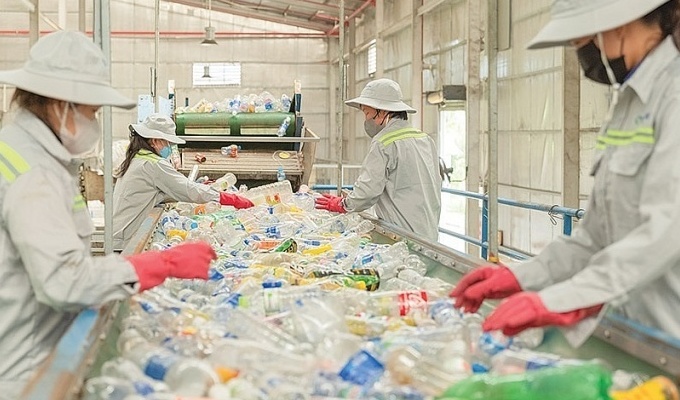
The National Assembly's Committee on Science, Technology and Environment sought feedback on a draft law amending several provisions of the Law on Environmental Protection on September 29. Under the draft, organisations and individuals that manufacture or import products would be responsible for collecting EV batteries for recycling at mandatory rates as part of their extended producer responsibility (EPR) obligations.
Under a draft decree detailing the proposed rules, the mandatory recycling rate for EV batteries, including lithium and nickel-metal hydride (NiMH) batteries, would be set at 8 per cent of the total volume placed on the market each year during 2029-2031. The rate would then rise to 15 per cent for the following three years.
Under current regulations, the mandatory recycling rate is zero.
Under Decree No.110/2026/ND-CP, recycling rates are reviewed every three years, with the first adjustment for lithium and NiMH batteries used in transport vehicles scheduled for 2029.
Businesses would be able to recycle batteries domestically or export used batteries overseas for recycling.
The option is currently provided for under the 2020 Law on Environmental Protection, alongside direct collection and recycling or hiring or authorising third parties to carry out these activities. However, the drafting agency said financial contributions to support recycling were considered inconsistent with the 'polluter pays' principle.
Businesses had previously raised concerns over the proposed mandatory recycling rates for EV batteries.
The Vietnam Association of Motorcycle Manufacturers and the Vietnam Automobile Manufacturers’ Association said the country’s recycling infrastructure was not yet capable of meeting demand, while domestic technology was unable to recover lithium and nickel.
This could leave manufacturers in a difficult position, as they may be unable to collect end-of-life vehicles themselves while also struggling to find recycling partners with sufficient capacity.
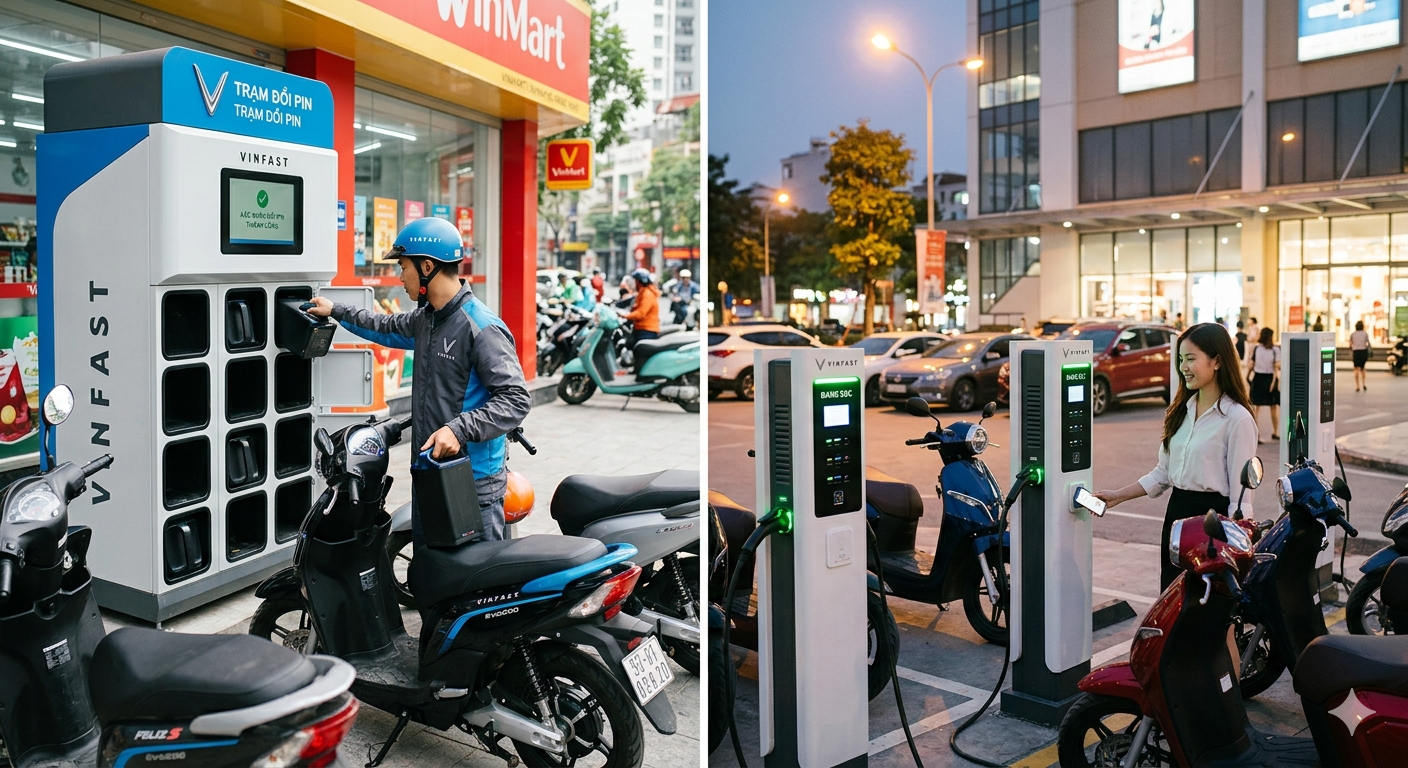
The challenge is expected to become more significant as the number of EVs on Vietnam’s roads grows. According to forecasts by the Ministry of Industry and Trade, the country could have between one million and three million electric vehicles in operation by 2030, generating hundreds of thousands to more than one million tonnes of batteries requiring treatment after their useful lives.
Dinh Trong Khang, deputy director of the Environment Specialised Institute under the Institute of Transport Science and Technology, said Vietnam therefore needs to establish the necessary legal framework and technical standards for battery recycling at an early stage.
“As soon as manufacturers put EVs on the market, some vehicles will inevitably experience battery failures or other problems requiring batteries to be discarded, posing significant environmental risks,” Khang said.
He said properly managed EV batteries could also become a resource for renewable energy storage and help reduce the cost of producing new batteries. “With the EV market expanding rapidly, Vietnam needs to anticipate this trend to protect the environment in the long term and contribute to the development of a circular economy.”
At the same time, battery degradation does not necessarily mean that an EV battery immediately becomes waste. Austrian battery diagnostics company Aviloo, which provides independent battery health analysis and certification, found that many EV models lost less than 5 per cent of their driving range after 150,000 km. Its findings were based on more than 500,000 independent tests across North America, South America, Europe, Australia, and Asia.
According to Geotab’s “How long do electric car batteries last? The updated guide to real-world EV battery health,” an analysis of more than 22,700 electric vehicles across 21 models found that average battery capacity degradation was 2.3 per cent a year. At this rate, an EV could retain around 81.6 per cent of its original battery capacity after eight years.
Assoc. Prof. Dr Nguyen Thuong Lang, senior lecturer at the National Economics University’s Institute for International Trade and Economics, said the environmental impact of EV batteries should be assessed alongside their potential benefits, with manufacturers’ responsibilities considered as part of a broader approach to products that could generate environmental waste.
“Technical solutions, clear environmental standards, and a comprehensive approach are needed to manage this issue effectively while balancing development with environmental protection,” Lang said.
In response, the drafting agency has proposed allowing businesses that fail to meet the 8 per cent recycling rate in 2029 to carry the shortfall over to subsequent years, for a maximum of five years.
Businesses would also be allowed to export used batteries to third countries for recycling, before being required to fully meet their recycling obligations from 2033.
The American Chamber of Commerce in Vietnam has also proposed policies to encourage the reuse of EV batteries as energy-storage systems after they are no longer suitable for vehicles, helping extend their useful lives and reduce waste.
The drafting agency said special cases would be studied and addressed in the decree guiding implementation of the law.
The draft law amending and supplementing several provisions of the Law on Environmental Protection was reviewed by the National Assembly Standing Committee last week and is expected to be submitted to the National Assembly at its second session next month.




What the stars mean:
★ Poor ★ ★ Promising ★★★ Good ★★★★ Very good ★★★★★ Exceptional
 Tag:
Tag:
Related Contents




Latest News


More News
- GreenYellow and Vina Paper partner on rooftop solar project (October 05, 2026 | 09:00)
- Consultation workshop refines Vietnam's clean hydrogen strategy (October 04, 2026 | 08:00)
- JBIC considers new financing options for Vietnam’s energy projects (October 03, 2026 | 08:00)
- Vestas to supply 16 turbines for two new Vietnam wind farms (October 01, 2026 | 07:00)
- Inter-sectoral cooperation on Montreal protocol (September 30, 2026 | 17:20)
- Bankability remains hurdle for Vietnam's JETP projects (September 29, 2026 | 12:08)
- Binh Minh Plastics extends clean water project to border communities (September 29, 2026 | 10:57)
- Coca-Cola Vietnam expands packaging collection programme (September 25, 2026 | 08:15)
- Pacifico Energy secures sea survey licence for offshore wind project in Lam Dong (September 24, 2026 | 18:02)
- Vietnam secures $221 million in UN development programmes for 2027-2031 (September 23, 2026 | 17:39)



Latest News






 Mobile Version