
Five targets made for environmental protection law

 |
Amending the Law on Environmental Protection clarified five targets |
The Ministry of Agriculture and Environment (MAE) is amending and supplementing several articles of the 2020 Law on Environmental Protection, after more than four years.
The most important strategy is on substantive administrative procedure reform and encouraging decentralisation and delegation of power to localities.
Administrative procedures are expected to be simplified, such as environmental criteria in investment project classification, environmental impact assessment procedures, and environmental permit issuance, to minimise compliance costs for businesses. However, the easing of procedures will be accompanied by a strict post-inspection and monitoring mechanism and a clear delineation of responsibilities at each level and in each sector, encompassing three core elements: tools, personnel, and processes.
The second strategy is to innovate thinking about waste, shifting from "waste treatment" to viewing waste as a "resource," creating a legal framework for the development of the environmental industry and circular economy.
The new version aims to be a pioneer in digital transformation, building a synchronised, public, and transparent environmental data ecosystem; serving management agencies, citizens, and business.
The fourth strategy is to shift from "passive remediation" to "proactive prevention", enhancing forecasting and early warning capabilities, and strictly controlling emission sources at their origin.
The fifth strategy is to operate economic tools effectively. The new version will help to perfect market mechanisms, especially the carbon market, transforming environmental protection and climate change adaptation into economic drivers.
“The draft law enhances the effectiveness of the policies of the 2020 Environmental Protection Law, such as applying environmental criteria in classifying investment projects to flexibly manage them according to environmental risk; managing waste in a way that enhances recycling, promoting a green economy and circular economy; and protecting environmental components via plans for managing surface water and air quality,” Deputy Minister of Agriculture and Environment Le Cong Thanh said.
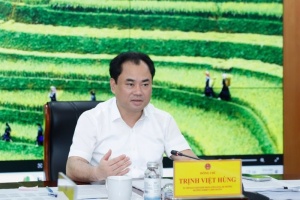 | Minister pushes for faster drafting of three key environmental laws Minister of Agriculture and Environment Trinh Viet Hung has requested an acceleration of the drafting process for three important laws, while emphasising quality, feasibility, and a strong shift from pre-approval to post-approval. |
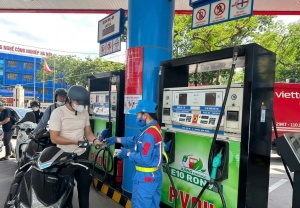 | National Assembly approves zero tax on petrol, oil, aviation fuel The National Assembly has unanimously approved sweeping tax cuts on petrol, oil and aviation fuel, reducing key rates to zero through June 30 in a bid to cushion domestic markets against volatile global energy prices. |
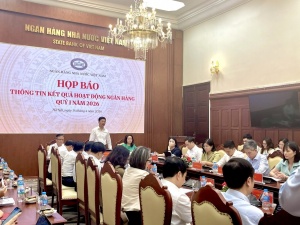 | Banks cut rates as credit growth gains pace At a briefing in Hanoi on April 14, the State Bank of Vietnam's (SBV) executive representative announced the results of banking operations in Q1, with coordinated rate cuts, accelerating credit growth, and flexible policies supporting macroeconomic stability and growth. |
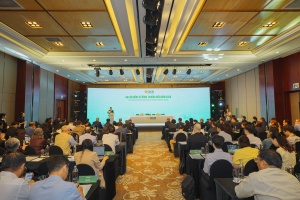 | OCB targets green credit at 10 per cent of loan portfolio Orient Commercial Joint Stock Bank (OCB) aims to maintain green credit at 10 per cent of its total loan book and rank among the top five Vietnamese joint-stock commercial banks based on sustainable development metrics by 2030. |
What the stars mean:
★ Poor ★ ★ Promising ★★★ Good ★★★★ Very good ★★★★★ Exceptional
 Tag:
Tag:Related Contents


Latest News


More News
- JBIC considers new financing options for Vietnam’s energy projects (October 03, 2026 | 08:00)
- Vestas to supply 16 turbines for two new Vietnam wind farms (October 01, 2026 | 07:00)
- Inter-sectoral cooperation on Montreal protocol (September 30, 2026 | 17:20)
- EV battery recycling rate proposed at 8 per cent from 2029 (September 29, 2026 | 16:00)
- Bankability remains hurdle for Vietnam's JETP projects (September 29, 2026 | 12:08)
- Binh Minh Plastics extends clean water project to border communities (September 29, 2026 | 10:57)
- Coca-Cola Vietnam expands packaging collection programme (September 25, 2026 | 08:15)
- Pacifico Energy secures sea survey licence for offshore wind project in Lam Dong (September 24, 2026 | 18:02)
- Vietnam secures $221 million in UN development programmes for 2027-2031 (September 23, 2026 | 17:39)
- Carlsberg Vietnam shows how resource efficiency can shape green industrial growth (September 18, 2026 | 09:03)


Latest News





 Mobile Version