

Easier access to sustainable finance proposed for green transition

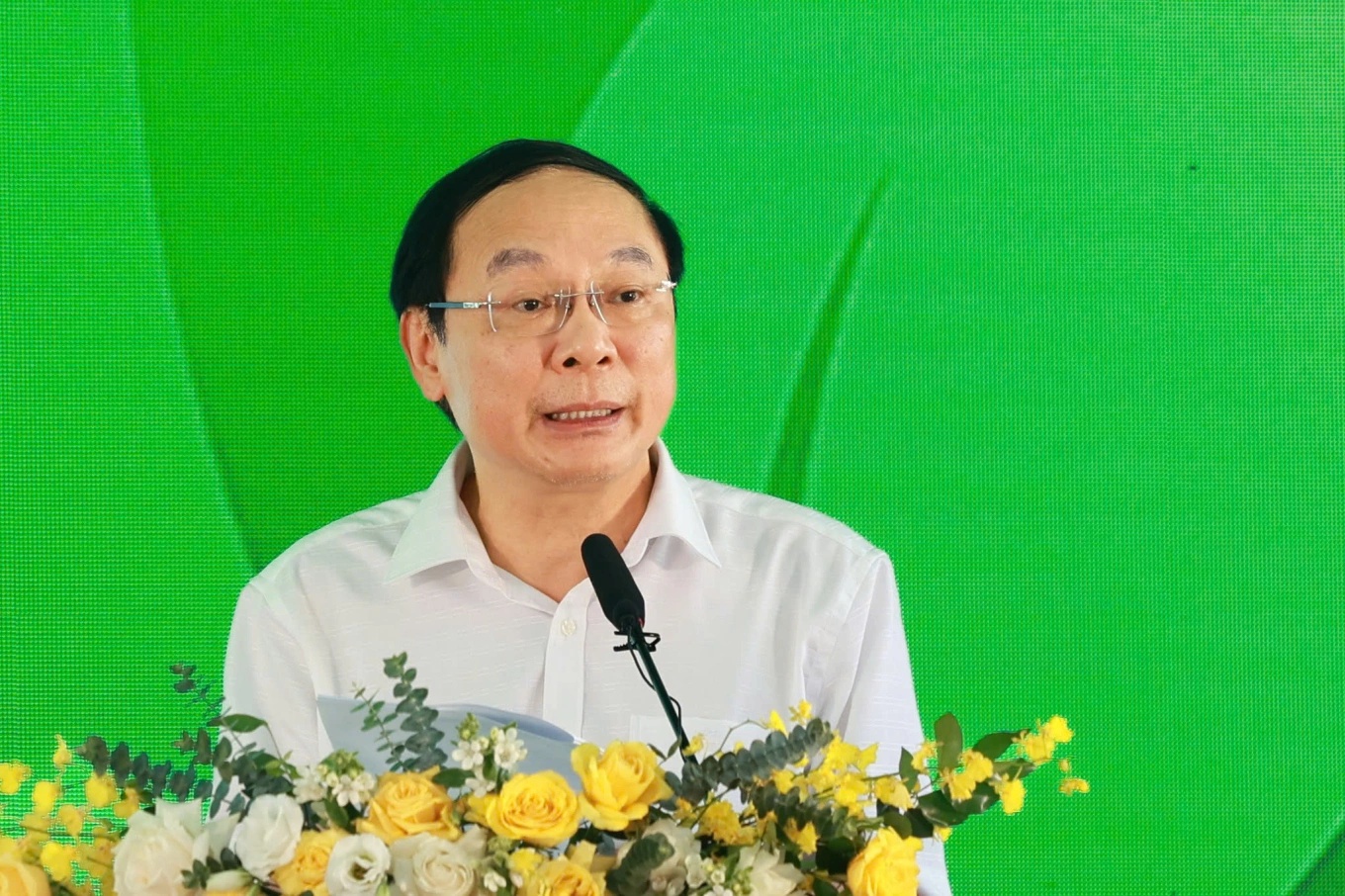 |
| Deputy Minister of Agriculture and Environment Le Cong Thanh |
Deputy Minister of Agriculture and Environment Le Cong Thanh made the remarks at Green Transition Day 2026, organised by Hanoi People's Committee on May 17. He said successful green transition requires three key pillars: green capital flows, incentive mechanisms, and clear green criteria.
According to Thanh, the Ministry of Agriculture and Environment (MAE) will continue refining environmental standards, green project criteria, and circular economy requirements, while promoting transparency in green finance, greening production and consumption, and preventing 'greenwashing' – the practice of making misleading claims about environmental benefits without meaningful action.
“This is aimed at enabling genuinely responsible and innovative businesses to gain better access to sustainable financial resources,” he said.
The deputy minister stressed that green transition should no longer be viewed as an optional pathway but as a mandatory requirement for development, enabling enterprises to integrate more deeply into global value chains and strengthen national competitiveness.
Thanh noted that policymakers have identified the need for a new growth model driven by science, technology, innovation, digital transformation, and green transition, alongside the development of the digital, green, and circular economy, as well as energy transition.
“To build a new growth model, Vietnam must accelerate green transition,” Thanh said, adding that green transition is not a fixed destination but an ongoing process of innovation and transformation. He urged industries, localities, and businesses to establish clear roadmaps and take concrete action rather than remain on the sidelines.
At the event, Nguyen Thi Lam Giang, director of the Agency for Innovation, Green Transition and Industry Promotion under Ministry of Industry and Trade said Prime Ministerial Directive No.09 issued in March introduced requirements to strengthen energy efficiency, accelerate energy transition, and promote electric mobility.
“Energy transition will help reduce dependence on fossil fuels, cut emissions, and create growth opportunities for emerging industries such as wind power, solar energy, biomass, and green hydrogen,” Giang said.
“Meanwhile, the development of green transport will accelerate the shift from fossil fuel-powered vehicles to electric mobility, opening opportunities for battery production, charging infrastructure, and green transport systems,” she added.
Vietnam is targeting double-digit economic growth in the coming years, aiming to become a high-income country by 2045 while pursuing its net-zero emissions commitment by the same year.
According to the MAE, green credit accounted for nearly 4.2 per cent of total outstanding loans in the economy last year, covering sectors such as renewable energy, agriculture, transport, and waste treatment. Green lending expanded by 9.5 per cent and 14.6 per cent in 2024 and 2025, respectively.
What the stars mean:
★ Poor ★ ★ Promising ★★★ Good ★★★★ Very good ★★★★★ Exceptional
 Tag:
Tag:
Related Contents




Latest News



More News
- JBIC considers new financing options for Vietnam’s energy projects (October 03, 2026 | 08:00)
- Vestas to supply 16 turbines for two new Vietnam wind farms (October 01, 2026 | 07:00)
- Inter-sectoral cooperation on Montreal protocol (September 30, 2026 | 17:20)
- EV battery recycling rate proposed at 8 per cent from 2029 (September 29, 2026 | 16:00)
- Bankability remains hurdle for Vietnam's JETP projects (September 29, 2026 | 12:08)
- Binh Minh Plastics extends clean water project to border communities (September 29, 2026 | 10:57)
- Coca-Cola Vietnam expands packaging collection programme (September 25, 2026 | 08:15)
- Pacifico Energy secures sea survey licence for offshore wind project in Lam Dong (September 24, 2026 | 18:02)
- Vietnam secures $221 million in UN development programmes for 2027-2031 (September 23, 2026 | 17:39)
- Carlsberg Vietnam shows how resource efficiency can shape green industrial growth (September 18, 2026 | 09:03)


Latest News





 Mobile Version