

Banks bolster risk buffers to safeguard asset quality amid credit expansion

Several banks failed to meet their profit targets last year after stepping up loan-loss provisioning. This, however, does not signal a weakening of core business operations; it reflects a strategic move to ensure sustainable development over the longer term.
 |
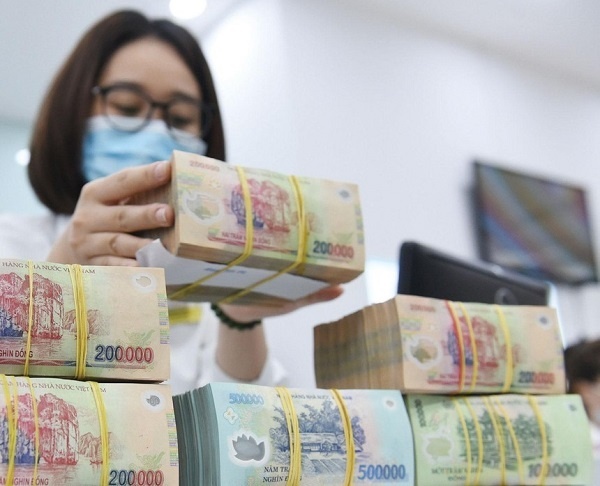
| Banks ramping up loan loss provision, gearing towards sustainable development over the long term. |
At southern lender Sacombank, consolidated pre-tax profit in 2025 approximated $305 million, equivalent to a mere 52 per cent of its annual target. The primary reason was the bank’s proactive provisioning of around $452 million for credit risks.
The sharp rise in provisioning expenses underscores Sacombank’s prudent management approach, aimed at strengthening its defensive capacity and maintaining flexibility in resolving legacy assets amid rising market risks.
Despite the impact, its core business performance remained stable, with pre-provision profit reaching about $760 million, up 29 per cent on-year.
Similarly, Eximbank increased its loan-loss provisions to approximately $61 million, up 57.5 per cent on-year.
As a result, the bank’s pre-tax profit stood at around $60.5 million, or 29 per cent of its annual target.
Eximbank’s management stated that the decline was anticipated, aimed at creating room to improve asset quality in subsequent periods.
Although profits were affected by higher provisioning and investment costs, Eximbank’s core operations maintained stable momentum.
Its consolidated financial statements for the fourth quarter of 2025 showed net interest income rising 11.4 per cent on-year to approximately $67.6 million.
For the full year, net interest income totalled about $239.2 million, marking a slight increase from the previous year.
At Asia Commercial Bank (ACB), CEO Tu Tien Phat said the bank set aside approximately $132 million in provisions in 2025, more than double the level recorded in 2024.
Fully recognising provisions under new regulations, such as Decree 86, rather than deferring them to future years, demonstrates ACB’s proactive move to raise safety standards instead of optimising short-term profits.
“Increasing the provisioning buffer is not merely a defensive move; it also creates flexibility for banks to accelerate when the economic cycle turns more favourable,” Phat said.
Despite higher provisioning expenses, ACB’s non-performing loan (NPL) ratio declined to 0.97 per cent at the end of 2025, the lowest level since 2023. Meanwhile, its loan-loss reserve (LLR) ratio surged from 78 per cent to 114 per cent.
ACB’s leadership acknowledged that aggressive provisioning would weigh on short-term profitability but described it as a necessary step.
“The strong increase in provisioning in 2025 is aimed at reinforcing the risk buffer. Once the buffer is sufficiently thick, the bank will have room to support profitability in 2026 if debt recovery efforts are implemented effectively,” said the bank's CEO.
Techcombank, for its part, maintained an LLR ratio above 100 per cent for the ninth consecutive quarter, rising to 127.9 per cent at the end of 2025, thereby creating a solid financial cushion against market volatility.
ABBank also reported notable improvements in asset quality. Total bad debts as of the end of 2025 declined by 73 per cent compared with the beginning of the year, reducing its NPL ratio from 3.74 per cent to just 0.88 per cent.
The bank allocated approximately $80 million for risk provisions in 2025, up 46 per cent on-year.
Analysts view the sector-wide strengthening of internal buffers in 2025 as a proactive defensive strategy. With thicker provisioning cushions and cleaner balance sheets, banks are expected to gain significant advantages in funding costs and profitability in 2026 and beyond, provided debt recovery efforts prove effective.
Expert Chau Dinh Linh from Ho Chi Minh City University of Banking noted that asset quality cannot be overlooked, especially as credit growth reached 20 per cent last year. As lending expands, dubious debts (group 3-5 NPLs) typically trend upward. However, major banks are applying robust risk management practices.
“If banks conduct thorough appraisal processes from the outset, resolving bad debts later will be far less burdensome. The overall trend in the system is to move towards stricter standards such as Basel III and Circular 14 to strengthen capital buffers,” Linh said.
Experts at Yuanta Vietnam Securities Company also cautioned about potential risks as banks accelerate credit growth in high-risk sectors such as real estate and construction to meet profit targets. Without maintaining sufficiently high provisioning ratios, the system’s asset quality could come under pressure after 2026.
 | Banks step up debt recovery to support earnings Banks are accelerating debt recovery and collateral liquidation efforts, helping stabilise non-performing loans and support profit growth amid narrowing net interest margins and improving credit conditions. |
 | Banks set for selective hiring in 2026 Vietnam’s banking sector is entering 2026 with a more targeted approach to hiring, reflecting improving business conditions and evolving operational demands. Recruitment plans point to steady expansion rather than broad-based workforce growth. |
 | Banks target stronger profits, credit growth in 2026 Banks are setting ambitious 2026 targets, aiming for strong profit growth and faster credit expansion while preparing for stricter capital requirements. |
What the stars mean:
★ Poor ★ ★ Promising ★★★ Good ★★★★ Very good ★★★★★ Exceptional
 Tag:
Tag:
Related Contents










Latest News






More News
- From loans to women’s economic empowerment (October 06, 2026 | 17:58)
- VIB named Outstanding Retail Bank 2026, targets transaction banking (October 06, 2026 | 10:52)
- FTSE upgrade paves way for stronger stock market development (October 05, 2026 | 18:44)
- coLoan to empower women through inclusive green finance (October 05, 2026 | 18:42)
- Techcombank CEO: AI no longer a tool but a new operating foundation (October 05, 2026 | 18:11)
- Banks sustain profit growth as funding costs squeeze margins (October 02, 2026 | 22:22)
- Nam A Bank delivers strong breakthrough in 2026 (October 02, 2026 | 19:00)
- Policy credit builds sustainable livelihoods from the grassroots (September 29, 2026 | 07:48)
- VIB deploys Front Arena treasury and foreign exchange trading system on AWS (September 28, 2026 | 16:46)
- Nam A Bank receives $60 million loan from FMO (September 28, 2026 | 12:37)


Latest News







 Mobile Version