

How Hong Kong can bridge critical financial centre gaps

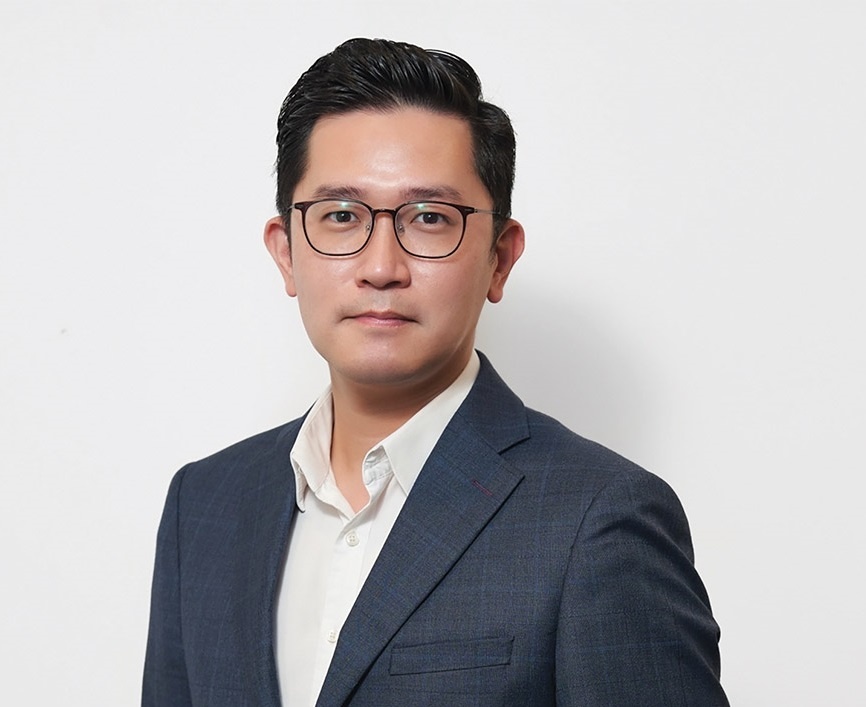 |
| Michael Lin, vice chairman, Southern Vietnam Hong Kong Business Association Vietnam |
Ho Chi Minh City will serve as the main hub, focusing on capital markets and listings to bridge international investors with Vietnamese businesses, particularly for infrastructure, small- and medium-sized enterprises, and green projects. Meanwhile, Danang city will function as a laboratory for fintech, wealth management, and green finance innovations.
Despite the ambitious vision, Vietnam faces structural constraints that could impede its development. The country’s financial system remains heavily bank-dominated, with corporate financing relying disproportionately on bank loans rather than capital markets.
This creates a fundamental mismatch, as successful IFCs require deep non-bank capital, institutional investors like pension funds and insurers, and sophisticated risk-sharing instruments, all of which Vietnam is still building.
The shallow capital markets present particular challenges for long-tenor funding of infrastructure and green projects, precisely the areas where Vietnam wants its IFC to excel. Additionally, many infrastructure and transition projects face unclear risk allocation between state and private investors, along with inconsistent pricing mechanisms. This uncertainty around project bankability makes it difficult to attract the large-scale international capital that Vietnam needs.
Beyond financial infrastructure, Vietnam must address fundamental ecosystem gaps in legal frameworks, regulatory capacity, talent pools, and market liquidity, challenges that typically take established financial centres decades to resolve.
Hong Kong’s established position as a global financial hub positions it uniquely to help Vietnam overcome critical challenges through targeted collaboration rather than competition.
Firstly, Hong Kong can serve as a vital gateway for channelling international capital into Vietnam’s real economy. Through cross-listing partnerships and bond issuance mechanisms, Vietnamese companies could access Hong Kong’s deep pools of institutional capital while maintaining their primary operations at home. This would directly address Vietnam’s shallow capital markets by creating a bridge to one of the world’s most liquid financial centres.
Hong Kong’s experience in structuring complex infrastructure financing and green bonds could be particularly valuable for Vietnam’s priority projects, for example, metro lines, high speed rail, and renewable energy.
Secondly, Vietnam has already begun aligning its IFC with international best practices, including allowing the use of foreign law and arbitration in transactions, a direct parallel to Hong Kong’s investor-friendly legal environment.
Hong Kong can accelerate this process by sharing its proven regulatory templates, disclosure standards, and enforcement mechanisms. The city’s common law tradition and internationally recognised arbitration systems could provide the legal certainty that international investors require when deploying capital into emerging markets.
Meanwhile, one of Vietnam’s core challenges is the absence of large institutional investors. Hong Kong hosts numerous pension funds, insurers, sovereign wealth funds, and asset managers that specialise in emerging market investments.
By facilitating connections between these institutions and Vietnamese projects through structured investment vehicles, Hong Kong can help solve Vietnam’s institutional capital gap. Joint investment funds focused on ASEAN infrastructure or regional mid-cap growth companies could provide the patient, long-term capital that Vietnam needs.
In addition, Vietnam recognises the critical importance of developing its financial human capital. Hong Kong’s financial services sector employs thousands of professionals with expertise in investment banking, asset management, risk management, and regulatory compliance.
Structured talent exchange programmes, secondments, and joint training initiatives could rapidly upskill Vietnam’s financial workforce. Hong Kong’s universities and professional bodies could also establish satellite programmes in Ho Chi Minh City and Danang to build local capacity.
For Vietnam’s fintech sandbox ambitions in Danang, Hong Kong’s experience with regulatory technology and digital finance innovation provides a valuable blueprint. It has successfully balanced financial innovation with regulatory oversight – exactly the approach Vietnam seeks. Joint fintech accelerators, shared regulatory sandbox frameworks, and technology partnerships could help Vietnam develop its fintech sector while managing risks.
Meanwhile, to address Vietnam’s challenges with project bankability and risk allocation, Hong Kong’s investment banks and advisory firms can provide critical expertise in structuring public-private partnerships, creating risk-sharing mechanisms, and establishing transparent pricing frameworks. This technical assistance could make Vietnamese infrastructure and green projects more attractive to international capital.
Vietnam’s IFC development presents an opportunity for Hong Kong to expand regional financial services and create new investment channels. By serving as Vietnam’s partner in building its financial centre, Hong Kong can strengthen its own role as a premier hub for accessing high-growth Southeast Asian markets. Ho Chi Minh City’s leaders have expressed eagerness to strengthen cooperation and learn from Hong Kong’s success, creating a foundation for meaningful collaboration that benefits both sides.
This partnership model, where established and emerging financial centres work together rather than compete, could become a template for regional financial development, ultimately strengthening the entire Asian financial ecosystem.
What the stars mean:
★ Poor ★ ★ Promising ★★★ Good ★★★★ Very good ★★★★★ Exceptional
 Tag:
Tag:Related Contents


Latest News


More News
- coLoan to empower women through inclusive green finance (October 05, 2026 | 18:42)
- Techcombank CEO: AI no longer a tool but a new operating foundation (October 05, 2026 | 18:11)
- Banks sustain profit growth as funding costs squeeze margins (October 02, 2026 | 22:22)
- Nam A Bank delivers strong breakthrough in 2026 (October 02, 2026 | 19:00)
- Policy credit builds sustainable livelihoods from the grassroots (September 29, 2026 | 07:48)
- VIB deploys Front Arena treasury and foreign exchange trading system on AWS (September 28, 2026 | 16:46)
- Nam A Bank receives $60 million loan from FMO (September 28, 2026 | 12:37)
- Vietnam’s finance sector moves to build an AI-driven digital ecosystem (September 25, 2026 | 10:58)
- Vietnam pushes digital finance into tangible gains (September 25, 2026 | 08:17)
- Citi and HDBank sign MoU to expand banking cooperation (September 24, 2026 | 09:50)






 Mobile Version