
Banks trim rates as headwinds complicate monetary policy

Deposit rates are beginning to cool as many banks trim rates by 2-50 basis points across tenors.
The ‘Big 4’ group – encompassing major state lenders Vietcombank, VietinBank, Agribank and BIDV – has mainly cut rates on 24-month deposits.
The ‘Big 4’ account for roughly 50 per cent of total deposits in the banking system. Their coordinated move to lower long-term (24-month) rates is seen as a key signal that could help steer broader interest rate trends.
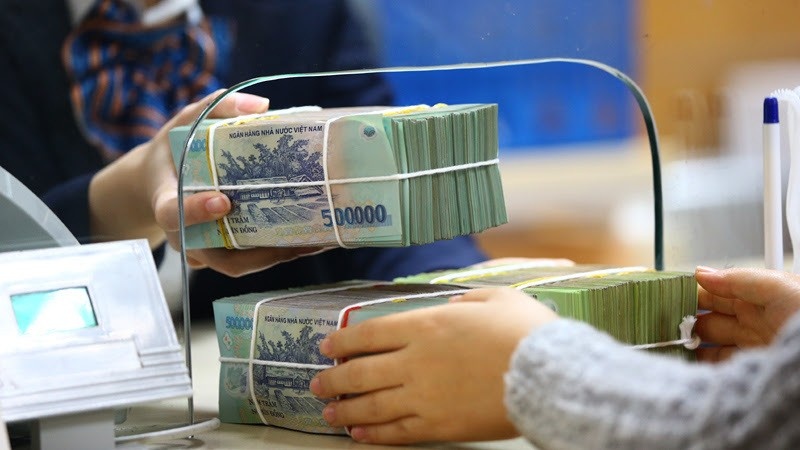 |
| Deposit rates are edging lower, but mounting pressures are narrowing room for further cuts |
Lai Tien Quan, deputy CEO of BIDV, in a recent talk with local media said that in line with directives from the State Bank of Vietnam Governor at a meeting on April 9, BIDV promptly cut deposit rates by 0.5 percentage points.
At the same time, it reduced lending rates by 0.5 percentage points for medium- and long-term loans to help businesses and households lower capital costs, boost production and support economic growth.
As a key state-owned commercial bank, Agribank is committed to stabilising both deposit and lending rates, especially lending rates, said Deputy CEO Phung Thi Binh.
“The aim is to support businesses and individuals in expanding production and business activities, particularly as Vietnam targets double-digit GDP growth in 2026-2030,” she said.
Following the central bank’s guidance, Agribank has cut its 24-month deposit rate by 0.5 percentage points to 6 per cent, per year, down from 6.5 per cent in March.
“The 24-month deposit rate serves as the benchmark for determining our medium- and long-term lending rates,” said Binh, noting that such lending rates were typically adjusted every three months based on the 24-month benchmark plus a set margin.
Addressing views that cutting long-term rates may have limited impact given that most deposits are short-term (under 12 months), Binh said that in practice, depositors still tend to choose longer tenors for higher returns. As such, a 0.5 percentage-point cut in 24-month rates remains meaningful. Meanwhile, short-term deposit rates are already capped by the central bank, leaving most policy room concentrated in longer maturities.
According to Chau Dinh Linh from the Ho Chi Minh City University of Banking, maintaining low interest rates was previously more feasible when the US Federal Reserve paused rate hikes, creating policy space domestically.
“Now the situation has reversed on the global stage,” he said. “US inflation is picking up again, energy prices are under pressure from geopolitical conflicts, and risks such as a potential closure of the Strait of Hormuz are making variables increasingly unpredictable.”
The banking system is also facing simultaneous pressures, including monetary policy shifts in major economies, domestic inflation risks, exchange rate pressures, rising credit demand, and increasing non-performing loans – all of which turn policy management into a multi-variable challenge.
“Interest rate movements going forward will depend heavily on the consumer price index, but it will be difficult to see further declines given the mounting pressures,” Linh said.
Pham Chi Quang, head of Monetary Policy Department at the State Bank of Vietnam, said the central bank was deploying policy tools in a coordinated manner. Credit growth is being guided towards a target of around 15 per cent this year, while exchange rates will be managed with a focus on ensuring stability.
“A crucial factor underpinning credit, interest rate and exchange rate management is that the State Bank continues to ensure stable liquidity quietly across the banking system,” Quang said. “Maintaining stability and absolute safety in the banking system’s operations – especially robust liquidity – is the key priority.”
 | Deposit rate hikes expected to continue as banks compete for liquidity Deposit rates are expected to trend higher in early 2026 as banks compete for liquidity, raising funding costs and creating upward pressure on lending rates, including mortgages. |
 | Banks ramp up plans to establish VIFC subsidiaries Banks are accelerating plans to set up subsidiary banks at the Vietnam International Financial Centre to expand the ecosystem and enhance international competitiveness. |
 | Higher 2026 growth target puts pressure on credit framework Vietnam’s credit growth framework is set to face mounting pressure as policymakers pursue a significantly higher economic growth target in 2026. |
What the stars mean:
★ Poor ★ ★ Promising ★★★ Good ★★★★ Very good ★★★★★ Exceptional
 Tag:
Tag:
Related Contents






Latest News





More News
- From loans to women’s economic empowerment (October 06, 2026 | 17:58)
- VIB named Outstanding Retail Bank 2026, targets transaction banking (October 06, 2026 | 10:52)
- FTSE upgrade paves way for stronger stock market development (October 05, 2026 | 18:44)
- coLoan to empower women through inclusive green finance (October 05, 2026 | 18:42)
- Techcombank CEO: AI no longer a tool but a new operating foundation (October 05, 2026 | 18:11)
- Banks sustain profit growth as funding costs squeeze margins (October 02, 2026 | 22:22)
- Nam A Bank delivers strong breakthrough in 2026 (October 02, 2026 | 19:00)
- Policy credit builds sustainable livelihoods from the grassroots (September 29, 2026 | 07:48)
- VIB deploys Front Arena treasury and foreign exchange trading system on AWS (September 28, 2026 | 16:46)
- Nam A Bank receives $60 million loan from FMO (September 28, 2026 | 12:37)


Latest News






 Mobile Version