
Vietnam urged to upgrade FDI quality as global production chains restructure

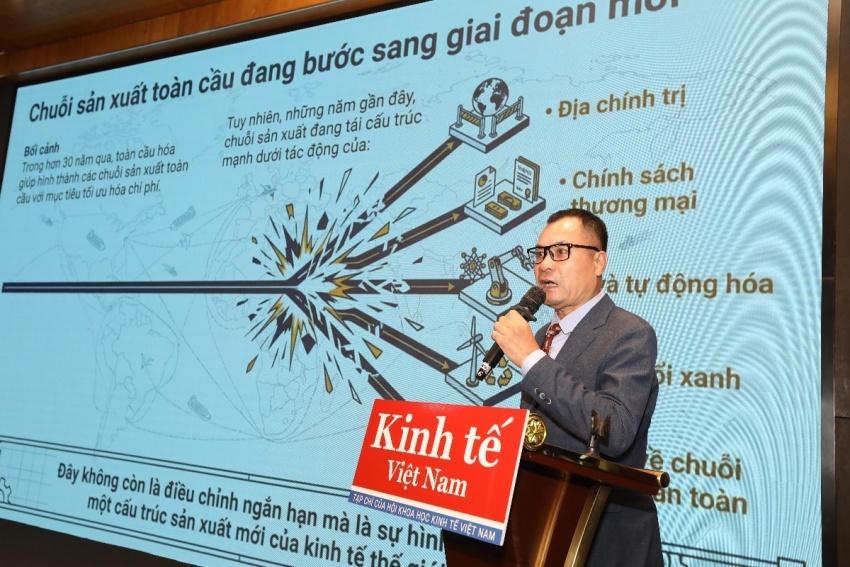 |
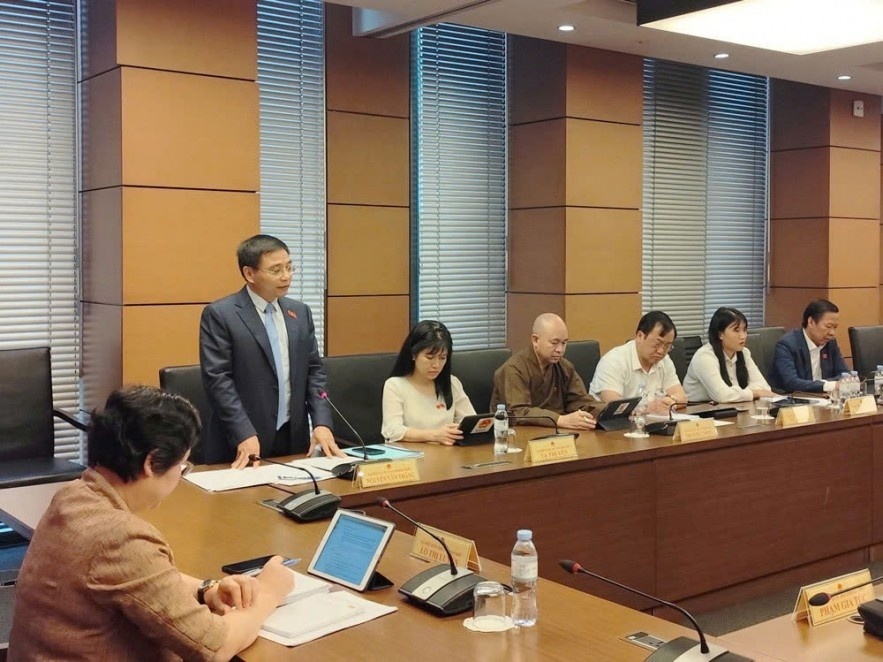
| Nguyen Trong Thoan, representing the research team of VnEconomy |
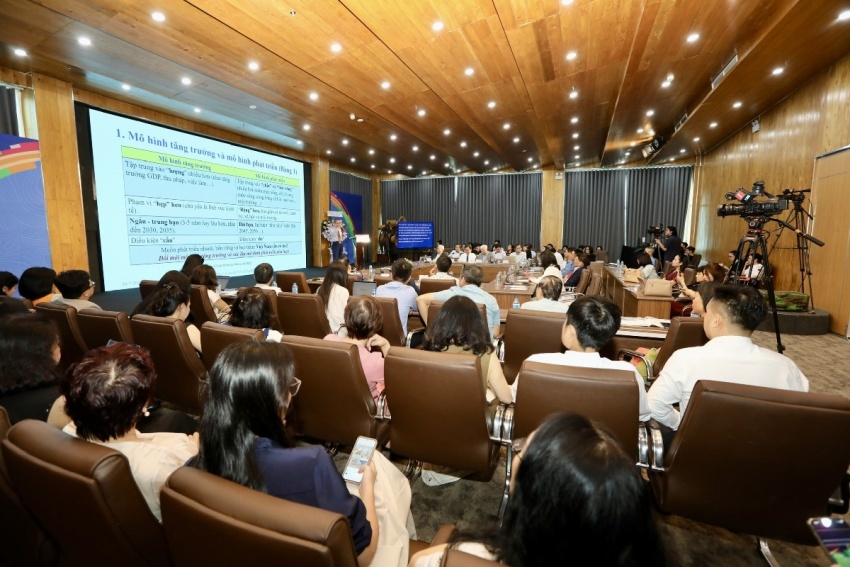
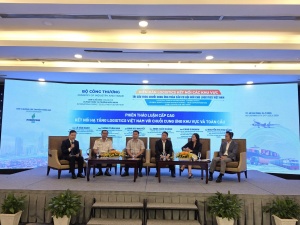
The assessment was made by Nguyen Trong Thoan, representing the research team of Vietnam Economic Times (VnEconomy), at the Summer Economic Roundtable 2026, held on July 30.
Recent developments in the global economy indicate that international production networks are entering a new phase of structural transformation. The COVID-19 pandemic, geopolitical tensions, rising trade protectionism, the green transition, and the rapid advancement of AI are fundamentally changing how multinational corporations organise manufacturing and investment. These are no longer temporary adjustments, but long-term shifts that are reshaping the architecture of global production.
At the same time, multinational companies are adopting new criteria when selecting investment destinations. While low labour costs and investment incentives were once the dominant considerations, companies now place greater emphasis on innovation capacity, workforce quality, digital infrastructure, energy security, and the stability of the investment environment.
"If the previous wave of globalisation was driven primarily by cost optimisation, multinational corporations are now redesigning their investment strategies based on an entirely different set of priorities," Thoan said.
According to VnEconomy's research, three major forces are driving the current restructuring of global production chains. First, trade and tariff policies. The US has expanded Section 301 tariffs on products including electric vehicles, semiconductors, and batteries, while introducing additional tariffs linked to labour standards. These measures have prompted multinational corporations to reassess their supply networks and reduce dependence on a single market through strategies such as China+1, friend-shoring, and near-shoring.
Second, the rapid advancement of AI and automation. The widespread adoption of industrial robots, AI, and big data is altering competitive advantages in manufacturing. Labour-intensive production is gradually giving way to production systems that depend on digital infrastructure and highly skilled workers.
Third, a stronger focus on supply chain resilience. Disruptions caused by the pandemic and geopolitical conflicts have encouraged companies to prioritise stability by distributing production across multiple countries to ensure business continuity.
Thoan noted that developed economies are intensifying industrial policies aimed at building strategic technology ecosystems. The US and the European Union have introduced large-scale support programmes, including the CHIPS and Science Act, the Inflation Reduction Act, the European Chips Act, and the Net-Zero Industry Act, to engage investment in semiconductors, electric vehicles, and clean energy.
Across Asia, countries including Japan, South Korea, and China are increasing investment in research and development while accelerating AI, robotics, and smart manufacturing.
More importantly, competition among countries has shifted. Rather than relying primarily on tax incentives or inexpensive labour, governments are increasingly competing by building comprehensive industrial ecosystems that combine efficient logistics, reliable energy supplies, research institutions, skilled human resources, and transparent legal frameworks.
Against this backdrop, the VnEconomy research team believes Vietnam remains an attractive investment destination thanks to its political stability and extensive network of free trade agreements.
However, while the FDI sector contributes more than 70 per cent of Vietnam's export turnover, the country faces a strategic turning point. Traditional advantages such as low labour costs and preferential investment policies are no longer sufficient to secure long-term competitiveness. The greater challenge lies not in attracting larger volumes of investment, but in improving its quality by drawing projects in research and development, chip design and manufacturing, AI, batteries, and other high-value industries.
"This transition could become one of the defining factors shaping Vietnam's future growth quality," Thoan said. "Over the long term, an economy's competitiveness will depend not only on the number of factories it attracts or the amount of investment it secures, but also on its ability to generate greater value within global supply chains."
The restructuring of global production networks also presents opportunities for Vietnam to strengthen its position in international manufacturing.
Supported by deep international integration, political stability, a growing domestic market, and an increasing focus on science, technology, and innovation, Vietnam is well-placed to deepen its participation in global production networks.
 |
To reposition Vietnam within global value chains, Thoan and the VnEconomy research team proposed four key policy priorities.
First, improve strategic foresight. Changes in geopolitics, trade policies, technological development, and the green transition influence not only investment flows but also industrial development, export structures, and each country's position in global value chains. Vietnam should strengthen its capacity to anticipate developments in trade and technology policies to support long-term planning.
Second, improve the quality of foreign direct investment. Investment attraction policies should prioritise projects that bring technology transfer, establish research and development centres, and build stronger linkages with domestic enterprises.
Third, strengthen domestic private enterprises. Private capital should be encouraged to invest in supporting industries, high technology, and research and development rather than focusing primarily on sectors offering rapid financial returns. This will enable Vietnamese companies to become direct suppliers to multinational corporations.
Fourth, develop a stronger industrial ecosystem. The research team called for accelerated investment in digital infrastructure, reliable and green energy supplies, high-quality workforce development, and improvements to the business environment to support higher-value industrial growth.
 | 58% of Chinese supply-chain executives plan supplier diversification in 2026, DP World finds DP World's Global Trade Observatory data shows 58% of Chinese supply-chain executives intend to increase suppliers and diversify sourcing in 2026, with AI deployment (50%) and digitalisation (44%) topping the growth agenda. |
 | Draft law targets global manufacturers for key industries The draft Law on Key Industries proposes new incentives, government procurement mechanisms and investor commitments on technology transfer to attract global manufacturers and strengthen domestic industrial capabilities and supply chain resilience. |
 | Global supply chain restructuring presents new opportunities for logistics sector Global supply chain restructuring presents new opportunities for Vietnam's logistics sector, but capitalising on this trend will require accelerated infrastructure development, digital transformation, green logistics, and stronger regional connectivity. |
What the stars mean:
★ Poor ★ ★ Promising ★★★ Good ★★★★ Very good ★★★★★ Exceptional
 Tag:
Tag:
Related Contents




Latest News




More News
- Work on digital technology building begins in Hanoi (October 16, 2026 | 17:46)
- Vietnam CFA showcase highlights $120m funding need for climate ventures (October 16, 2026 | 17:14)
- Long-delayed LNG power projects may be replaced in revised PDP VIII (October 14, 2026 | 11:59)
- Foreign investors seeking a synchronised manufacturing ecosystem (October 14, 2026 | 11:51)
- Localities report breakthrough results in FDI in first nine months (October 14, 2026 | 11:45)
- Why Asian FDI is flowing into northern Vietnam’s industrial parks (October 14, 2026 | 09:03)
- Hung Yen unveils adjusted master plan with three economic zones (October 13, 2026 | 11:30)
- Ho Chi Minh City climbs 17 places in Global Financial Centres Index (October 13, 2026 | 11:27)
- Quang Tri province to tighten delayed power projects (October 13, 2026 | 10:34)
- $600 million Ho Chi Minh City - Long Thanh expressway expansion under pressure (October 09, 2026 | 16:00)









 Mobile Version