
Future aviation needs to rethink engineering

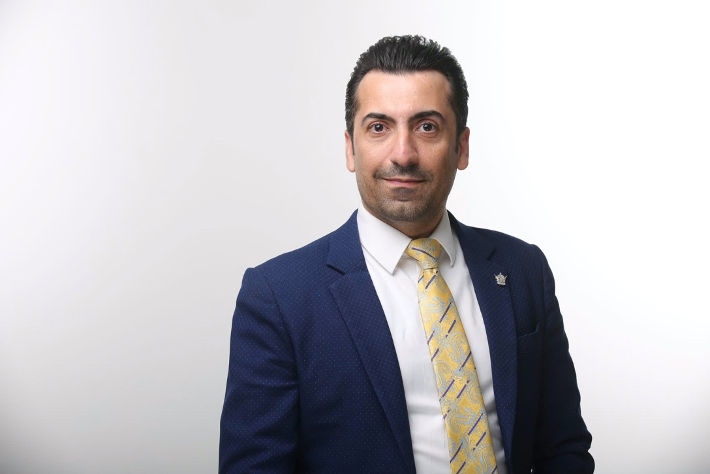 |
| Mohsen Bahmani |
Many inventors focus on improving existing technologies. Your work appears to take a different direction. What is your approach to innovation?
Most engineering innovation is incremental. We make motors more efficient, batteries lighter, or materials stronger. Those improvements are essential, but my approach has always started with a different question: What if the technology everyone accepts is no longer necessary?
That question has guided much of my work. Rather than beginning with existing solutions, I try to understand the underlying problem and ask whether there is an entirely different way to solve it.
For me, engineering is not about making products slightly better. It is about finding solutions that address meaningful challenges in society. Sometimes that requires improving established technologies. At other times, it requires reconsidering the assumptions that have shaped them for decades.
Your first internationally recognised invention was the Floating Shoes. How did that idea emerge?
The idea came after seeing the devastating consequences of tsunami disasters. I wondered whether ordinary people could have a simple device that might help them stay afloat during flooding or large-scale water emergencies.
That led to the development of the Floating Shoes, which were designed as a life-saving concept rather than a commercial novelty. The invention later received several awards at international invention exhibitions, but what mattered most to me was demonstrating that engineering could directly address real human problems.
Looking back, the Floating Shoes also established a philosophy that has continued throughout my career: innovation should have a practical purpose and create value beyond technological curiosity.
Your latest invention, the Bahmani Propulsion System, also challenges a long-standing engineering concept. What motivated you to rethink aircraft propulsion?
During my studies in mechanical engineering at the Karlsruhe Institute of Technology, I became increasingly interested in propulsion systems. Conventional aircraft, drones, and many emerging aerial vehicles all rely on exposed rotating propellers. Over time, I began asking whether that architecture itself could be reconsidered.
That question became the starting point for nearly 10 years of research involving mathematical modelling, structural mechanics, energy transfer, and systems engineering.
The result was the Bahmani Propulsion System, or BPS, which is protected by European Patent EP3565971B8. Instead of relying on exposed propellers, the system uses a coordinated internal propulsion architecture designed to generate thrust in a fundamentally different way.
The goal was not simply to build another propeller or fan, but to explore an alternative engineering framework for propulsion.
What practical role could this technology play as the aviation industry develops next-generation aircraft and urban air mobility?
Aviation is entering a period of significant change. Developers of drones, flying taxis, and other advanced air mobility platforms are looking for solutions that improve safety, reduce noise, simplify maintenance, and make aircraft more suitable for operation in urban environments.
These are some of the engineering challenges that BPS was designed to address. By replacing exposed propellers with a compact internal propulsion architecture, the system offers another option that designers may consider alongside existing technologies.
The European patent confirms that the invention met the requirements for novelty, inventive step, and industrial applicability. More importantly, we have also developed a working prototype to demonstrate the operating principles. That means the concept has progressed beyond theoretical analysis into physical implementation, although further development and testing will naturally be required before any commercial application.
Looking ahead, what do you hope your inventions will contribute to engineering and society?
Every invention is part of a much longer journey. I don't believe innovation is about replacing everything that came before. It is about expanding the range of possible solutions available to engineers.
Whether it was the Floating Shoes or the Bahmani Propulsion System, my objective has remained the same: to solve real problems by questioning assumptions that many people simply accept.
Engineering progresses through both discipline and imagination. If an invention encourages other researchers to think differently about propulsion, mobility, or safety, then I believe it has already made a meaningful contribution, regardless of how the technology ultimately evolves.
 | New research centre to drive technology development in Vietnam The Ministry of Science and Technology will cooperate in establishing the Vietnam Advanced Research and Production Centre (VAMRC), creating a space for businesses and universities to jointly research and develop new technological products. |
 | MST and World Bank strengthen research and innovation ties The Ministry of Science and Technology and the World Bank will enhance cooperation in research infrastructure and venture capital development. |
 | Vietnam and WEF to strengthen cooperation in AI and semiconductor technology Vietnam and the World Economic Forum (WEF) have agreed to strengthen cooperation in AI and semiconductor technology, following a meeting in Hanoi. |
What the stars mean:
★ Poor ★ ★ Promising ★★★ Good ★★★★ Very good ★★★★★ Exceptional
 Tag:
Tag:Related Contents





Latest News
More News
- Dentons LuatViet launches new Vietnamese language website (November 28, 2024 | 09:57)
- Extending foreign investment projects in Vietnam: unravelling obstacles (September 05, 2024 | 15:15)
- EPLegal joins forces with Dentons LuatViet in Vietnam (June 06, 2024 | 08:30)
- New PDP8 implementation plan brings investment opportunities (April 05, 2024 | 15:40)
- EU's Carbon Border Adjustment Mechanism and its impact on Vietnam's industry (February 29, 2024 | 10:24)
- Dentons LuatViet hires Ngo Anh Tuan as senior partner (February 22, 2024 | 15:47)
- New law on telecommunications brings new opportunities (January 30, 2024 | 11:08)
- Vietnam's amended Land Law 2023: some pivotal changes and their impacts (January 25, 2024 | 14:29)
- Getting Vietnam’s carbon market framework ready (December 05, 2023 | 18:09)
- Eva Szurminska Jaworska joins Dentons LuatViet (September 18, 2023 | 17:57)








 Mobile Version