
Economy needs 11.9 per cent growth in H2 to achieve 10 per cent GDP target for 2026

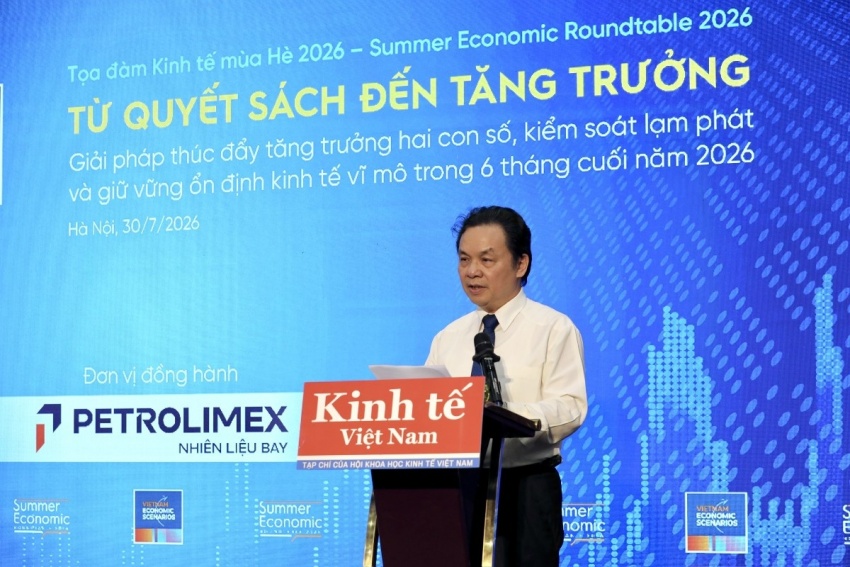 |
| Hoang Van Cuong, vice chairman of the Vietnam Economic Association |
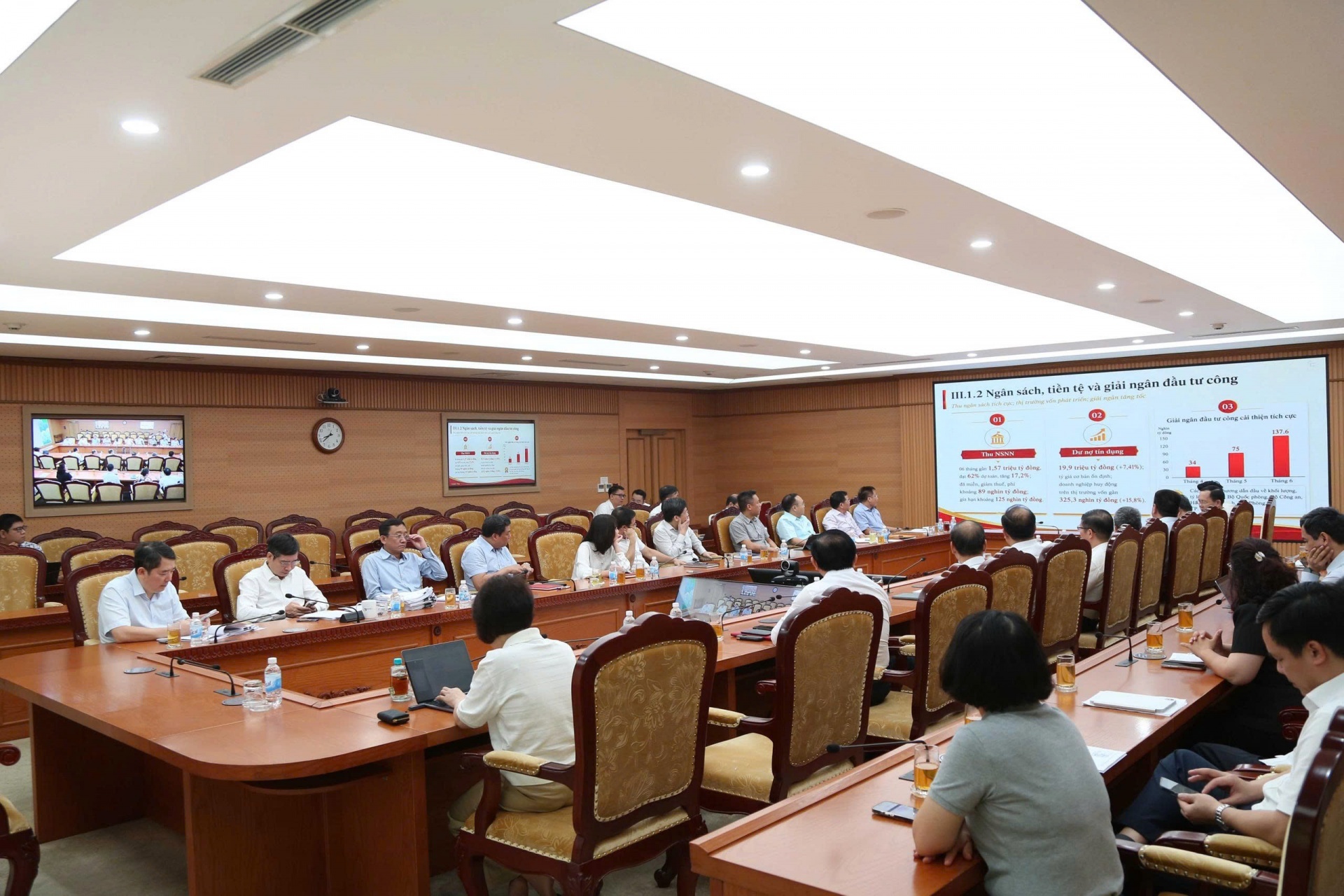
Speaking at the Summer Economic Roundtable 2026, "From Policy to Growth: Solutions for Achieving Double-Digit Growth, Controlling Inflation, and Maintaining Macroeconomic Stability in 2026," Hoang Van Cuong, vice chairman of the Vietnam Economic Association, said 2026 was a pivotal year. It marks both the first year of the country's 2026-2030 socioeconomic development plan and the first year Vietnam has set a 10 per cent growth target, laying the foundation for sustained double-digit growth in the years ahead.
"High economic growth is meaningful only when it is built on a foundation of macroeconomic stability, effective inflation control, balanced economic fundamentals, and higher productivity. The goal is not growth at any cost, but rapid yet sustainable growth, and high-quality growth," he said.
Citing economic data for the first six months of the year, Cuong noted that Vietnam's GDP expanded 8.18 per cent, the highest first-half growth rate in 15 years, supported by broad-based recovery across all three major sectors of the economy.
Manufacturing and processing industries continued to serve as the primary growth engine, while investment, consumption, and exports all recorded solid improvements. State budget revenue, foreign direct investment (FDI), and total social investment also posted strong gains, providing room for additional growth-supporting policies in the months ahead.
Cuong said, "These results reflected not only the recovery of traditional growth drivers, but also the initial effectiveness of institutional reforms aimed at removing investment bottlenecks, encouraging private sector development, advancing science and technology, fostering innovation, and accelerating digital transformation."
He added that these reforms are creating an important foundation for a new growth cycle driven by higher productivity and more efficient resource allocation.
Despite the encouraging performance, Cuong warned that challenges in the second half of the year remain significant. "To achieve the annual growth target of 10 per cent, the economy must expand by approximately 11.9 per cent during the final six months of 2026, while keeping inflation at around 4.5 per cent and preserving macroeconomic stability," he said.
He stressed that these three objectives must be pursued simultaneously. Prioritising growth alone could increase inflationary pressures and create macroeconomic imbalances, while overly cautious policymaking could cause Vietnam to miss opportunities at a time when global supply chains and international capital flows are undergoing restructuring.
Cuong also identified several structural bottlenecks that require urgent attention. These include continued dependence on the FDI sector for growth, uneven public investment disbursement, difficulties businesses face in accessing finance, implementation capacity that has yet to match policy ambitions, and the fact that science, technology, and innovation have not yet become genuine drivers of economic growth.
"The gap between policymaking and policy implementation is currently the country's greatest challenge in achieving its growth objectives," he said.
Against this backdrop, the Summer Economic Roundtable 2026 focused on solutions to accelerate institutional reform, improve coordination between fiscal and monetary policies, speed up public investment disbursement, strengthen the private sector, enhance the economy's resilience to external shocks, and, above all, improve policy implementation so that government decisions can be translated more quickly into tangible growth.
 | UOB sees resilience amid cost pressures and external strains According to a June 12 report by UOB (United Overseas Bank), recent data paint a mixed near-term picture, with higher energy costs dampening momentum. |
 | Vietnam's economy grew an estimated 8.4 per cent in second quarter Vietnam's economy is estimated to have expanded by just under 8.4 per cent on-year in the second quarter, according to the National Statistics Office. |
 | Businesses propose fresh growth drivers for second-half GDP expansion The local business community has proposed regulatory and financial reforms, including an FDI-linked sandbox and a small- and medium sized enterprise digital bank, to help accelerate GDP growth in the second half of 2026. |
 | ADB maintains Vietnam's growth outlook amid Southeast Asia downgrades The Asian Development Bank (ADB) has slightly lowered its growth forecast for developing Southeast Asia while maintaining its outlook for Vietnam, citing disruption to energy supplies from the Middle East conflict. |
What the stars mean:
★ Poor ★ ★ Promising ★★★ Good ★★★★ Very good ★★★★★ Exceptional
 Tag:
Tag:Related Contents




Latest News





More News
- KN Holdings honoured for ESG efforts in Vietnam (October 18, 2026 | 11:00)
- APEA 2026 Vietnam honours 65 outstanding leaders and enterprises (October 17, 2026 | 10:00)
- MEXC highlights AI-driven trading and broader market access at TOKEN2049 (October 17, 2026 | 09:00)
- EuroCham confidence index holds at 78.3 despite operational hurdles (October 16, 2026 | 17:27)
- Shrimp and rice firms face rising standards in export markets (October 16, 2026 | 09:00)
- SCG and Prime Group add value to the ecosystem (October 15, 2026 | 15:55)
- Project readiness key to unlocking green finance (October 15, 2026 | 12:35)
- Sovereign AI and human oversight key to secure digital government (October 15, 2026 | 12:32)
- MEXC Ventures partners with Corelia Academy: Bringing digital asset education closer to Vietnamese students (October 15, 2026 | 09:00)
- Global design expertise meets a more sophisticated Vietnam market (October 15, 2026 | 09:00)









 Mobile Version