
Draft law targets global manufacturers for key industries

The draft dossier for the law is currently being finalised by the Ministry of Industry and Trade (MoIT) under the government's direction and is expected to be submitted to the National Assembly at its upcoming session late this year.
According to Pham Van Quan, deputy director general of the Agency for Industry under the MoIT, one of the key innovations in the draft Law is the proposal of innovative policy mechanisms designed to entice investors, foster product development, and create markets for the growth of Vietnam's key industries.
At a press conference on July 20, Quan said the MoIT has been assigned by the government to take the lead in drafting the Law on Key Industries, with the objective of attracting the world's leading technology corporations while ensuring that local businesses can participate more deeply in global supply chains.
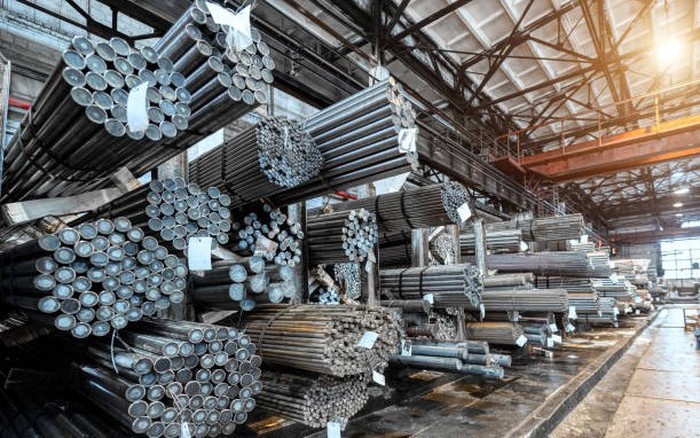 |
Quan noted that Vietnam had missed several opportunities to attract large-scale investment in the recent past because the country’s incentive policies were supposedly not enough competitive.
"There were case one investor had intended to expand their manufacturing facility in Vietnam with investment ranging from $1 billion to more than $3 billion, but at that time there was no suitable incentive mechanism to retain and encourage the company to scale up its investment," he said.
“More recently, Vietnam has lured several semiconductor majors through specific policy mechanisms. However, the investors' commitments to the government regarding technology transfer, workforce training, and support for local enterprises to join global supply chains have remained rather general and have yet to meet expectations,” he added.
Regarding the current legal framework for incentives and support for key industries, the MoIT stated in the draft Law's explanatory report that Vietnam still lacks a comprehensive and systematic legal framework. Existing regulations still do not adequately distinguish the value chains within each industrial ecosystem, industrial cluster, and industrial sub-sector.
Measures to support market development have not received sufficient attention, while policies promoting the application, transfer, improvement, and innovation of manufacturing technologies – particularly key enabling technologies – remain fragmented, lack long-term sustainability, and are not well aligned with the characteristics of industrial production activities.
To address these shortcomings, the draft law proposes a number of innovative policies. In addition to tax and credit incentives, enterprises investing in key industries would be given priority access to strategic resources or opportunities to participate in large-scale projects.
In return, they would be required to make specific commitments on technology transfer, human resource development, the expansion of domestic supplier networks, and other development objectives.
The draft law also establishes a mechanism to monitor compliance with these commitments. Companies that fail to fulfill their obligations would lose their preferential treatment.
"If these new mechanisms are approved, we expect to attract around 500 leading global enterprises to invest and manufacture in Vietnam's key industries," said Quan. "This would enable domestic businesses to participate more deeply in global supply chains through technology transfer, workforce training, and supplier development. It would also lay the foundation for Vietnamese companies to master technologies and materials, strengthening supply chain resilience and national security."
To establish sufficiently powerful instruments for developing Vietnam's core industrial capabilities, the draft law also proposes mechanisms for procurement, government orders, task assignments, and localisation to create markets for key industrial products.
Specifically, chapter II of the draft law introduces mechanisms covering government procurement, competitive bidding, task assignments, direct contracting for the supply of strategic industrial products and services, as well as localisation requirements for key national projects, with the aim of enhancing domestic manufacturing self-reliance.
The draft also provides robust incentive and support policies for suppliers receiving government orders or direct contract awards, as well as investors implementing strategic projects.
These measures include product insurance support, price incentives, interest rate subsidies, assistance in technology acquisition, support for certain input costs, and temporary support for product consumption.
These provisions are intended to accelerate the development of domestic core industrial capabilities, reduce dependence on imports, and strengthen the economy's self-reliance.
The draft law also introduces export support measures to help secure overseas markets for key industrial products.
“The United States has the CHIPS Act, China has the Made in China initiative, and many countries have adopted government procurement mechanisms to develop strategic industrial sectors,” Quan said, adding that Vietnam also needs specific policy mechanisms to build and develop internationally competitive key strategic industries.
According to the Agency for Industry leadership, the draft law is being developed at a time when a number of related laws, including the Law on Bidding and the Law on Public Investment, are already in force.
The drafting committee will therefore study options to ensure consistency with the existing legal framework while creating sufficiently flexible mechanisms for industries of strategic national importance.
Regarding public procurement, at a recent government meeting the Ministry of Finance was instructed to study and prepare a proposal for a comprehensive revision of the Law on Bidding for submission to the National Assembly under the 2026 legislative programme.
As Vietnam accelerates efforts to achieve its target of double-digit economic growth, several proposals to reform bidding policies are expected to introduce more practical incentives, facilitating public procurement and purchasing activities while supporting the development of the country's key strategic industries.
 | Four key industries in HCM City see positive growth HCM City’s Index of Industrial Production (IIP) in the first 10 months of the year increased by nearly 8 per cent compared to the same period last year, propped up by high growth of electronic equipment and machinery. |
 | GE brand trio to shape the future of key industries GE on July 19 announced the brand names of the three future companies it will create through its planned separation into healthcare, energy, and aviation. |
 | Vietnam’s gaming industry levels up for global expansion Vietnam's gaming industry is entering a new growth phase as local developers expand beyond the domestic market, supported by rising digital capabilities, stronger investment, and growing international demand for online entertainment. |
 | Korea’s DN Solutions eyes Vietnam’s high-tech industries South Korea’s DN Solutions is expanding its presence in Vietnam, targeting the country’s growing semiconductor, railway, aerospace, and automotive industries with advanced machine tool solutions. |
What the stars mean:
★ Poor ★ ★ Promising ★★★ Good ★★★★ Very good ★★★★★ Exceptional
 Tag:
Tag:
Related Contents







Latest News





More News
- Sojitz in Vietnam: 40 years from individual projects to a business cluster 'KATAMARI' (October 08, 2026 | 09:00)
- Coteccons targets 'Quality Growth' with 25 per cent dividend plan (October 07, 2026 | 13:00)
- Vietnam Education Forum opens UK Education Mission's Hanoi visit (October 07, 2026 | 12:27)
- Tax authorities deactivate TINs of nearly 180,000 businesses (October 07, 2026 | 12:08)
- World Bank raises Vietnam's 2026 GDP growth forecast to 7.4 per cent (October 07, 2026 | 11:41)
- Vietstock 2026 to spotlight livestock innovation and green transition (October 07, 2026 | 09:00)
- Vietnam’s GDP grows over 9 per cent in first nine months (October 05, 2026 | 18:45)
- Vietnam earns $56.3 billion from agro-forestry-fishery exports (October 05, 2026 | 18:32)
- DSV balances resilience and decarbonisation in supply chains (October 05, 2026 | 18:20)
- Electronics exports reach $175.4 billion in the first nine months (October 05, 2026 | 18:12)



Latest News




 Mobile Version