
Vietnam launches pilot carbon trading exchange

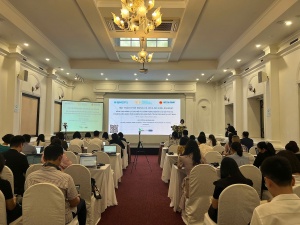
The Ministry of Finance and the Ministry of Agriculture and Environment (MAE) jointly inaugurated the exchange, with the pilot trading product listed under the code VN2025.
 |
Greenhouse gas emission allowances represent the maximum volume of emissions that a country, industry, or enterprise is permitted to release over a specified period, typically one year.
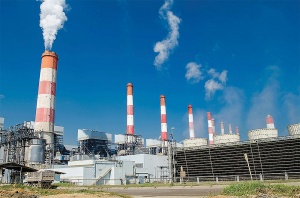
Under a decision approved by the prime minister, total emission allowances allocated to Vietnam’s thermal power, steel, and cement industries for 2025-2026 amount to more than 511 million tonnes of CO₂e.
Companies exceeding their allocated quotas will be required to purchase additional allowances from lower-emitting enterprises or use carbon credits to offset emissions, with offsets capped at 30 per cent of their allocated allowances.
Trading results are published daily on the website of the Hanoi Stock Exchange, which operates the platform.
By 9:15am on the opening day, the exchange had recorded transactions of 400 tonnes of CO₂e, with a total trading value of $2,160. The latest traded price reached $5.40 per tonne.
By the close of the first trading session, total transaction volume had exceeded 1,200 tonnes of CO₂e, with a combined value of $6,468. While the highest traded price remained $5.40 per tonne, the closing price eased to $5.2 per tonne.
Under the trading mechanism, participating enterprises will use securities accounts opened with licensed securities companies authorised to join the carbon exchange. Similar to stock market transactions, buyers and sellers receive immediate confirmation once trades are executed, along with monthly statements covering both cash balances and emission allowance holdings.
Nguyen Anh Phong, chairman of Hanoi Stock Exchange, said it aimed to create a flexible financial mechanism enabling businesses to optimise the cost of emission reductions while aligning economic incentives with environmental responsibilities.
“The core objective of the exchange is to establish a flexible financial mechanism that helps enterprises optimise emission reduction costs while closely linking economic benefits with environmental protection responsibilities,” Phong said.
Vu Thi Chan Phuong, chairwoman of the State Securities Commission of Vietnam, said launching the exchange is only the first step towards developing a stable, transparent, efficient, and sustainable carbon market.
She called on stakeholders to study international experience, strengthen the capacity of intermediary institutions, member securities firms, and service providers, and gradually develop Vietnam’s carbon market in line with global integration requirements.
The pilot carbon exchange will operate until 2028, before moving to full commercial operation in 2029. During the pilot phase, participating enterprises will be exempt from exchange service fees.

What the stars mean:
★ Poor ★ ★ Promising ★★★ Good ★★★★ Very good ★★★★★ Exceptional
 Tag:
Tag:
Related Contents



Latest News


More News
- JBIC considers new financing options for Vietnam’s energy projects (October 03, 2026 | 08:00)
- Vestas to supply 16 turbines for two new Vietnam wind farms (October 01, 2026 | 07:00)
- Inter-sectoral cooperation on Montreal protocol (September 30, 2026 | 17:20)
- EV battery recycling rate proposed at 8 per cent from 2029 (September 29, 2026 | 16:00)
- Bankability remains hurdle for Vietnam's JETP projects (September 29, 2026 | 12:08)
- Binh Minh Plastics extends clean water project to border communities (September 29, 2026 | 10:57)
- Coca-Cola Vietnam expands packaging collection programme (September 25, 2026 | 08:15)
- Pacifico Energy secures sea survey licence for offshore wind project in Lam Dong (September 24, 2026 | 18:02)
- Vietnam secures $221 million in UN development programmes for 2027-2031 (September 23, 2026 | 17:39)
- Carlsberg Vietnam shows how resource efficiency can shape green industrial growth (September 18, 2026 | 09:03)


Latest News





 Mobile Version