
SABECO adopts cautious 2026 plan amid industry pressures

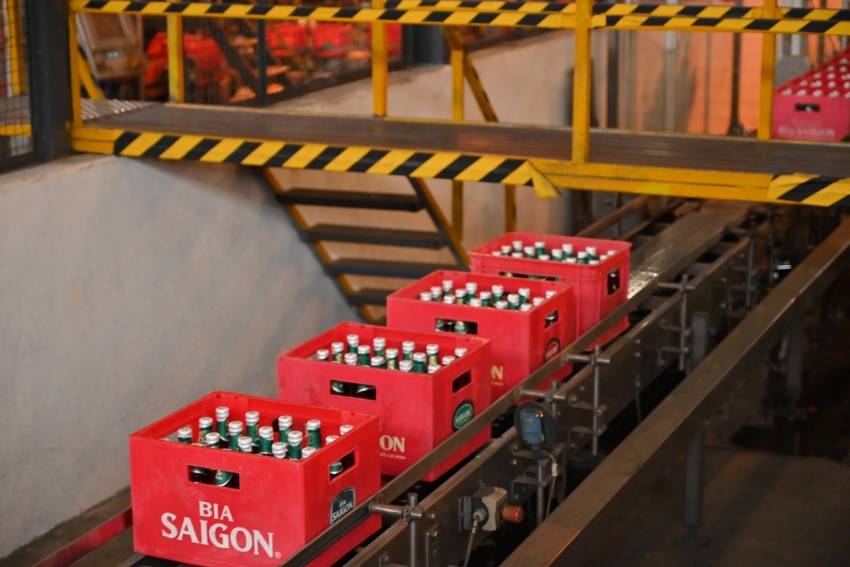 |
According to materials submitted to shareholders, SABECO reported net revenue of nearly VND32 trillion ($1.28 billion) in 2025, achieving around 99.6 per cent of its annual plan. However, after-tax profit reached only VND4.424 trillion ($177 million), falling short of the targeted VND4.728 trillion ($189 million).
This means the company fulfilled approximately 94 per cent of its profit plan, indicating a notable gap between revenue performance and profitability.
The divergence between revenue and profit suggests increasing pressure on margins. While top-line figures remained largely stable, cost dynamics and competitive factors appear to have eroded profitability. In its AGM documents, SABECO acknowledged that business conditions in 2025 remained challenging, citing weakening consumer demand, shifting consumption patterns, and intensifying competition.
Changes in consumer behaviour, including a shift towards premium products and, in some cases, reduced alcohol consumption, have continued to weigh on the mid-tier segment where SABECO has traditionally maintained a strong presence. At the same time, regulatory measures aimed at controlling alcohol consumption have had a lingering impact on market demand.
In addition, fluctuations in input costs such as barley, aluminium, and logistics have added further pressure on operating margins. The company’s ability to pass on higher costs to consumers has been constrained by stiff competition, particularly from international brewers with stronger positioning in the premium segment. As a result, margin recovery remains uncertain in the near term.
Against this backdrop, SABECO has adopted a cautious approach for its 2026 business plan. The company targets revenue and profit growth, but profit is expected to increase at a slower pace than revenue. This reflects a conservative outlook and suggests that management does not anticipate a significant improvement in profitability in the short term.
The company also highlighted several ongoing risks, including continued volatility in input costs, intensifying industry competition, and evolving consumer preferences. Meanwhile, regulatory policies governing alcoholic beverages are expected to remain a key factor influencing the sector’s outlook.
In this context, the shortfall in 2025 profit raises questions about forecasting accuracy and execution capabilities amid a rapidly changing market environment. Although the deviation from the plan was not substantial, it underscores broader structural challenges facing the beer industry, where growth has slowed and competition has become more pronounced.
As SABECO heads into its 2026 AGM, investors are likely to focus on how the company plans to navigate these headwinds and whether it can sustain stable growth while addressing margin pressures.
What the stars mean:
★ Poor ★ ★ Promising ★★★ Good ★★★★ Very good ★★★★★ Exceptional
 Tag:
Tag:Related Contents



Latest News




More News
- Sojitz in Vietnam: 40 years from individual projects to a business cluster 'KATAMARI' (October 08, 2026 | 09:00)
- Coteccons targets 'Quality Growth' with 25 per cent dividend plan (October 07, 2026 | 13:00)
- Vietnam Education Forum opens UK Education Mission's Hanoi visit (October 07, 2026 | 12:27)
- Tax authorities deactivate TINs of nearly 180,000 businesses (October 07, 2026 | 12:08)
- World Bank raises Vietnam's 2026 GDP growth forecast to 7.4 per cent (October 07, 2026 | 11:41)
- Vietstock 2026 to spotlight livestock innovation and green transition (October 07, 2026 | 09:00)
- Vietnam’s GDP grows over 9 per cent in first nine months (October 05, 2026 | 18:45)
- Vietnam earns $56.3 billion from agro-forestry-fishery exports (October 05, 2026 | 18:32)
- DSV balances resilience and decarbonisation in supply chains (October 05, 2026 | 18:20)
- Electronics exports reach $175.4 billion in the first nine months (October 05, 2026 | 18:12)



Latest News





 Mobile Version