
Middle East conflict disrupts supply chains, pressures logistics firms

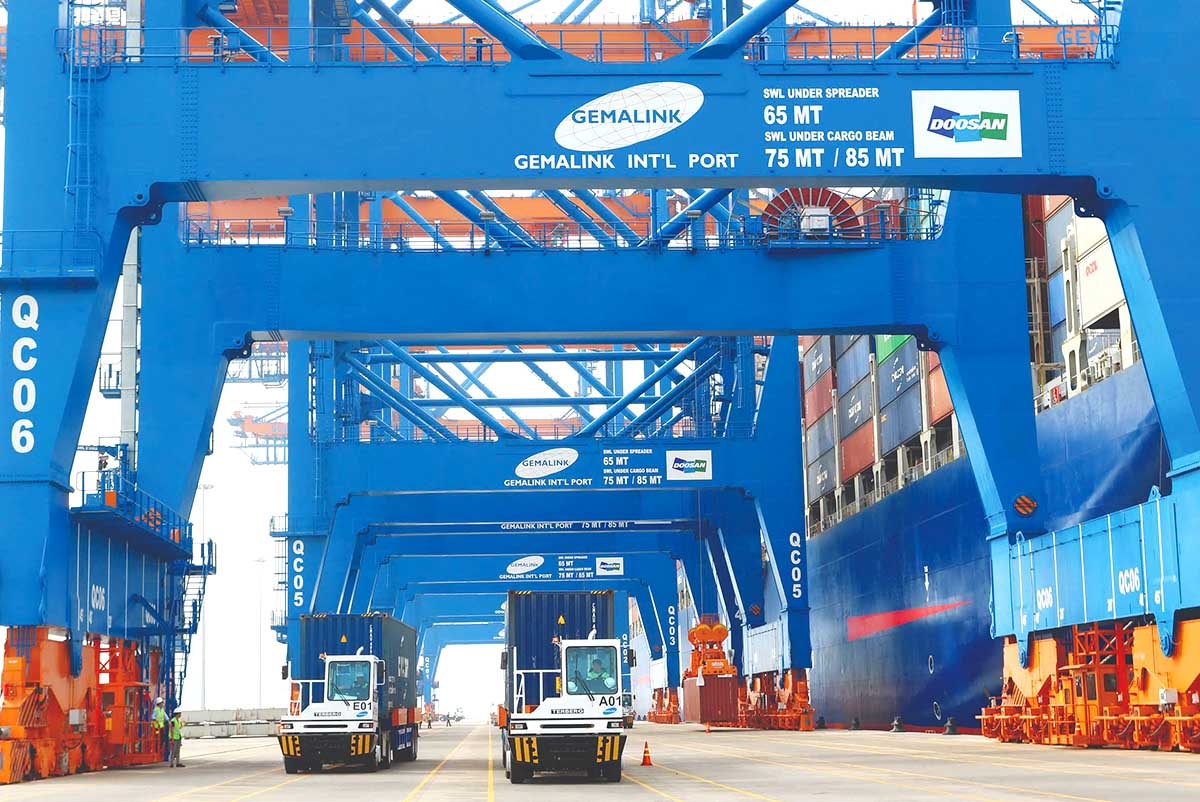 |
The Vietnam Logistics Business Association (VLA) has conducted a survey of 49 logistics companies in Vietnam from March 3 to 11. The survey reveals that a little over 73 per cent of firms are closely watching the developments in the Middle East. This underscores the increasing vulnerability of Vietnam’s logistics community to global geopolitical fluctuations. This trend is particularly true after the supply chain disruption during the pandemic. Many companies have begun monitoring potential risks that could disrupt international transportation.
One of the key findings is that just under 90 per cent of companies report moderate to severe impacts on their business operations. In particular, 51 per cent of companies report impact levels of 4 to 5, signalling severe or crisis conditions that require swift policy responses.
The survey indicates that around 39 per cent of companies rate the impact as moderate, mainly reflected in declining profit margins. Close to 35 per cent of companies say the impact is severe, causing operational disruptions and revenue declines.
About 16 per cent of companies assess the situation as extremely serious, posing risks of a crisis or operational disruptions. Meanwhile, 10 per cent report little to no impact from the Middle East tensions, mostly domestic firms not engaged in international shipping routes.
According to industry experts, the Middle East tension can create a rippling effect on the global transportation system, from energy prices, shipping schedules, and insurance premiums, to congestion at transshipment ports.
43 per cent of companies consider the surging freight costs as the greatest challenge. A little over 16 per cent of respondents report prolonged delivery times, while 14 per cent have experienced order cancellations or delays from customers. Businesses also find difficulties in securing shipping space (4 per cent) and higher cargo insurance premiums (2 per cent).
According to the VLA, shipping companies adjusting routes or extending voyages to avoid conflicted areas can disrupt schedules and drive up transportation costs. Simultaneously, surcharges related to war and maritime security risks are added to freight rates. The surge in logistics costs is putting pressure on supply chains, forcing many import and export businesses to adjust shipping plans or delay orders.
To mitigate the impact, logistics companies have proposed several measures, including stabilising the fuel market as well as monitoring and controlling domestic fuel supply and prices to prevent sudden fluctuations that could affect transportation costs.
In addition, businesses have also called for tax and fee support measures, such as reductions in corporate income tax, VAT, and certain sector-specific charges during the challenging period.
 | Middle East tensions raise energy, logistics and FX risks for Vietnam corporates Escalating conflict in the Middle East is raising concerns about credit risks for Vietnamese businesses as energy and transport costs climb and global financial volatility intensifies. |
 | Middle East conflict raises risks for global coffee market The US-Iran conflict could put pressure on the coffee market through higher production costs, a volatile dollar, skyrocketing fuel prices and growing logistical uncertainty, especially with the closure of the Strait of Hormuz and the risk of paralysis in the Suez Canal. |
 | Middle East conflict could cost Vietnam $8 billion in farm exports Vietnam’s agricultural exports could lose $1- $8 billion if the Middle East conflict drags on from one month to a year, as supply chain disruptions and rising logistics costs weigh on trade flows. |
What the stars mean:
★ Poor ★ ★ Promising ★★★ Good ★★★★ Very good ★★★★★ Exceptional
 Tag:
Tag:
Related Contents




Latest News




More News
- Vietnam’s growth ambitions hinge on effective policy reforms (October 12, 2026 | 09:00)
- 100 entrepreneurs honoured with Thanh Giong Cup 2026 (October 12, 2026 | 08:00)
- French experts share AI and digital governance insights in Hanoi (October 11, 2026 | 08:00)
- Digital government push focuses on data connectivity and AI (October 10, 2026 | 08:00)
- Ho Chi Minh City holds dialogue with businesses to address operational hurdles (October 09, 2026 | 17:27)
- AI beginning to reshape recruitment criteria (October 09, 2026 | 16:49)
- Electronics firms boost raw material reserves sevenfold amid supply concerns (October 09, 2026 | 08:00)
- NSRP navigates global energy supply volatility (October 08, 2026 | 16:59)
- Minitab launches campaign to combat illegal software use in Vietnam (October 08, 2026 | 15:54)
- Raising construction materials supply chain standards amid green transition (October 08, 2026 | 14:00)







 Mobile Version