
Middle East conflict could cost Vietnam $8 billion in farm exports

 |
| Photo: Ministry of Agriculture and Environment |
At a regular press briefing held by the Ministry of Agriculture and Environment on March 11, Tran Gia Long, deputy director of the Planning and Finance Department, said the ministry was developing scenarios to assess potential impacts of the Middle East conflict on Vietnam’s agricultural sector.
Long noted that the escalating tensions in the region have heightened risks of supply chain disruptions, particularly along shipping routes to Europe, while also pushing up global energy and transport costs, which could weigh on Vietnam’s agricultural exports.
Under a scenario where the conflict lasts for around one month, Vietnam’s agricultural, forestry, and fisheries exports could decline by more than $1 billion. Of this, exports to the Middle East may fall by around $182 million, while shipments to Europe and Africa could decline by $770 million and $91 million, respectively.
If the conflict extends to three months, losses in agricultural exports could reach $3-3.5 billion. Exports to the Middle East may decline by $500-600 million, while shipments to North Africa could fall by $200-250 million and exports to the EU by $1.5-1.6 billion.
In a worst-case scenario where the conflict persists for a year, exports to the Middle East could be completely disrupted, while shipments to Europe and North Africa may drop by at least 50-60 per cent.
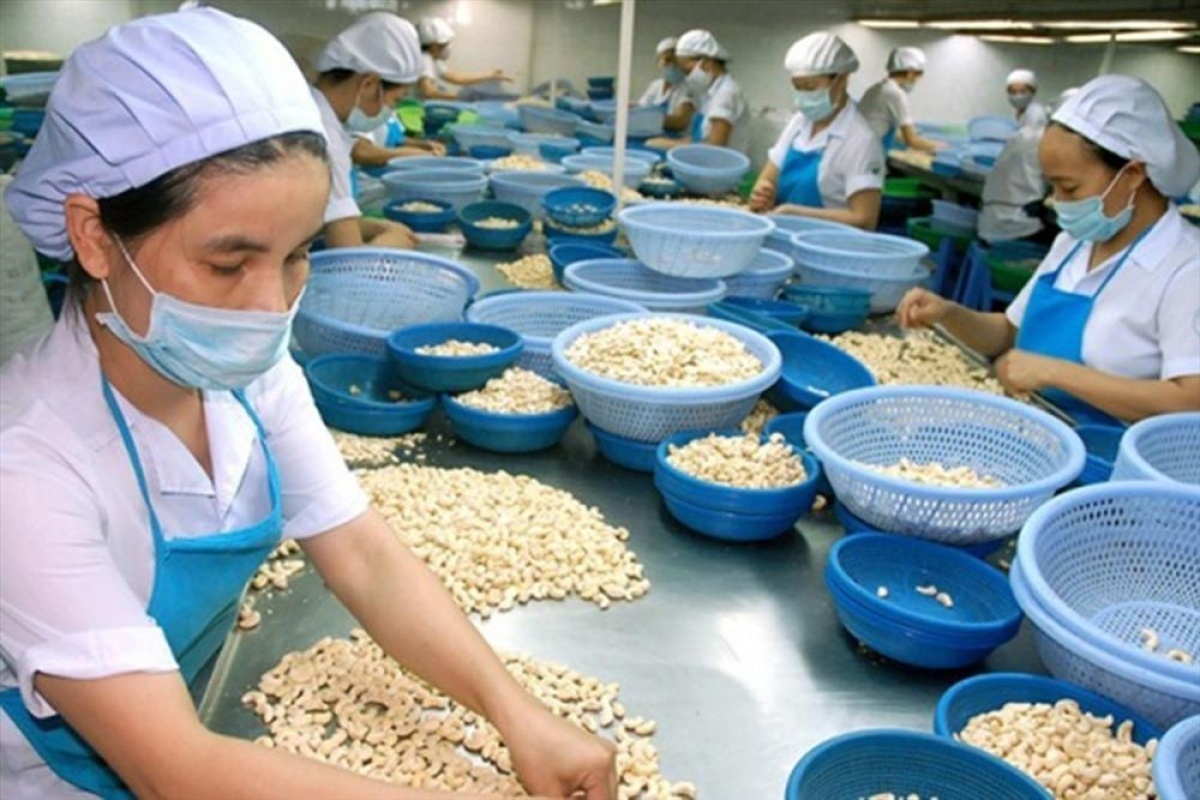
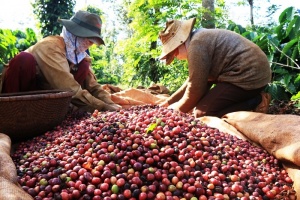
Last year, Vietnam exported $1.74 billion worth of agricultural products to the Middle East, with key items including cashew nuts worth nearly $600 million, seafood at $325 million, and coffee at $300 million.
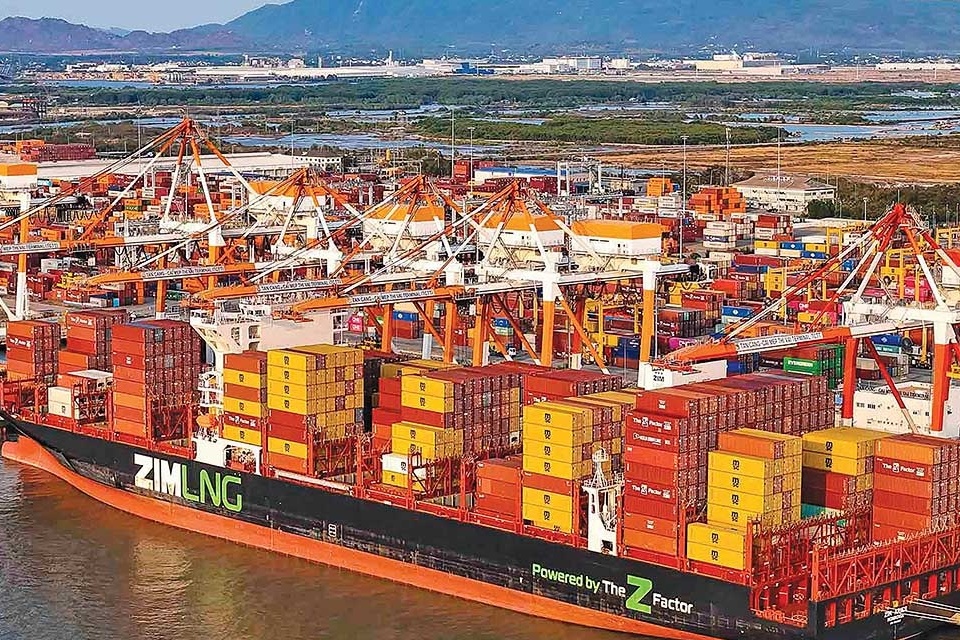
Le Ba Anh, deputy director of the Department of Quality, Processing and Market Development, said the agricultural sector was already facing direct impacts from the conflict, including shipping disruptions and longer delivery times. Some maritime carriers have reportedly suspended routes to the Middle East, while insurance costs have increased.
“This situation particularly affects exporters of products that require refrigerated containers, such as seafood and fruit and vegetables,” he said. “Indirect costs, including higher oil prices, will also raise production expenses.”
To mitigate the impact and offset potential losses, the Ministry of Agriculture and Environment said it would step up exports to traditional markets such as China, Japan, ASEAN, South Korea, the EU, and the United States.
For 2026, Vietnam’s agricultural sector has set a target of $73-74 billion in total exports of agricultural, forestry, and fisheries products, of which agricultural products alone are expected to contribute around $40 billion.

What the stars mean:
★ Poor ★ ★ Promising ★★★ Good ★★★★ Very good ★★★★★ Exceptional
 Tag:
Tag:Related Contents





Latest News






More News
- French experts share AI and digital governance insights in Hanoi (October 11, 2026 | 08:00)
- Digital government push focuses on data connectivity and AI (October 10, 2026 | 08:00)
- Ho Chi Minh City holds dialogue with businesses to address operational hurdles (October 09, 2026 | 17:27)
- AI beginning to reshape recruitment criteria (October 09, 2026 | 16:49)
- Electronics firms boost raw material reserves sevenfold amid supply concerns (October 09, 2026 | 08:00)
- NSRP navigates global energy supply volatility (October 08, 2026 | 16:59)
- Minitab launches campaign to combat illegal software use in Vietnam (October 08, 2026 | 15:54)
- Raising construction materials supply chain standards amid green transition (October 08, 2026 | 14:00)
- Samsung Vietnam to deepen cooperation with local manufacturers (October 08, 2026 | 12:00)
- Sojitz in Vietnam: 40 years from individual projects to a business cluster 'KATAMARI' (October 08, 2026 | 09:00)








 Mobile Version