
UOB sees resilience amid cost pressures and external strains

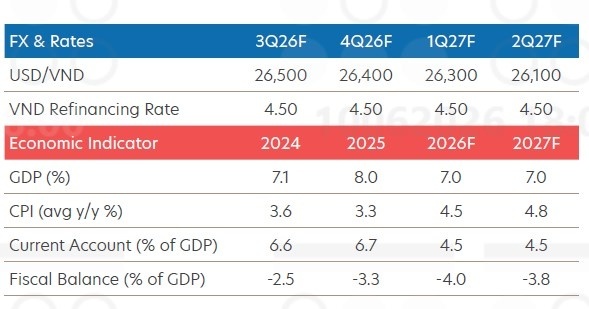 |
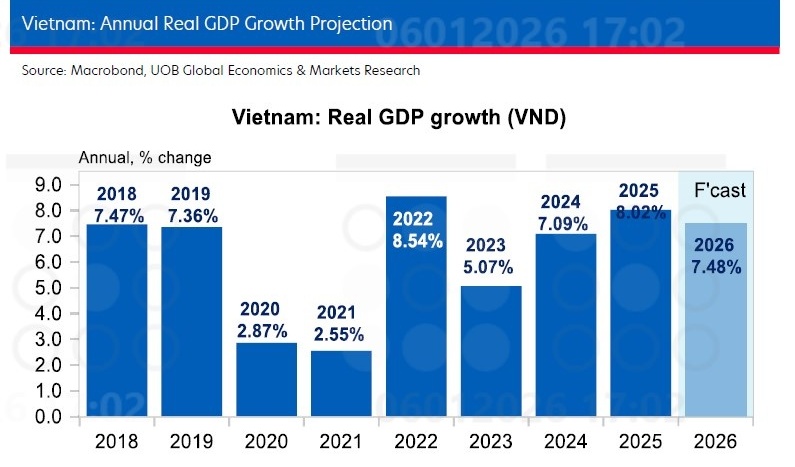
Vietnam’s economic growth slowed to 7.83 per cent on-year in 1Q26 from 8.46 per cent in 4Q25, but still beat both UOB's 7 per cent forecast and Bloomberg’s 7.6 per cent consensus.
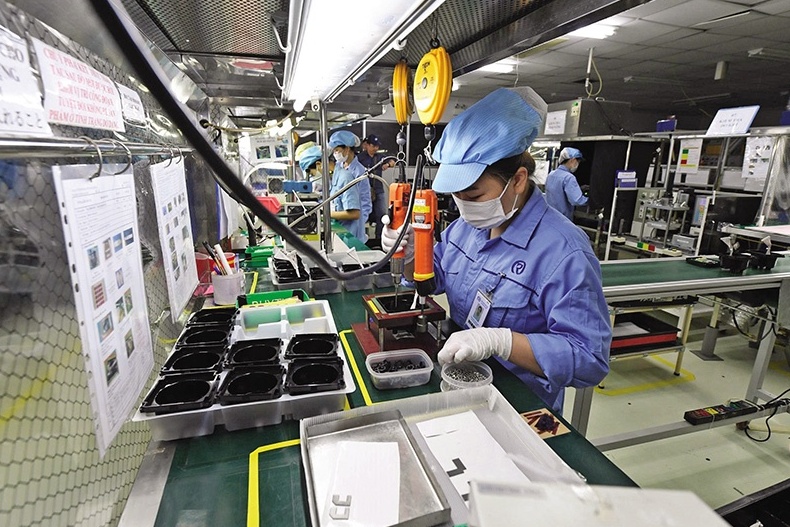
Growth was supported by manufacturing, construction and services, underpinned by strong export demand (19.1 per cent on-year) and realised foreign direct investment inflows (up 9.1 per cent on-year to $5.41 billion), as firms continued diversifying supply chains amid changing global trade rules.
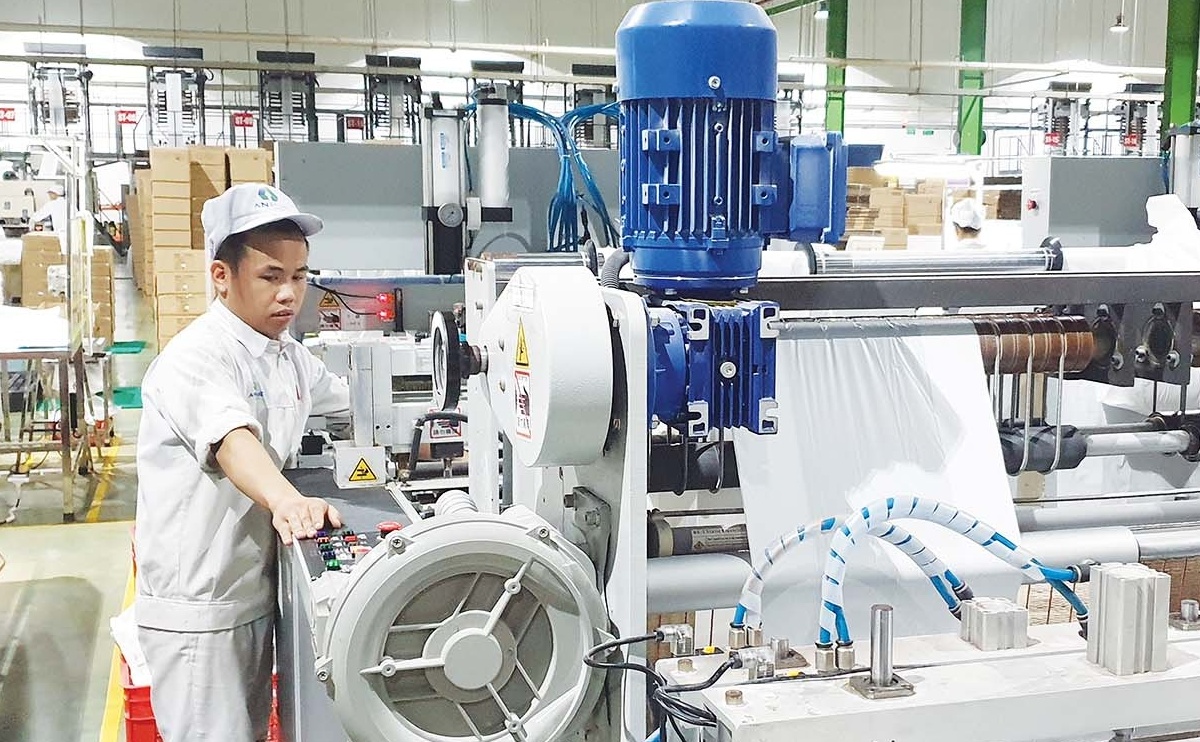
Recent data, though, point to a mixed near-term outlook as higher energy costs weigh. Manufacturing improved in May, with the Purchasing Managers' Index rising to 52.8 from 50.5 in Apr and 49.8 a year earlier, while the output index surged to 55.6.
Inflation accelerated to 5.6 per cent in May, its highest level in six years. Manufacturing output growth slowed to 9 per cent on-year from 10 per cent in April, bringing average growth in the second quarter to 9.5 per cent, down from 11 per cent in the first quarter.
Export growth eased to 18 per cent on-year in May from 21 per cent in April, while import growth accelerated to 33.8 per cent from 32.5 per cent. As a result, the trade balance recorded a deficit of $12.7 billion in the first five months of the year, compared to a surplus of nearly $5 billion in the same period of 2025, marking the widest gap in almost three decades.
UOB expects pressure on the balance of payments to persist. Large-scale infrastructure and transport projects are likely to drive demand for imported machinery, while elevated oil prices will increase energy costs. According to the bank’s simulations, if crude oil averages $100 per barrel for six to 12 months, Vietnam’s energy import bill could rise by around 40 per cent, or $5.2 billion, in 2026. Under the same scenario, the current account surplus could narrow by about 20 per cent, or $6.5 billion, from an estimated $33 billion in 2025.
Despite near-term challenges, Vietnam’s medium-term ambitions remain highly ambitious. In April, the National Assembly approved a development agenda for 2026–2030 targeting average annual GDP growth of at least 10 per cent. By 2030, the government aims to achieve upper-middle-income status, build a modern industrial base, rank among the world’s 30 largest economies, and raise GDP per capita to $8,500. By contrast, the World Bank forecasts growth of 6.8 per cent in 2026 and inflation of 4.2 per cent, citing the impact of the Middle East conflict on trade, fuel prices, and business activity.
"In our view, downside risks from energy prices and possible shifts in US tariff policy remain significant, though external demand has held up so far, supported in part by the global AI build-out. On balance, we continue to expect growth to moderate to 7 per cent in 2026. The most challenging period is likely in 2Q26-3Q26, with growth averaging about 6.7 per cent," the UOB report noted.
A key concern for the State Bank of Vietnam (SBV) is inflation, which averaged 4.3 per cent on-year in the first five months, close to its 4.5 per cent target, and the SBV expects it could rise to 5.5 per cent this year. "As SBV monitors downside pressure on the VND, its preference is likely to keep policy rates steady," UOB reported.
Separately, the SBV has urged banks to lower lending rates to support borrowers, while fiscal measures are deployed, including extending the zero-rate tax on petrol and selected fuel products until the end of June. Even so, some local banks have raised deposit rates amid competition for liquidity as credit demand rises. Outstanding loans reached more than $76 billion as of April 28, up 18.26 per cent on-year, while total liquidity grew a slower 7.7 per cent on-year.
 | World Bank projects Vietnam’s growth to moderate to 6.8 per cent in 2026 While headwinds are expected to temper the pace of expansion, World Bank's latest Vietnam Economic Update, released on May 15, projects growth will moderate to a 6.8 per cent in 2026, following an 8 per cent expansion in 2025. |
 | OECD projects GDP growth of 6.5 per cent for Vietnam this year Vietnam's GDP is projected to grow by 6.5 per cent in 2026 and 6.2 per cent in 2027, a slowdown amid uncertainty from the Middle East conflict and US trade policy, the Organisation for Economic Co-operation and Development has said. |
 | Government urged to expand public procurement to create innovation Vietnam cannot continue relying primarily on capital expansion and labour growth if it wants to achieve double-digit economic growth, experts have said. Instead, the country needs to create stronger market demand for science, technology and innovation through concrete mechanisms. |
What the stars mean:
★ Poor ★ ★ Promising ★★★ Good ★★★★ Very good ★★★★★ Exceptional
 Tag:
Tag:Related Contents





Latest News




More News
- French experts share AI and digital governance insights in Hanoi (October 11, 2026 | 08:00)
- Digital government push focuses on data connectivity and AI (October 10, 2026 | 08:00)
- Ho Chi Minh City holds dialogue with businesses to address operational hurdles (October 09, 2026 | 17:27)
- AI beginning to reshape recruitment criteria (October 09, 2026 | 16:49)
- Electronics firms boost raw material reserves sevenfold amid supply concerns (October 09, 2026 | 08:00)
- NSRP navigates global energy supply volatility (October 08, 2026 | 16:59)
- Minitab launches campaign to combat illegal software use in Vietnam (October 08, 2026 | 15:54)
- Raising construction materials supply chain standards amid green transition (October 08, 2026 | 14:00)
- Samsung Vietnam to deepen cooperation with local manufacturers (October 08, 2026 | 12:00)
- Sojitz in Vietnam: 40 years from individual projects to a business cluster 'KATAMARI' (October 08, 2026 | 09:00)








 Mobile Version