
Melbourne named world’s most liveable city for fourth year running


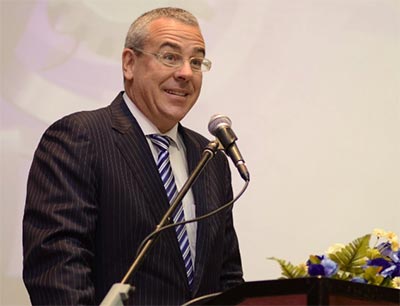
The Premier of Victoria, Denis Napthine, said the Victorian state capital offered an unparalleled lifestyle, underpinned by resilient economic credentials, world class infrastructure, excellent health and education systems and progressive business regulation.
“With Melbourne set to overtake Sydney as Australia’s largest city as early as 2030, the Victorian Government is investing in key infrastructure, from road and rail projects to hospitals and schools, to ensure our state remains the best possible place to live, work and do business,” said Napthine.
“And we continue to work closely with Australian and international businesses to facilitate new investments that will create new jobs and build an even better, more prosperous Victoria,” added Napthine.
Tim Dillon, commissioner to South East Asia for the State Government of Victoria said “Melbourne is Asia-Pacific’s leading destination for cutting-edge innovation, research, development, and high-tech manufacturing, backed by the region’s best talent ecosystem, a pioneering spirit of invention, and unparalleled government support for pro-business regulation and policies.”
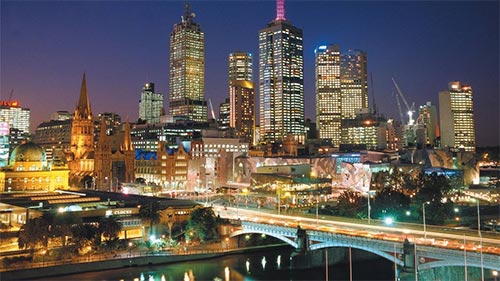
“Melbourne has everything a US business needs to succeed in the Asia-Pacific marketplace, and that is why we are seeing more and more companies setting up shop in Melbourne as they expand globally,” added Dillon.
The EIU’s Liveability Ranking assesses living conditions in 140 cities across the globe by assigning a rating across five broad categories, including: Stability; Healthcare; Culture and environment; Education; and Infrastructure.
Melbourne scores highly in all of the EIU’s criteria and achieves perfect scores in the areas of healthcare, education and infrastructure.
Ongoing investment in Melbourne’s world-class infrastructure was highlighted in the report for keeping Melbourne at the top of the index.
Melbourne’s high ranking follows three consecutive years at the top of the index, which it achieved by taking the title from Vancouver, Canada, after a run of almost a decade.
Dillon said Melbourne’s much vaunted liveability was largely due to consistent investment in infrastructure.
“Over the past decade, the government investment in infrastructure has doubled, with investment in roads, public transport, health, schools and other infrastructure over 2014-2015 estimated at A$7.5 billion/£3.37billion.”
Derek Dyson, global retail director at Specsavers, which runs a manufacturing centre in Port Melbourne, said Melbourne offered a the double attraction of being an excellent location for doing business, as well as being a great place to live.
“As a business we have grown rapidly from our support office and manufacturing centre in Port Melbourne and we easily service the whole of Australia and New Zealand from here, backed up by smaller teams in each state,” said Dyson.
“Infrastructure is in place and is seemingly continually invested in which is good for business. Varying levels of government have one eye on the future which means planning for and coping with significant population growth is always taken into account,” he added.
Dave Scheine, APAC director at Yelp, which established in Melbourne in January to help drive the company's efforts in Australia and Asia, said that Melbourne has lived up to its billing as one of the most livable cities in the world.
“The foodie scene is phenomenal and it's hard to keep track of all the new hip places opening up. It reminds me of a mash-up between the UK and California, where you get the walkability/transit oriented accessibility of a European capital city with the lifestyle, fresh produce and weather of the San Francisco Bay Area,” said Scheine.
What the stars mean:
★ Poor ★ ★ Promising ★★★ Good ★★★★ Very good ★★★★★ Exceptional
Latest News


More News
- Manila becomes a new check-in destination for Vietnamese youth (December 11, 2025 | 18:07)
- Vietjet launches mega year-end ticket promotion (December 10, 2025 | 11:33)
- Dalat leads Vietnam’s 2025 search trends (December 09, 2025 | 13:44)
- Vietnam welcomes record wave of international visitors (December 09, 2025 | 13:43)
- Vietjet launches daily Manila flights to celebrate year-end festive peak season (December 05, 2025 | 13:47)
- The destinations powering Vietnam’s festive season travel demand (December 04, 2025 | 18:33)
- Vietnam named among the world’s most exciting winter destinations (December 04, 2025 | 15:10)
- Phu Tho emerges as northern Vietnam’s new tourism hub (December 01, 2025 | 17:00)
- Vietjet completes Airbus A320/A321 updates ahead of deadline (December 01, 2025 | 09:49)
- Vietjet resumes Con Dao flights from early December (November 28, 2025 | 15:24)









 Mobile Version