
Owner-occupied housing stabilises, paving the way for new growth cycle

Speaking at the Vietnam Real Estate Summit (VRES) 2025 in Hanoi, Nguyen Quoc Anh, deputy CEO of Batdongsan.com.vn, shared that as the year enters its final quarter, interest rates have begun to edge up, as many commercial banks have recorded a decline in deposits, pushing 12-month deposit rates to around 5.3-5.5 per cent per year.
According to Quoc Anh, to properly assess the impact of the late-year interest rate uptick, it is necessary to view this development in comparison with the 2022 period.
He noted that 2022 was marked by a dual shock, as global inflation surged, exchange rates fluctuated sharply, and Vietnam was forced to raise interest rates in line with the US Federal Reserve. Lending rates at the time jumped to 11-15 per cent amid a corporate bond crisis that led to an abrupt tightening of credit.
"The market was virtually stalled, with transactions plunging. Interest rate pressure forced many investors to sell at a loss, particularly in the land plot segment," he said. “From the second quarter of 2022, prices entered a deep correction cycle, while market sentiment fell to its lowest point, with 72 per cent of surveyed consumers concerned about inflation and 75 per cent believing interest rates would continue to rise.”
He also shared Batdongsan.com.vn's survey at the time that more than a quarter of investors were forced into distress sales, while the remainder chose to stay on the sidelines.
By contrast, Quoc Anh stressed that the context in 2025 is entirely different.
“The current mild increase in deposit rates is largely technical, aimed at re-establishing funding conditions after the sharp decline seen in 2024. Lending rates are generally around 6-7 per cent per year, higher than the 5-5.5 per cent trough of preferential packages for young buyers, but still within a range that supports transactions,” he explained.
“Market pressure at present mainly stems from capital demand for public investment and production, while low deposit rates continue to channel capital flows into real estate and equities,” said Quoc Anh.
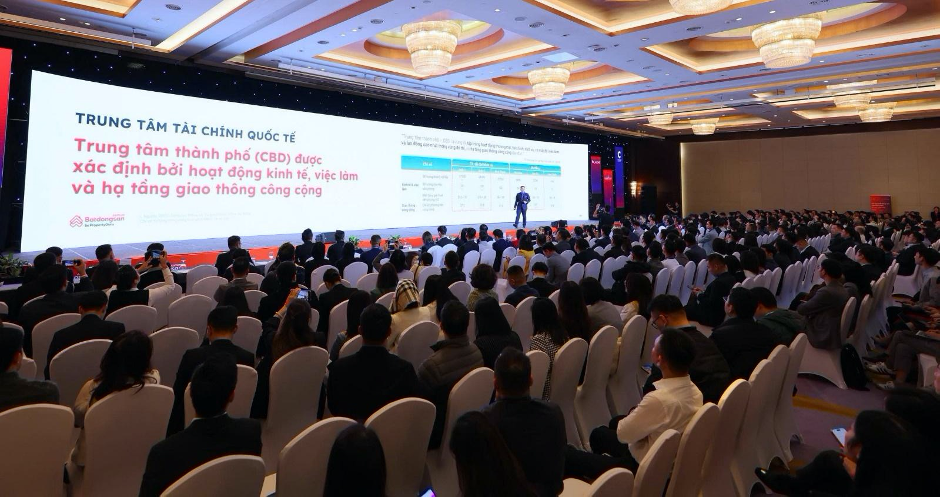 |
| Nguyen Quoc Anh, deputy CEO of Batdongsan.com.vn |
He added that there are currently no signs of widespread land fever. Hotspots are largely linked to administrative boundary merger negotiations, while transactions remain concentrated in apartments and private houses in major urban areas.
“In the short term, the market may continue to test sentiment, but from a medium- to long-term perspective, the recovery cycle that began in 2024 still has ample room to run. I believe 2026 will mark a phase of clearer market differentiation and a more stable trajectory. A scenario as severe as 2022 is very unlikely to repeat,” he said.
Moreover, amid the strong restructuring of the real estate market, Quoc Anh emphasised the role of international financial centres (IFCs) as a strategic missing piece in repositioning central business districts (CBDs) and unlocking new growth drivers.
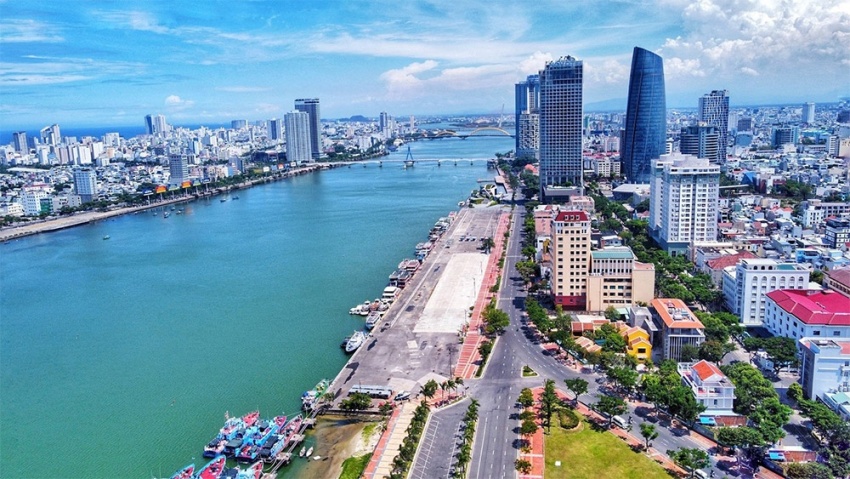
In Vietnam, Ho Chi Minh City and Danang are at a pivotal juncture: whether they will develop into new IFC cores or merely become extensions of existing CBDs.
Quoc Anh argued that the challenge is not simply about building additional centres, but about whether existing bottlenecks can be resolved such as limited land availability, overloaded infrastructure, and a shortage of high-quality real estate supply.
“If future IFCs such as Thu Thiem or Danang are planned with a long-term vision, backed by upfront infrastructure investment and sufficiently strong incentive policies, they can certainly become new CBD nuclei, where real estate value is underpinned by scarcity and superior quality,” he said.
Le Bao Long, marketing director of Batdongsan.com.vn, observed that persistently high property prices are exerting significant pressure on homeownership affordability for young people. However, rather than succumbing to pessimism, many are proactively adjusting their financial strategies and allocating resources more flexibly to move closer to their homeownership goals.
Sharing insights from the survey of more than 1,000 consumers, Long said the market is witnessing clear differentiation in sentiment and behaviour among those aged 18-44, reflected in four notable trends.
“For renters, especially young families, the goal of homeownership remains obvious. As many as 93 per cent of married respondents with children said they aim to buy a home within the next five years, despite acknowledging that prices remain a major barrier. Many are choosing to boost income through additional work, manage spending more tightly, or accumulate savings,” said Long.
 |
More notably, Long pointed out that demand for homeownership within the next five years in Ho Chi Minh City stands at 81 per cent, significantly higher than Hanoi’s 69 per cent, according to Batdongsan.com.vn data. This gap is largely attributable to differences in affordable housing supply.
"In Ho Chi Minh City, apartments priced below $120,000 account for 21-31 per cent of total supply, compared with only about 10 per cent in Hanoi. More affordable supply enables young people and middle-income households in Ho Chi Minh City to access housing more easily, thereby sustaining strong ownership demand. By contrast, Hanoi's market is skewed towards the mid- and high-end segments, with common price ranges of $200,000-400,000. This pushes ownership costs far beyond the financial capacity of most buyers, leading to a marked decline in future home-buying intentions,” stated Long.
Analysing the long-term rental segment, Long views this group as offering sustainable investment opportunities for income-generating real estate models.
“This segment demonstrates stable payment capacity, with 72 per cent spending less than 30 per cent of their income on rent, and a trend towards long-term occupancy, as 34 per cent of surveyed renters say they plan to rent for three years or longer,” said Long
"To attract and retain this group, investors need to meet four core criteria: housing quality, amenities, location, unit size, and the surrounding neighbourhood. By investing seriously in quality of living rather than merely providing a place to stay, investors can build stable rental portfolios with lower volatility and long-term cash flows," he added.
 | Danang leading latest wave of industrial real estate funding Danang is staking its claim as a key trading hub and logistics center linking the Central Highlands with Laos and northeastern Thailand. |
 | Bank stocks gain appeal on strong credit growth and expanding ecosystems Robust earnings over the first three quarters of the year, coupled with banks' ability to broaden their ecosystems and flexibly enter new business segments, are continuing to make bank stocks a compelling choice for investors. |
 | Real estate deals boom via high-profile names The Vietnamese real estate merger and acquisition (M&A) market in 2025 recorded significant growth, marking a positive shift after a prolongation. |
What the stars mean:
★ Poor ★ ★ Promising ★★★ Good ★★★★ Very good ★★★★★ Exceptional
 Tag:
Tag:
Related Contents




Latest News

More News
- MIK Group launches House of MIK in Ho Chi Minh City (October 03, 2026 | 17:00)
- Vietnam hospitality shifts towards integrated mixed-use developments (October 03, 2026 | 10:00)
- Stavian IP accelerates its modern expansion (October 02, 2026 | 14:00)
- ESG for future-ready industrial success (October 02, 2026 | 09:00)
- Green Future Awards honour five leading industrial park developers (October 01, 2026 | 22:20)
- Green transition leaders honoured at Green Future Awards 2026 (October 01, 2026 | 22:10)
- Six developers honoured as Emerging Green Industrial Property Developers (October 01, 2026 | 22:00)
- Why logistics will define the next phase of growth (October 01, 2026 | 09:00)
- Urban Development Law takes effect on October 1 (September 30, 2026 | 17:49)
- Phu My Hung to demolish Lawrence S. Ting Building for new development (September 30, 2026 | 17:43)



Latest News





 Mobile Version