
Vietnam CFA showcase highlights $120m funding need for climate ventures

The event took place on October 15, showcasing 11 climate-focused businesses from across Vietnam with a combined funding requirement of more than $120 million over the next three years.
According to British Ambassador to Vietnam Iain Frew, over the past four years, the Climate Finance Accelerator (CFA) has supported 34 ground-breaking businesses that are helping to accelerate Vietnam’s private sector-led green growth ambition.
“The businesses this year are offering pioneering solutions, from sand-based heat batteries and fruit-peel packaging to insect-based waste recycling and low-carbon rice farming, to unlock climate action while creating new jobs, services, and critical infrastructure. I wish them every success in raising finance, drawing on their tailored CFA support,” Frew said at the event.
Abhinav Goyal, director, Capital Projects & Infrastructure, PwC Vietnam and CFA Vietnam Team Leader said that the eleven businesses participating this year represent a promising pipeline of climate investment opportunities that can contribute to Vietnam's decarbonisation goals.
“As investor interest in sustainable and impact-driven projects continues to grow, initiatives such as the CFA play an important role in bridging the gap between innovative businesses and sources of capital. We are encouraged by the growing interest from investors and look forward to supporting these businesses as they continue their growth and fundraising journeys,” Goyal said.
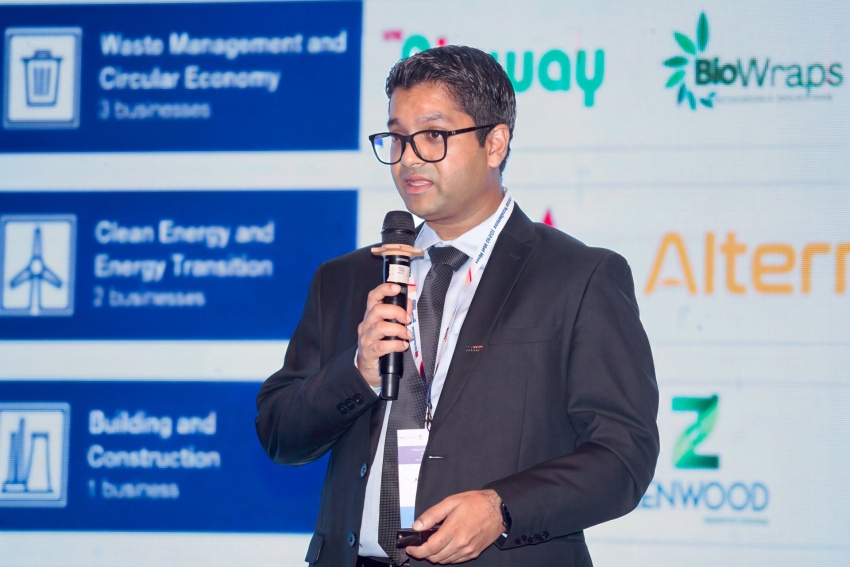 |
| Abhinav Goyal, director, Capital Projects & Infrastructure, PwC Vietnam and CFA Vietnam team leader. Photo: CFA Vietnam |
CFA Vietnam’s 2026 cohort operates across a diverse range of sectors, including clean energy, electric mobility, the circular economy, sustainable agriculture, and sustainable construction materials, highlighting the breadth of climate solutions being developed in Vietnam.
Speaking to VIR, Ted Kim, CEO of Viet Smart Mobility, a company providing green transport infrastructure and shared mobility services, said the company was rolling out its GCOO shared electric bicycle service in Vietnamese cities, offering a low-emission transport option for tourism and first- and last-mile journeys.
According to Kim, growth potential and conditions for expansion Vietnam has strong potential for shared e-bikes connecting public transport, tourism and everyday journeys.
“Our ambition is to build on Hue’s operating foundation and expand progressively to 12 tourism cities,” Kim said.
In Hue, Viet Smart Mobility is developing transfers with tourist electric boats serving the Imperial City area and discussing connections with forthcoming electric buses and sightseeing services.
“The next opportunity is cooperation around people’s lifestyles: metro–bus–GCOO transfer discounts and packages combining hop-on/hop-off day passes with e-bike access,” Kim said.
Through CFA, Kim seeks to translate operating experience into an investable business model, robust financial planning and measurable climate outcomes, while connecting with suitable equity and climate-finance partners.
“Equity would support our Vietnam-specific app, customer experience and organisational capacity; complementary financing would support vehicles, batteries and stations. This includes simpler registration, payment and web-based access, addressing barriers we have encountered in practice,” he said.
His biggest challenges are financing infrastructure before demand matures, securing stable operating locations and turning local partnerships into coordinated implementation.
“We need practical arrangements covering station access, charging, safety and transfers. Our goal is a shared growth platform where local businesses participate and benefit. CFA can help us establish the financial discipline, impact measurement and investor connections needed to scale this approach responsibly,” he added.
Another business in the programme is Phuc Sang Minh Gas which helps industrial customers transition to lower-carbon fuels through integrated gas infrastructure and technical expertise.
Vu Van Nam, chief commercial officer of Phuc Sang Minh, told VIR that Vietnam had significant potential for raw biogas from farms and wastewater and waste treatment plants, but the resource remained largely untapped.
Industries that could use biogas or bio-methane include those that are difficult to electrify or transition to solar and other energy solutions, such as steel and metal roofing production, as well as food and beverage manufacturing.
Switching from coal to natural gas can reduce lifecycle greenhouse gas emissions by approximately 30–40 per cent, while waste-derived BioCNG has the potential to achieve reductions of 70–90 per cent compared with conventional natural gas under well-managed production conditions.
“Our main objective in joining the CFA programme is to seek international funding, particularly impact investment that delivers environmental benefits and supports the green transition,” Nam said.
The company has also received practical support from the programme, particularly through in-person training sessions and expert advice. These activities have helped it refine its business model and financial projections, improve its investor outreach and present its projects more clearly to potential investors.
“I believe access to early-stage capital is one of the key barriers. Businesses spun off from existing organisations may have certain advantages in raising funds. However, for startups developing new technologies, government support is essential, particularly through pilot programmes and small-scale seed funding. This would enable businesses to continue testing, refining and deploying new technologies,” Nam said.
Nam is currently estimating a funding requirement of around $5 million for his company’s project spin off. In addition to direct equity investment, he also hopes to raise capital through loans from financial partners.
Funded by the UK government, the CFA programme provides individual and group support to promising climate businesses to strengthen their investment readiness, refine financial structures, and enhance appeal to financiers.
Through tailored advisory support and structured capacity-building activities, participating businesses receive assistance in evaluating financing options, strengthening financial models, refining investment propositions and preparing investor-facing materials.
The programme also supports businesses in strengthening environmental and climate considerations, as well as gender equality, disability and social inclusion practices that are increasingly important to investors.
Globally, between 2020 and 2024, the CFA supported over 238 climate investment opportunities, helped secure over 65 deals and unlocked over $530 million in investment.
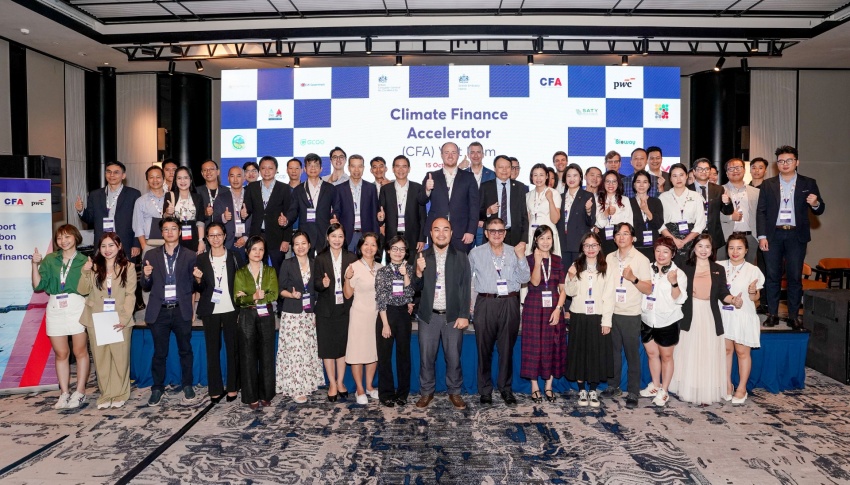 |
| Participants at the CFA Vietnam 2026 Investor Engagement Event in Ho Chi Minh City on 15 October. Photo: CFA Vietnam |
 | CFA Institute calls for annual meeting reforms The investment professional organization issued recommendations improving shareholder engagement and governance at corporate annual general meetings. |
 | UK-funded CFA Vietnam picks 13 businesses for low-carbon support The UK-funded Climate Finance Accelerator in Vietnam has announced its 2026 cohort of 13 businesses developing scalable solutions to support the country's low-carbon transition. |
What the stars mean:
★ Poor ★ ★ Promising ★★★ Good ★★★★ Very good ★★★★★ Exceptional
 Tag:
Tag:Related Contents


Latest News
More News
- Long-delayed LNG power projects may be replaced in revised PDP VIII (October 14, 2026 | 11:59)
- Foreign investors seeking a synchronised manufacturing ecosystem (October 14, 2026 | 11:51)
- Localities report breakthrough results in FDI in first nine months (October 14, 2026 | 11:45)
- Why Asian FDI is flowing into northern Vietnam’s industrial parks (October 14, 2026 | 09:03)
- Hung Yen unveils adjusted master plan with three economic zones (October 13, 2026 | 11:30)
- Ho Chi Minh City climbs 17 places in Global Financial Centres Index (October 13, 2026 | 11:27)
- Quang Tri province to tighten delayed power projects (October 13, 2026 | 10:34)
- $600 million Ho Chi Minh City - Long Thanh expressway expansion under pressure (October 09, 2026 | 16:00)
- Hung Yen’s regional GDP beats expectations (October 09, 2026 | 15:25)
- VIR seminar focuses on taking domestic suppliers into global supply chains (October 08, 2026 | 14:50)



 Mobile Version