
How should Vietnam approach renewed oil market volatility?

 |
| Prof. Dr. Andreas Stoffers, FOM University of Applied Sciences, Essen/Germany |
The UAE’s withdrawal from the Organization of the Petroleum Exporting Countries (OPEC) on May 1 is merely a short-term oil market event. Rather, it reveals something far more fundamental: global energy markets are becoming more fragmented, more geopolitically sensitive and significantly more driven by national strategies and interests.
Sooner or later, the situation in the Strait of Hormuz will normalise, and the Emirates’ freedom from quota restrictions will gain in importance. Markets will then watch very closely whether and to what extent Abu Dhabi actually increases output, and whether the other producers will question the discipline of the OPEC system.
Abu Dhabi’s decision is a strategic repositioning. In future, the UAE does not want to be seen merely as an oil producer, but as an energy, industrial and investment hub with greater flexibility across several economic sectors. Thus, this withdrawal should not be understood only in terms of oil, but as a step towards strategic autonomy: the freedom to transform its own energy resources into industrial growth, global investment power and diversified national value creation. For markets worldwide, this means that there will eventually be more supply available, but at the same time, less predictability.
How will Vietnam be affected?
For Vietnam, this development is both an opportunity and a warning. If the Emirates eventually produces more outside the quota system, this could help to ease global oil prices. This would be positive for energy-importing markets. Lower oil prices reduce inflationary pressure, lower logistics and transport costs, and support household purchasing power.
This affects Vietnam directly. The country is one of the most open countries in Asia and is deeply integrated into the global economy. Vietnam’s growth model depends strongly on manufacturing, exports, logistics and global value chains. Energy prices directly affect production costs, freight costs, import prices, export competitiveness and inflation.
However, I would not be too optimistic too quickly. The larger lesson from the UAE’s exit is that energy markets are becoming increasingly unpredictable. Today, the issue is OPEC coordination. Tomorrow, it might be another maritime chokepoint, a geopolitical conflict, higher shipping insurance costs, currency pressure or a sudden disruption in supply chains. We should be aware that black swan events can occur at any time, anywhere.
For a country like Vietnam, the key issue is not whether the oil prices go up or down next week. The key issue is volatility. Volatility makes planning more difficult for companies, investors, and policymakers. It affects corporate calculation, inflation, interest rates, exchange rates and public finances.
In short: falling oil prices would, of course, be welcome for Vietnam. But the biggest issue is not today’s price level, but rather volatility. Vietnam should therefore use this period as a warning signal. The country should strengthen its own energy security, diversify its supply and accelerate the modernisation of its energy system and digital economy.
Over the past year and a half, Vietnam has already launched a wide range of reform initiatives aimed at making the economy more resilient and more productive. These include the emphasis on private sector development (Resolution 68), legislative and administrative reforms under Resolution 66, the focus on science, technology, innovation and digital transformation under Resolution 57, and the Law on the Digital Technology Industry (DTI). In this broader reform context, energy security is not separate from economic development. This strengthening of resilience plays a key role in many of these reforms.
However, it would be fatal to simply rest on these laurels and hope that the economic rise of recent years will simply continue. From my own experience in Vietnam – both in banking and in policy-related work – I would say that Vietnam is very good at reacting quickly to external shocks. This has been visible several times over the past decades. But the next stage of development requires more than fast reaction. It requires structural preparation.
Vietnam’s ambition is to become a modern industrialised country by 2045. Such an economy cannot rely solely on cheap energy. It requires a secure, diversified, affordable and predictable energy supply. This is even more important in an age of digitalisation and AI, where data centres, advanced manufacturing, including additive manufacturing and sophisticated logistics will all require a reliable electricity supply in large quantities.
Vietnam should consider three dimensions in its energy policy: security, competitiveness and transformation. Energy supply must be secure enough to protect the economy from external shocks. At the same time, it must be competitive enough to support manufacturing and exports. And it must be modern enough to support Vietnam’s long-term energy transition without weakening industrial competitiveness.
Four strategic priorities
My conclusion regarding Vietnam is that the country should adopt a pragmatic approach. Vietnam should not attempt to predict oil prices with absolute accuracy. No country can do that. Instead, Vietnam should focus on resilience. In my view, four priorities are particularly important.
First, Vietnam should diversify its energy supply and avoid excessive dependence on a single region or shipping route. The current situation vividly demonstrates how vulnerable global trade can become when one major chokepoint is disrupted.
Second, Vietnam should strengthen strategic reserves and contingency planning. This does not only concern the state, but also large companies, small- and medium-sized enterprises, logistic providers and industrial zones. The target should be better risk management for energy and transport costs.
Third, Vietnam should accelerate its domestic energy transition pragmatically. This includes renewable energy, grid investment, energy efficiency, storage capacity, and liquefied natural gas wherever appropriate. Nuclear energy could also be an option in the longer term, provided there is a clear framework of safety, financing and regulatory capacity.
Fourth, Vietnam should link its energy policy more closely with its industrial policy. This includes improving risk management for companies and public institutions that are heavily dependent on energy and logistics costs
The current oil shock should not be viewed solely in a negative light, but rather as a wake-up call. It reminds us that an industrialising country needs to work even harder on the resilience of its economy. What makes me optimistic is that Vietnam’s policymakers increasingly understand this connection. Energy security, energy transition and digital modernisation are no longer separate agendas. They belong together. For Vietnam, this could become a decisive competitive advantage in the next stage of development.
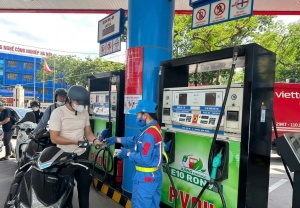 | National Assembly approves zero tax on petrol, oil, aviation fuel The National Assembly has unanimously approved sweeping tax cuts on petrol, oil and aviation fuel, reducing key rates to zero through June 30 in a bid to cushion domestic markets against volatile global energy prices. |
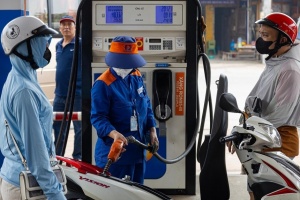 | Fuel imports rise in first quarter amid global market volatility Vietnam has ramped up fuel imports in the first quarter of the year amid global energy market volatility due to the tensions in the Middle East. |
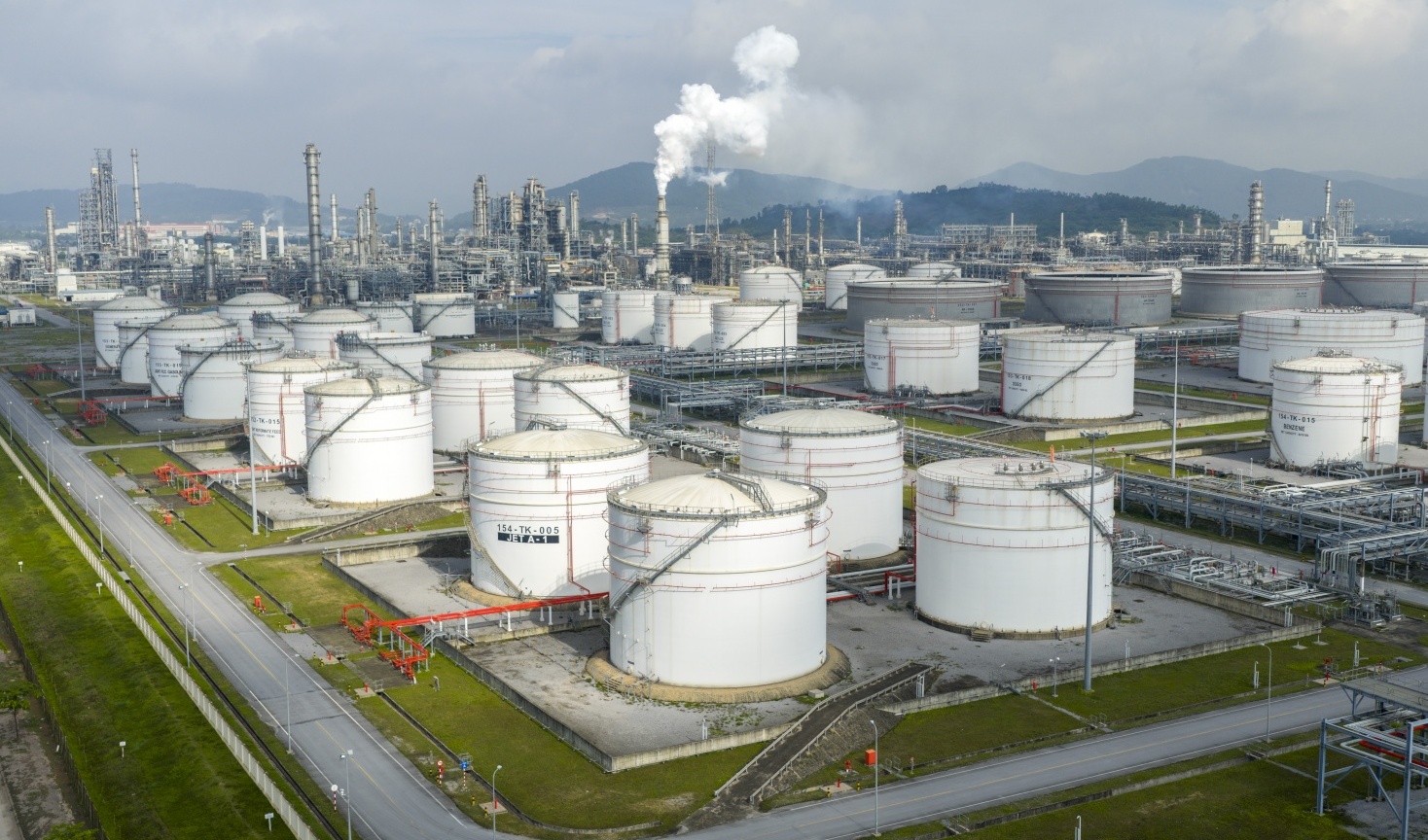
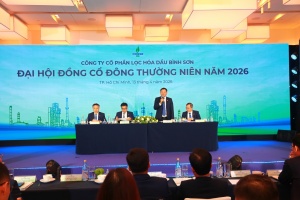 | BSR secures three months of crude supply for Dung Quat refinery Binh Son Refining and Petrochemical has secured enough crude oil to operate its Dung Quat refinery for the next three months amid Middle East supply disruptions. |
What the stars mean:
★ Poor ★ ★ Promising ★★★ Good ★★★★ Very good ★★★★★ Exceptional
 Tag:
Tag:
Related Contents







Latest News




More News
- Sojitz in Vietnam: 40 years from individual projects to a business cluster 'KATAMARI' (October 08, 2026 | 09:00)
- Coteccons targets 'Quality Growth' with 25 per cent dividend plan (October 07, 2026 | 13:00)
- Vietnam Education Forum opens UK Education Mission's Hanoi visit (October 07, 2026 | 12:27)
- Tax authorities deactivate TINs of nearly 180,000 businesses (October 07, 2026 | 12:08)
- World Bank raises Vietnam's 2026 GDP growth forecast to 7.4 per cent (October 07, 2026 | 11:41)
- Vietstock 2026 to spotlight livestock innovation and green transition (October 07, 2026 | 09:00)
- Vietnam’s GDP grows over 9 per cent in first nine months (October 05, 2026 | 18:45)
- Vietnam earns $56.3 billion from agro-forestry-fishery exports (October 05, 2026 | 18:32)
- DSV balances resilience and decarbonisation in supply chains (October 05, 2026 | 18:20)
- Electronics exports reach $175.4 billion in the first nine months (October 05, 2026 | 18:12)



Latest News





 Mobile Version