
Hanoi region to get second airport under revised aviation plan

The Ministry of Construction (MoC) issued Decision No.1140/QD-BXD on July 1, approving revisions to the National Airport System Development Plan for the 2021-2030 period, with a vision to 2050.
This marks the second adjustment to the national airport development plan within the past six months.
Of note, the revised plan incorporates the country's updated development targets, using an average GDP growth rate of at least 10 per cent per year during the 2026-2030 period and GDP per person of around $8,500 by 2030 as the basis for forecasting air transport demand.
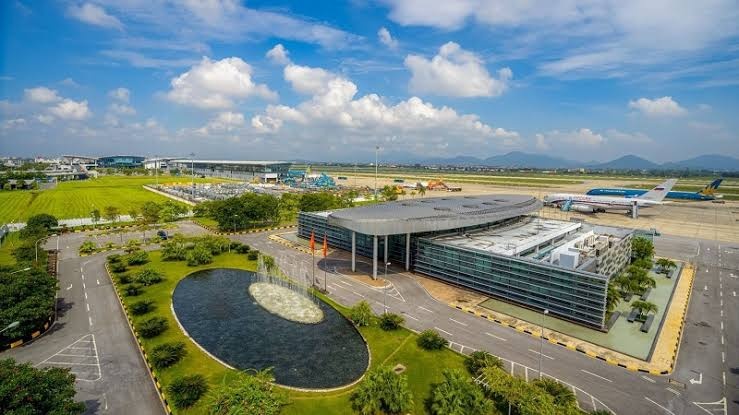 |
| Noi Bai International Airport (Hanoi). Photo: ACV |
Under the revised plan, Vietnam will continue to manage, invest in and efficiently operate the country’s existing airports while developing a network of 36 airports during the 2021-2030 period, including 19 international airports and 17 domestic airports.
Compared with the previous plan for the same period, the most notable addition is the inclusion of the second airport for the capital region in the list of international airports, raising the total number of international airports from 19 to 20.
Decision 1140 states that the location of the second airport for the capital region will be studied and determined before 2030.
According to the orientation set out in the plan, the airport is expected to be located in the southern part of Hanoi, within Ung Hoa and Chuyen My communes.
Another key highlight of Decision 1140 is that, for the first time, the National Airport System Development Plan introduces specific criteria for the development of air logistics centres.
Such centres will be established at airports handling cargo demand of at least 250,000 tonnes per year while meeting warehousing and multimodal transport connectivity requirements.
The MoC has prioritised the development of air logistics centres in the Hanoi region, the Ho Chi Minh City region, and at Van Don, Cat Bi, Quang Tri, Chu Lai, Long Thanh and Can Tho airports.
Expansion to other airports will be considered once they meet the required cargo throughput criteria.
In addition, Decision 1140 outlines plans to establish a network of aircraft maintenance, repair and overhaul (MRO) centres at airports where demand exists.
Priority will be given to major airports with integrated infrastructure and strong international route networks, including Van Don, Noi Bai, Gia Binh, Chu Lai, Tan Son Nhat, and Long Thanh.
This is the first time the National Airport System Development Plan has clearly identified the airports to be prioritised for MRO centre development, laying the foundation for the establishment of Vietnam's aviation industry and a high value-added aviation technical services supply chain.
The inclusion of air logistics and MRO as formal components of the National Airport System Development Plan for the first time reflects a shift in development orientation from focusing solely on airport infrastructure to promoting the broader aviation economy, in line with the development model adopted by major regional aviation hubs such as Singapore, Incheon, and Hong Kong.
Decision 1140 also revises the aviation sector's development targets through 2030, placing greater emphasis on transport demand and infrastructure quality.
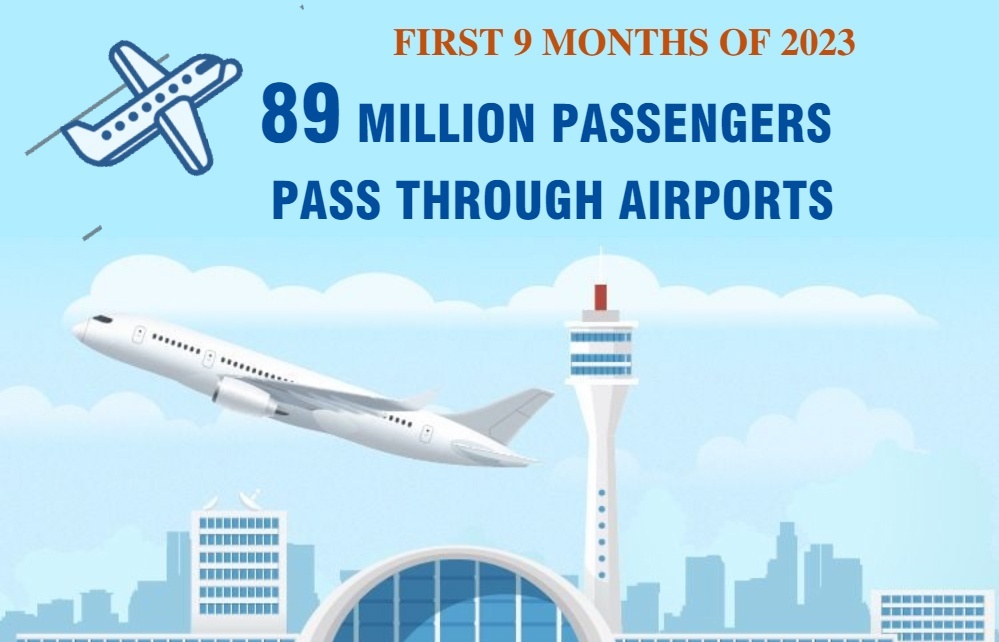
Total throughput across the national airport system is projected to reach just under 250 million passengers and 4.35 million tonnes of cargo.
Alongside prioritising investment in major hubs in the capital region, including Noi Bai and Gia Binh, and in Ho Chi Minh City, including Tan Son Nhat and Long Thanh, the plan aims to raise the network's designed capacity to accommodate passenger growth while ensuring more than 95 per cent of the population can access an airport within a 100-kilometre radius.
Decision 1140 also introduces several new orientations aimed at making aviation sector development more flexible and modern.
Rather than prescribing fixed investment scales for each airport, the MoC states that both investment scale and implementation timing are intended as guiding references only.
Investment in newly planned airports will be considered based on socioeconomic development strategies, national defence and security requirements, transport demand, the availability of resources and investment efficiency.
This approach will provide greater flexibility to accelerate or adjust airport investment schedules as actual conditions evolve, instead of requiring formal revisions to the development plan as in the past.
The revised plan also introduces a more flexible mechanism for the airport network by allowing domestic airports to operate non-scheduled international flights, provided they fully satisfy all regulatory requirements.
Together with the mechanism allowing specialised airports to be converted into domestic airports when regular commercial operations become necessary, the new provisions are expected to enable more efficient utilisation of the existing aviation infrastructure while reducing pressure for new investment in the short term.
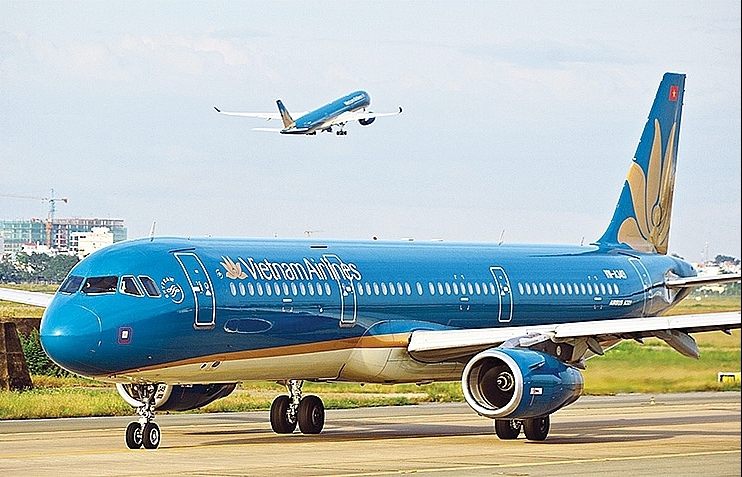
 | Tan Son Nhat International Airport’s Terminal 3 construction to kick off in May Airports Corporation Vietnam (ACV) has proposed beginning the construction of Tan Son Nhat International Airport’s Terminal 3 this month after a long delay. |
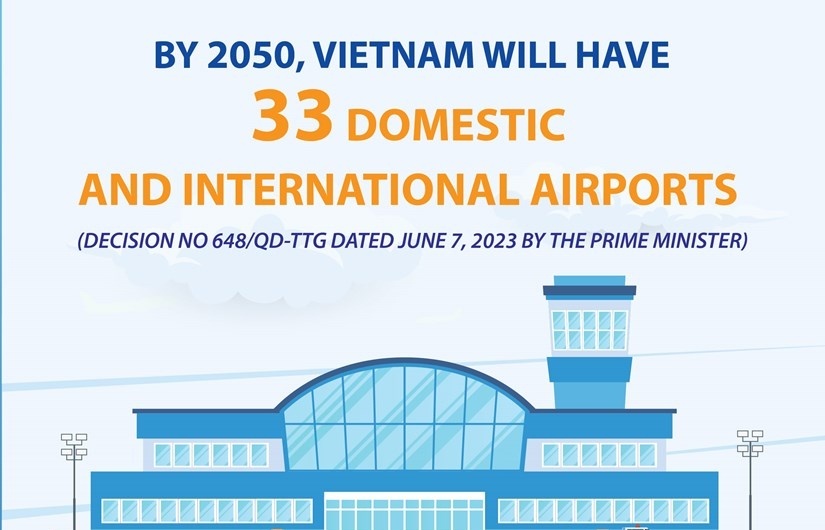
 | Vietnam to establish 33 domestic and international airports by 2050 Under the Decision approving the master plan for the development of the national airport network, Vietnam will establish 30 domestic and international airports in the 2021-2030 period and by 2050 will have 33. |
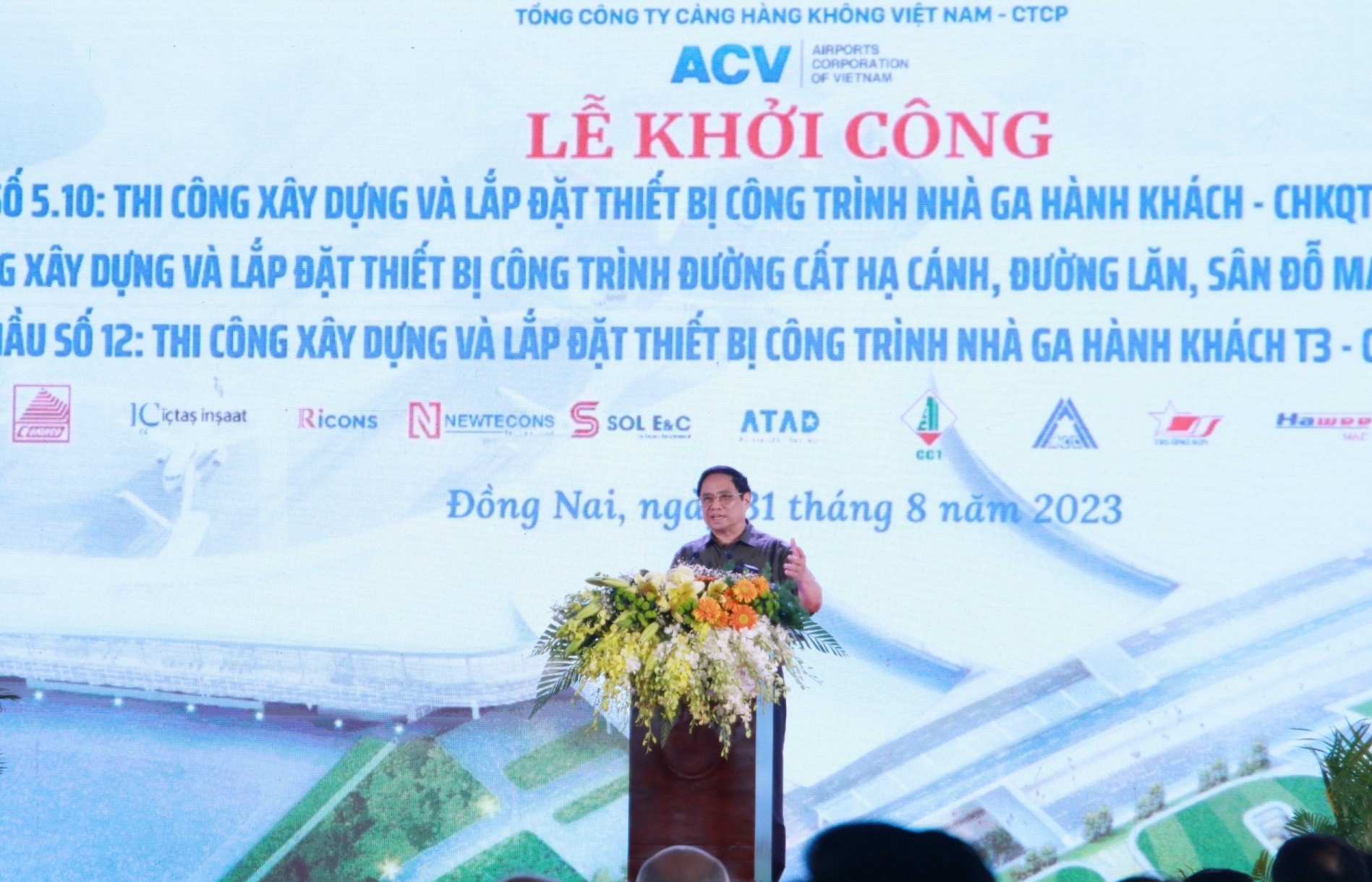
 | Long Thanh International Airport's road to success paved with obstacles Long Thanh International Airport in Dong Nai province is expected to give southeast Vietnam an economic boost when it opens in 2026, but this opportunity will arrive with multiple challenges. |
What the stars mean:
★ Poor ★ ★ Promising ★★★ Good ★★★★ Very good ★★★★★ Exceptional
 Tag:
Tag:
Related Contents




Latest News




More News
- Thanh Hoa urged to remove obstacles to Cong Thanh LNG project (October 23, 2026 | 10:14)
- Vietnam pledges transparent tax and customs policies for South Korean businesses (October 23, 2026 | 10:08)
- KUKA Vietnam inaugurates new Hanoi headquarters (October 22, 2026 | 09:00)
- OJI Group invests in $110 million aseptic carton packaging plant in Vietnam (October 22, 2026 | 08:23)
- EVN begins construction on the Quang Trach II LNG plant (October 22, 2026 | 07:00)
- Foreign investors pour billions into Vietnam's semiconductor sector (October 21, 2026 | 14:49)
- Hyosung TNC begins bio-BDO production in Vietnam (October 21, 2026 | 12:12)
- Ho Chi Minh City to unveil new projects worth $13.5 billion at AEF 2026 (October 21, 2026 | 11:51)
- Market upgrade is just the beginning: Vietnamese companies face tougher test to attract capital (October 20, 2026 | 16:04)
- EFTA–Vietnam Free Trade Agreement opens up opportunities to enhance supply chain (October 20, 2026 | 15:56)






 Mobile Version