
Iran war to modestly impact Vietnam

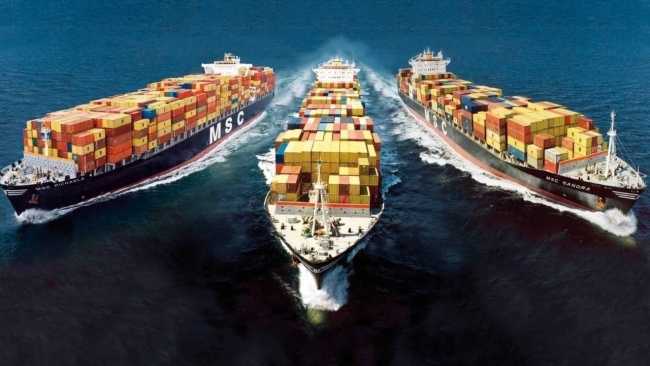 |
Michael Kokalari, chief economist of VinaCapital said, "The war in Iran should not have a major impact on Vietnam, partially because its exports to the Middle East account for less than 3 per cent of total exports, and because protracted, large-scale ground operations in Iran are unlikely. Instead, we expect a more intense version of last year’s '12 -day war,' lasting a bit longer but ultimately proving to be a sharp but temporary shock for global markets."
The most noticeable impact on the Vietnamese economy comes from the sharp rise in world oil prices. Global oil prices are up about 30 per cent year-to-date, which will probably lift Vietnam’s consumer price index (CPI) inflation rate from 2.5 per cent on-year to circa 4 per cent in the months ahead.
Petrol accounts for approximately 4 per cent of Vietnam’s CPI basket, but food accounts for 36 per cent/CPI and Vietnam produces most its own food domestically, enabling policymakers to limit the impact of temporary inflation spikes on the country’s economy.
"The oil price spike will also weigh on Vietnam’s GDP growth somewhat because Vietnam net imports over 1 per cent of GDP worth of the energy that it consumes, despite producing crude oil and gas itself. It would be fairly straightforward for the government of offset this drag on growth with stimulus measures," Kokalari said.
Also, additional increases in oil prices from current levels could be somewhat constrained by the Organization of the Petroleum Exporting Countries’s decision to increase output beginning in April and oil inventories – particularly in China – were reportedly at multi-year highs as of early 2026.
That said, the value of the US dollar and gold prices both increased to some degree in response to the commencement of the conflict due to “safe haven” flows into both. This in turn puts some depreciation pressure on the VND, which when coupled with upward pressure on CPI inflation, reinforces our prior expectation that 12-month bank deposit rates in Vietnam will increase by 50-100 basis points this year to circa 7 per cent by year-end.
In a protracted war scenario, which could push oil prices well above $100, the impact on Vietnam's economy will become more apparent. Inflation would rise above 5 per cent, pushing 1-year deposit interest rates above the 7–8 per cent range. Vietnam’s GDP growth could decline by a total of 2 percentage points.
This scenario also entails an oil price shock to household spending. Specifically, direct household spending on petrol, heating in Vietnam is about 6 per cent. An approximately 70 per cent oil price shock would lift that share to over 10 per cent.
High oil prices could also weaken consumer demand in Vietnam's major export markets. Vietnam’s total exports could suffer a 20 percentage-point hit in this scenario, which would translate into a circa 1 percentage-point hit to GDP growth.
 | Middle East tensions set to test VN-Index, boost energy stocks Escalating Middle East tensions are rattling global energy markets, but analysts say several stock groups could outperform even as broader indices face short-term volatility. |
 | PV Gas reduces LPG deliveries amid Middle East conflict disruptions State-run Vietnam Oil and Gas Group subsidiary PV Gas has been forced to scale back its liquefied petroleum gas deliveries following supply disruptions linked to armed conflict in the Middle East and operational incidents at key production facilities. |
 | Middle East tensions drive cost pressures for seafood exporters Seafood companies are facing mounting cost pressures and rising cold chain risks as the Middle East conflict escalates, posing urgent questions about market restructuring. |
What the stars mean:
★ Poor ★ ★ Promising ★★★ Good ★★★★ Very good ★★★★★ Exceptional
 Tag:
Tag:
Related Contents



Latest News






More News
- MEXC highlights AI-driven trading and broader market access at TOKEN2049 (October 17, 2026 | 09:00)
- EuroCham confidence index holds at 78.3 despite operational hurdles (October 16, 2026 | 17:27)
- Shrimp and rice firms face rising standards in export markets (October 16, 2026 | 09:00)
- SCG and Prime Group add value to the ecosystem (October 15, 2026 | 15:55)
- Project readiness key to unlocking green finance (October 15, 2026 | 12:35)
- Sovereign AI and human oversight key to secure digital government (October 15, 2026 | 12:32)
- MEXC Ventures partners with Corelia Academy: Bringing digital asset education closer to Vietnamese students (October 15, 2026 | 09:00)
- Global design expertise meets a more sophisticated Vietnam market (October 15, 2026 | 09:00)
- Vietnam growth nears double digits, UOB raises forecast (October 14, 2026 | 17:39)
- Smart factories need skills, finance and trust to scale (October 14, 2026 | 17:33)




Latest News







 Mobile Version