
Finance sector lays firm groundwork for 2026 after major reform

 |
The conference was honuored by the attendance and keynote remarks of Prime Minister Pham Minh Chinh, alongside members of the Party Central Committee, deputy prime ministers, leaders of central Party and state bodies, National Assembly agencies, and local authorities.
Addressing the conference, Minister of Finance Nguyen Van Thang said this was the first annual review conducted under the ministry's new organisational structure following the merger and consolidation of the MoF, the Ministry of Planning and Investment, the State Capital Management Committee at Enterprises, and Vietnam Social Security.
"The entire financial sector has strengthened in solidarity and determination to fulfill all assigned tasks as we enter a new phase of development in 2026," he said.
The minister added that 2025 had been marked by significant challenges, particularly heightening uncertainty and volatility in global financial and trade markets, as well as severe impacts from natural disasters, flooding, and climate change. At the same time, the financial sector undertook an unprecedented organisational overhaul from central to local levels, cutting 37 per cent of focal units.
"These developments posed considerable challenges for the entire sector. However, the MoF maintained unity and overcame difficulties to achieve encouraging results," the minister said.
First, on institutions, the MoF focused on developing the largest volume of legal and policy documents ever, coupled with renewed thinking and approaches to remove obstructions, promote decentralisation and delegation, and promptly meet new development requirements.
Second, the MoF advises the government on scenarios and policy solutions to achieve economic growth of at least 8 per cent while keeping inflation at its lowest possible level.
Third, fiscal policy management was conducted in a proactive, decisive, and effective manner, with clear priorities. Tax and fee reductions and extensions were implemented to support production and business, alongside enhanced revenue management linked to digital transformation to ensure accurate collections. Recurrent expenditure was strictly curtailed to increase spending on development, social security, and national defence and security.
Fourth, administrative procedures and business conditions were further streamlined, improving the investment and business environment and contributing to the mobilisation of social investment and the development of all economic sectors.
Fifth, financial and securities markets continued to develop in a more modern, efficient, sustainable, and integrated direction.
Sixth, the effectiveness of the social insurance system and insurance market was strengthened to mitigate economic risks and support sustainable and inclusive development.
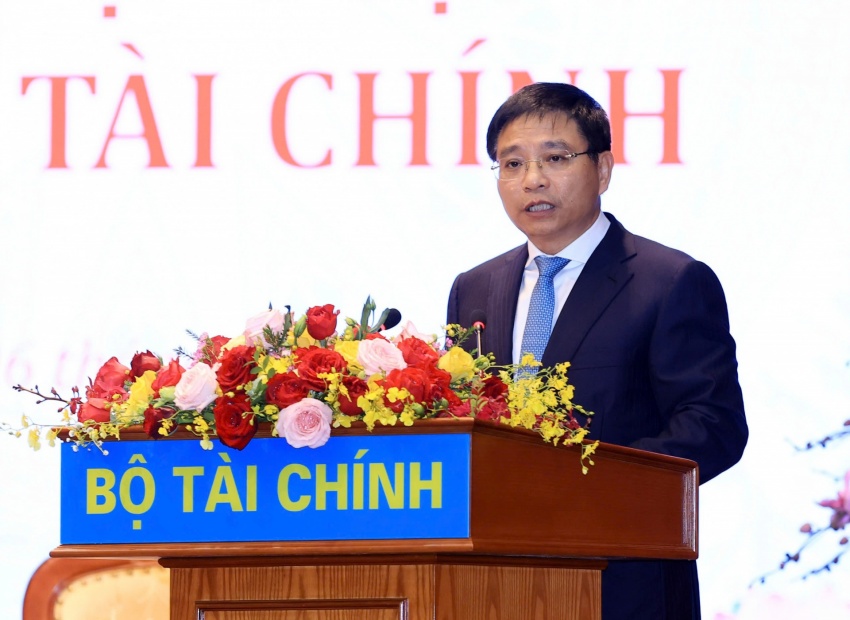 |
| Minister of Finance Nguyen Van Thang |
In addition to these achievements, Minister Thang also pointed to several disadvantages and difficulties. Foremost among them was pressure on financial policy management to mobilise social investment at around 40 per cent of GDP to achieve double-digit growth, while maintaining macroeconomic stability.
It is also necessary to further innovate and improve financial and investment policy solutions to create breakthroughs in developing economic sectors and financial markets, in line with resolutions and conclusions of the Party and National Assembly, and the direction of the government and the prime minister.
"Moreover, workloads are increasing and requirements are becoming more demanding, while some tasks and projects have yet to fully meet development needs," the minister said, while calling on the entire sector to draw valuable lessons and best practices to work more effectively.
Looking to 2026, the minister said that this is a year of particular importance, marking the first year of implementing the Resolution of the 14th National Party Congress. While external conditions remain unfavourable and unpredictable, and the economy still faces internal constraints and challenges, the Party, National Assembly, government and the prime minister have set very ambitious targets: economic growth of at least 10 per cent in 2026, while maintaining macroeconomic stability, controlling inflation at around 4.5 per cent, ensuring major economic balances, strengthening social security, improving living standards, and meeting the requirements of rapid, sustainable, and inclusive national development.
The MoF and the entire financial sector must act with greater resolve and determination, continue to comprehensively renew thinking and approaches across all areas of work, and closely and effectively coordinate with ministries, agencies, and localities to promptly implement the Party's guidelines, National Assembly resolutions, and the direction of the government and the prime minister, in response to increasingly demanding requirements.
Following the minister's remarks, under the chairmanship of PM Chinh, the conference focused on discussions and substantive, candid contributions to the 2025 situation and key solutions for 2026.
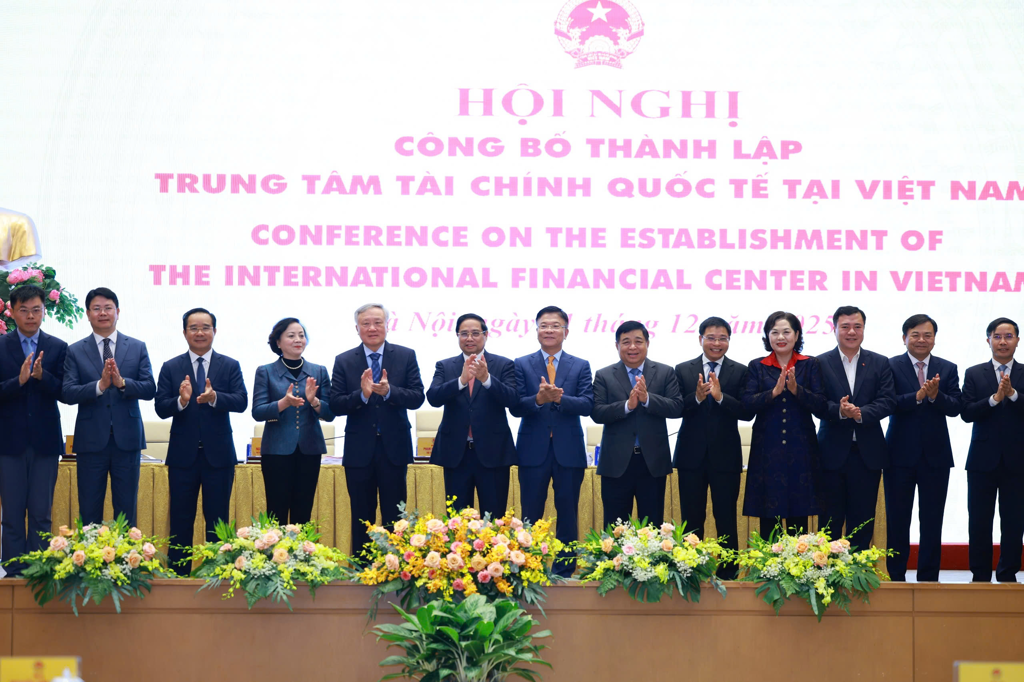 | Government moves to establish International Financial Center The government has officially announced the establishment of an International Financial Center (IFC), signaling a major policy push to elevate the country's role in regional finance. |
 | Tax sector wraps up 2025 and sets priorities for next year The tax authorities closed 2025 with record revenue collections and digital adoption while outlining key priorities for 2026, including expanding the tax base, preventing revenue losses, and improving taxpayer services. |
 | Vietnam GDP posts second-strongest growth since 2011 Vietnam's economy delivered one of its strongest growth performances in more than a decade last year, with momentum building steadily through the quarters and peaking at year-end. |
 | Stock market starts 2026 with growth and governance in focus Vietnam's stock market began its first trading session of 2026 on a confident note, with lingering underscoring its role as a key pillar for rapid yet sustainable economic growth in the next phase of national development. |
What the stars mean:
★ Poor ★ ★ Promising ★★★ Good ★★★★ Very good ★★★★★ Exceptional
 Tag:
Tag:Related Contents


Latest News





More News
- EuroCham confidence index holds at 78.3 despite operational hurdles (October 16, 2026 | 17:27)
- Shrimp and rice firms face rising standards in export markets (October 16, 2026 | 09:00)
- SCG and Prime Group add value to the ecosystem (October 15, 2026 | 15:55)
- Project readiness key to unlocking green finance (October 15, 2026 | 12:35)
- Sovereign AI and human oversight key to secure digital government (October 15, 2026 | 12:32)
- MEXC Ventures partners with Corelia Academy: Bringing digital asset education closer to Vietnamese students (October 15, 2026 | 09:00)
- Global design expertise meets a more sophisticated Vietnam market (October 15, 2026 | 09:00)
- Vietnam growth nears double digits, UOB raises forecast (October 14, 2026 | 17:39)
- Smart factories need skills, finance and trust to scale (October 14, 2026 | 17:33)
- Sanofi-Aventis Vietnam appoints new head of Vaccines and country lead (October 12, 2026 | 17:21)




Latest News






 Mobile Version