
Funding must be activated for semiconductor success

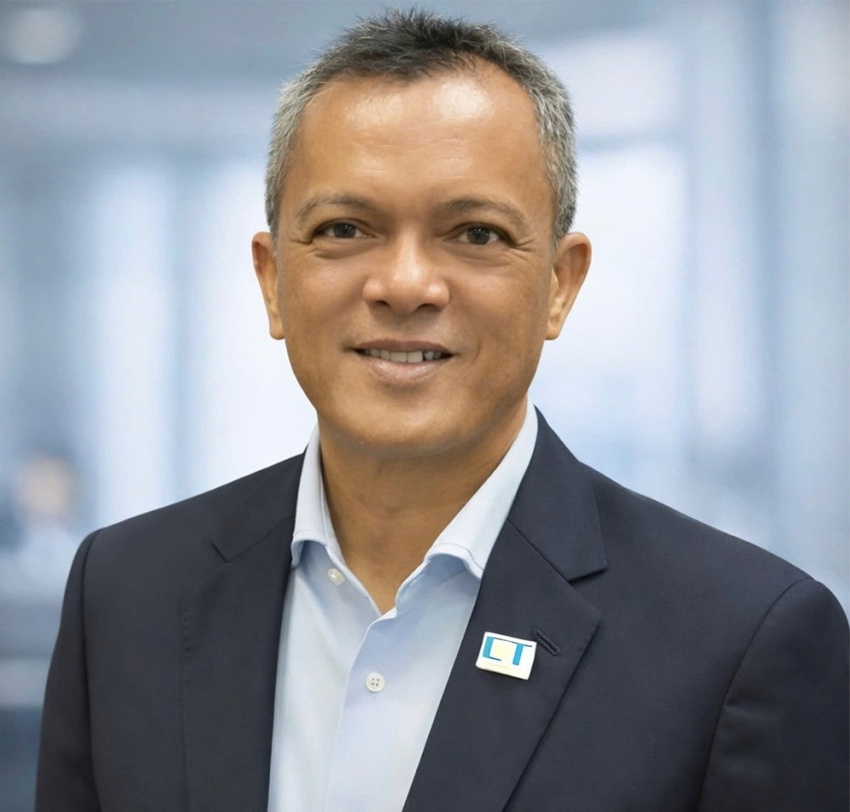 |
| Azmi Bin Wan Hussin Wan, chief operations officer CT Semiconductor |
However, for global semiconductor corporations, interest or policy declarations alone are insufficient. Capital flows are only truly activated when concrete, verifiable, and operationally effective trigger conditions are met.
Global semiconductor investors do not make decisions based on potential or paper-based strategies. They invest in countries where operational conditions have been demonstrably proven.
The first decisive criterion is industrial infrastructure reliability. Semiconductor manufacturing requires uninterrupted power supply, ultra-pure water, stable operating environments, full ecosystem for supply chain, and logistics systems capable of withstanding disruptions.
Investors assess not only installed capacity, but also redundancy and continuity of operations. Without proven industrial-grade reliability at this level, Vietnam is unlikely to become a priority destination.
The second criterion is long-term policy predictability and credibility. Semiconductor investments typically have very long lifecycles. As such, confidence in the stability, transparency, and consistency of legal frameworks, government policy including tax, import/export, land-use rights, and investment procedures is more critical than the level of incentives offered.
From my perspective, domestic enterprises play an anchoring role in building market confidence. By committing long-term capital and aligning closely with national priorities, such as Vietnam’s semiconductor industry development strategy to 2030, Vietnam’s direction is structural rather than short-term.
The third criterion is scalable human capital. Beyond highly skilled engineers, the semiconductor industry requires large numbers of process engineers, technicians, and skilled operators. Vietnam’s competitiveness will depend on its ability to rapidly scale this workforce in both quantity and quality.
Compared with Malaysia, Indonesia, and India, CT Semiconductor identifies Vietnam’s greatest weakness as its limited participation in the semiconductor value chain, particularly in advanced manufacturing and outsourced semiconductor assembly and test (OSAT).
Malaysia has built a mature OSAT ecosystem over several decades, supported by dense supplier and service networks. India, while still developing, has mobilised substantial state resources under a clear national strategy. Vietnam, despite its strong electronics manufacturing base, lacks hands-on experience in large-scale semiconductor production operations.
However, human capital and supporting services are areas where Vietnam can improve most rapidly if approached correctly. The key lies in sustained collaboration among three pillars: government, academia, and industry, where training must be closely linked to practice and real production environments.
In this context, CT Semiconductor has implemented a programme on assembly, testing, and packaging (ATP) at the National Innovation Centre in Hanoi. Delivered by international experts with over 30 years of industry experience and fully funded by the company, the programme attracted 180 lecturers from more than 50 universities and colleges nationwide, forming the core teaching force for Vietnam’s future semiconductor engineers.
Vietnam should adopt a phased development strategy, rather than attempting to cover the entire ecosystem from the outset. ATP should be the initial priority: this segment requires significantly lower capital investment than wafer fabrication, offers faster deployment timelines, and aligns well with Vietnam’s existing electronics manufacturing base. ATP facilities also generate immediate demand for materials, chemicals, equipment maintenance, and logistics, catalysing the formation of a supporting ecosystem.
Chip design capabilities can be developed in parallel, particularly in areas such as power electronics, automotive chips, and AI applications. However, design alone is insufficient to anchor supply chains. Physical manufacturing assets, especially ATP plants, create long-term commitments and stronger economic spillover effects.
On the next move, Vietnam can gradually expand into materials, equipment services, and eventually wafer fabrication as conditions mature. Based on this trajectory, we are working towards building a fully integrated semiconductor ecosystem, mastering the entire process from research and training to design, lithography, assembly, testing, and advanced packaging.
We believe several non-financial factors will become increasingly decisive in the coming years. Foremost among them is policy consistency and institutional coordination between central and local authorities, particularly in taxation, customs, and administrative procedures.
Intellectual property protection is another critical factor, especially as advanced packaging technologies and design intellectual property continue to rise in value.
Environmental, social, and governance (ESG) compliance has also become a strategic requirement. We are committed to fully complying with international ESG standards to meet the growing expectations of global partners.
Finally, connectivity with the global ecosystem, through trade agreements, mobility of international experts, data governance frameworks, and alignment with global technology standards, will strongly influence decisions.
We identify three key criteria to activate a new wave of semiconductor investment into Vietnam during the next five years: a long-term national semiconductor strategy with binding commitments; development of ready-to-operate semiconductor industrial zones, with guaranteed infrastructure and streamlined licensing procedures; and large-scale development of technical human capital, focusing on application-oriented engineers trained in collaboration with industry.
If Vietnam can translate these criteria into tangible capabilities rather than policy aspirations, the country will not only draw in funding, but progressively position itself as a strategic node in the global semiconductor supply chain, anchored by pioneering enterprises already turning these conditions into reality.
What the stars mean:
★ Poor ★ ★ Promising ★★★ Good ★★★★ Very good ★★★★★ Exceptional
 Tag:
Tag:Related Contents



Latest News


More News
- AI beginning to reshape recruitment criteria (October 09, 2026 | 16:49)
- Electronics firms boost raw material reserves sevenfold amid supply concerns (October 09, 2026 | 08:00)
- NSRP navigates global energy supply volatility (October 08, 2026 | 16:59)
- Minitab launches campaign to combat illegal software use in Vietnam (October 08, 2026 | 15:54)
- Raising construction materials supply chain standards amid green transition (October 08, 2026 | 14:00)
- Samsung Vietnam to deepen cooperation with local manufacturers (October 08, 2026 | 12:00)
- Sojitz in Vietnam: 40 years from individual projects to a business cluster 'KATAMARI' (October 08, 2026 | 09:00)
- Coteccons targets 'Quality Growth' with 25 per cent dividend plan (October 07, 2026 | 13:00)
- Vietnam Education Forum opens UK Education Mission's Hanoi visit (October 07, 2026 | 12:27)
- Tax authorities deactivate TINs of nearly 180,000 businesses (October 07, 2026 | 12:08)








 Mobile Version