
Expectations increased with EU’s tightened due diligence

Assessments of the EU’s Corporate Sustainability Due Diligence Directive (CSDDD) were outlined in a PwC Vietnam publication released in early January. According to the report, the directive, which took effect in mid-2024 with staggered application phases towards 2029, will apply to companies with more than 5,000 employees and global net revenues of at least €1.5 billion ($1.74 billion), including non-EU companies that generate an equivalent level of revenue within the EU market.
At its core, the CSDDD requires companies to identify, prevent, mitigate, and address adverse impacts on human rights and the environment, while providing remediation where harm has occurred. Crucially, due diligence must be embedded into corporate policies and governance structures and extended across the entire value chain, rather than being confined to direct suppliers or first-tier business partners.
“Enforcement will be overseen by designated national authorities in EU member states, with companies facing administrative penalties and potential civil liability if due diligence efforts are found to be insufficient,” said the report. This enforcement mechanism signals a shift towards more tangible consequences for companies that fail to demonstrate effective and continuous due diligence.
PwC highlighted that the implications for Vietnamese businesses could be far-reaching. Even companies not directly subject to the directive are likely to feel its effects, particularly those operating as subsidiaries, contractors, or suppliers to EU-based firms.
Expectations around transparency in labour practices, environmental management, and corporate governance are set to rise, requiring many Vietnamese companies to accelerate changes already under way to meet stricter sustainability standards demanded by EU customers, parent companies, and investors.
For companies that fall within the scope of the directive, due diligence processes will need to align with international frameworks such as the Guidelines for Multinational Enterprises from the Organisation for Economic Co-operation and Development, and the UN Guiding Principles on Business and Human Rights. This includes embedding due diligence into enterprise risk management, identifying and prioritising human rights and environmental risks across operations and business partners, taking action to prevent or address adverse impacts, and disclosing progress in a transparent and consistent manner.
Information requests from companies covered by the directive will also be guided by a risk-based approach, with a strong focus on data related to adverse impacts. Vietnamese companies that sit within EU value chains can therefore expect growing demands for due diligence information, including risk assessments, mitigation plans, supplier questionnaires, grievance mechanisms, and traceability data.
In many cases, internal policies and operational practices relating to labour standards, environmental controls, and governance will need to be reviewed and updated to align with partner expectations. Contractual arrangements and supplier codes of conduct may also be strengthened to reflect clearer commitments to responsible business practices, data governance, and corrective action planning.
At the same time, deeper participation in EU value chains means that the operations of Vietnamese firms may feature more prominently in risk assessments, particularly in sectors or locations considered higher risk. This heightened visibility increases both compliance pressure and reputational exposure, especially for companies operating in labour-intensive or environmentally sensitive industries.
“The way Vietnamese companies connect to global value chains is being fundamentally reshaped by new regulatory requirements,” said Jeremy Prepscius, managing director for Global Sustainability and Sustainable Supply Chains at PwC Hong Kong. “Digitalisation, transparency of origin, and traceability are becoming essential tools for demonstrating value, product performance, and regulatory compliance.”
Prepscius added that these requirements are increasingly embedded across the entire business cycle. “We are seeing traceability and data integrity influencing how companies source inputs, manage suppliers, design operations, and even how they position products in the market. Sustainability information is becoming as important as cost and quality in commercial decision-making,” he said.
According to Luong The Cuong, senior manager of ESG Risk Services at PwC Vietnam, the CSDDD marks a decisive shift in how sustainability is enforced across global value chains. “The directive sends a clear signal that responsible business conduct is moving from voluntary commitments to binding obligations, not only for EU companies but also for their subsidiaries and suppliers,” Cuong said.
For Vietnamese firms, this means higher expectations, closer scrutiny, and a greater need for proactive engagement with EU partners, he added. “Companies that wait to respond only when information is requested may struggle, while those that invest early in governance, systems, and capabilities will be better positioned to remain competitive and trusted within these value chains,” he said.
While compliance will require investment, PwC noted that companies that act early may gain strategic advantages. Strong due diligence systems can improve risk visibility, strengthen supplier relationships, and enhance credibility with international customers and investors. Over time, this may support access to higher-value contracts and more stable long-term partnerships.
 |
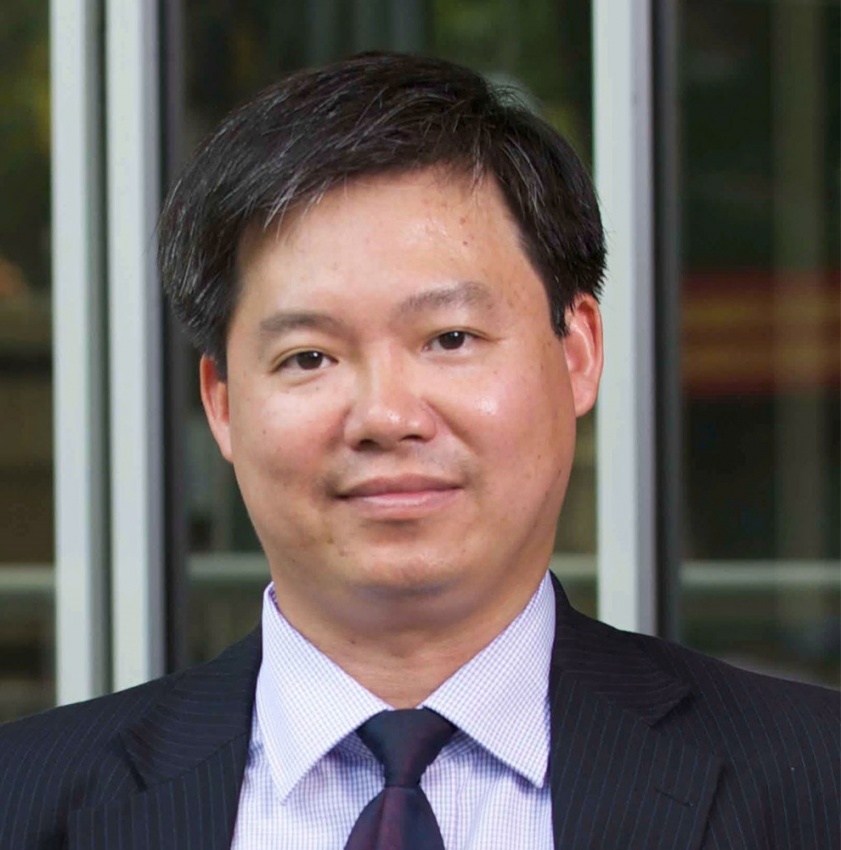
Nguyen Hoang Nam, ESG leader and partner PwC Vietnam
 |
Vietnamese companies remain at an early stage of readiness for the CSDDD. Some exporters have adopted basic sustainability practices to meet buyer requirements, but comprehensive due diligence is still limited.
Larger firms in sectors such as textiles and electronics are generally more advanced, reflecting pressure from global clients. By contrast, small and medium-sized enterprises, which comprise the bulk of Vietnam’s supply chain, face significant capability gaps.
The central challenge lies in moving from voluntary compliance to systematic, documented processes aligned with EU standards, including traceability, risk assessment, and remediation across the entire value chain.
Structural weaknesses pose material risks for Vietnamese suppliers. In labour management, inconsistent enforcement of working-hour limits, weak grievance mechanisms, and reliance on informal labour expose companies to compliance risks. Environmental controls present another vulnerability, as many suppliers lack effective monitoring of emissions, wastewater, and hazardous waste, alongside credible climate transition plans.
Corporate governance also remains underdeveloped, with limited board-level oversight of sustainability, weak integration of environmental, social, and governance into enterprise risk management, and inadequate reporting frameworks. In the absence of clear accountability and documented due diligence, suppliers risk failing mandatory disclosure requirements, increasing their exposure as high-risk partners for EU buyers.
At the same time, aligning with CSDDD offers Vietnamese enterprises a pathway to strategic value creation. Embedding due diligence into operations can strengthen transparency and risk management, enhancing credibility with EU clients and investors. Mapping supply chains and addressing vulnerabilities also improves resilience, reducing exposure to regulatory and reputational shocks.
Moreover, leadership in sustainability can support growth by improving access to premium markets and long-term contracts, as EU buyers increasingly prioritise partners aligned with their sustainability commitments.
Compliance with CSDDD should therefore be seen as an investment in brand value and operational discipline, rather than a regulatory burden.
What the stars mean:
★ Poor ★ ★ Promising ★★★ Good ★★★★ Very good ★★★★★ Exceptional
 Tag:
Tag:Related Contents




Latest News




More News
- KN Holdings honoured for ESG efforts in Vietnam (October 18, 2026 | 11:00)
- APEA 2026 Vietnam honours 65 outstanding leaders and enterprises (October 17, 2026 | 10:00)
- MEXC highlights AI-driven trading and broader market access at TOKEN2049 (October 17, 2026 | 09:00)
- EuroCham confidence index holds at 78.3 despite operational hurdles (October 16, 2026 | 17:27)
- Shrimp and rice firms face rising standards in export markets (October 16, 2026 | 09:00)
- SCG and Prime Group add value to the ecosystem (October 15, 2026 | 15:55)
- Project readiness key to unlocking green finance (October 15, 2026 | 12:35)
- Sovereign AI and human oversight key to secure digital government (October 15, 2026 | 12:32)
- MEXC Ventures partners with Corelia Academy: Bringing digital asset education closer to Vietnamese students (October 15, 2026 | 09:00)
- Global design expertise meets a more sophisticated Vietnam market (October 15, 2026 | 09:00)









 Mobile Version