

Vietnam grants first foreign bank licence in nine years to Korea’s IBK

On April 22, Deputy Governor Nguyen Ngoc Canh had a meeting with Chang Min Young, chairman and president of the Industrial Bank of Korea (IBK) at the State Bank of Vietnam (SBV) headquarters in Hanoi. During the meeting, Deputy Governor Canh congratulated IBK Vietnam on receiving its licence to establish a wholly foreign-owned bank in Vietnam.
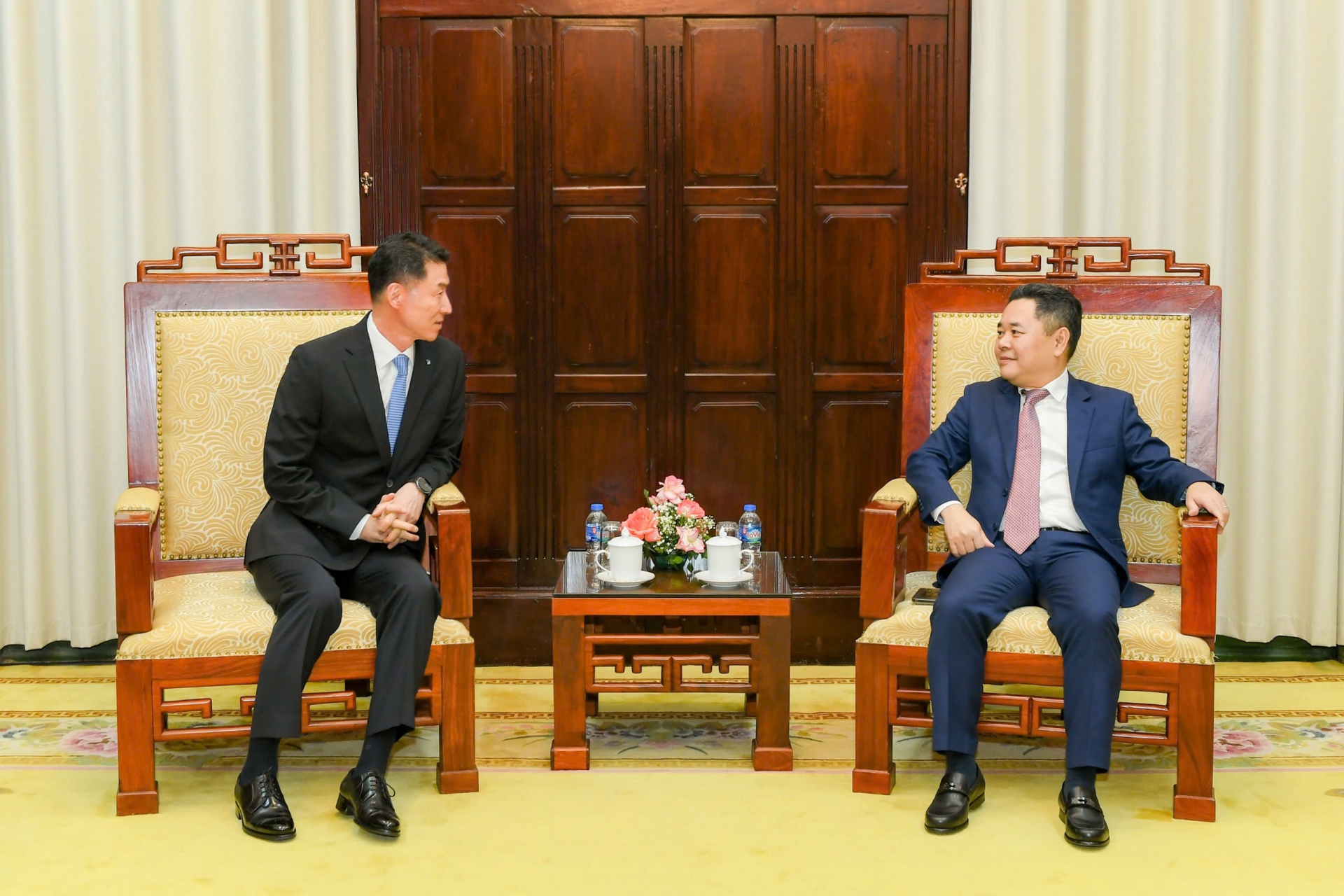 |
| Deputy Governor Nguyen Ngoc Canh (right) in discussion with Chang Min Young, chairman and president of IBK |
This is the only licence issued by the State Bank of Vietnam to a wholly foreign-owned bank in Vietnam over the past nine years, bringing the total number of such banks in the country to 10, including three from South Korea. The most recent licence before this was granted to UOB Vietnam in 2017.
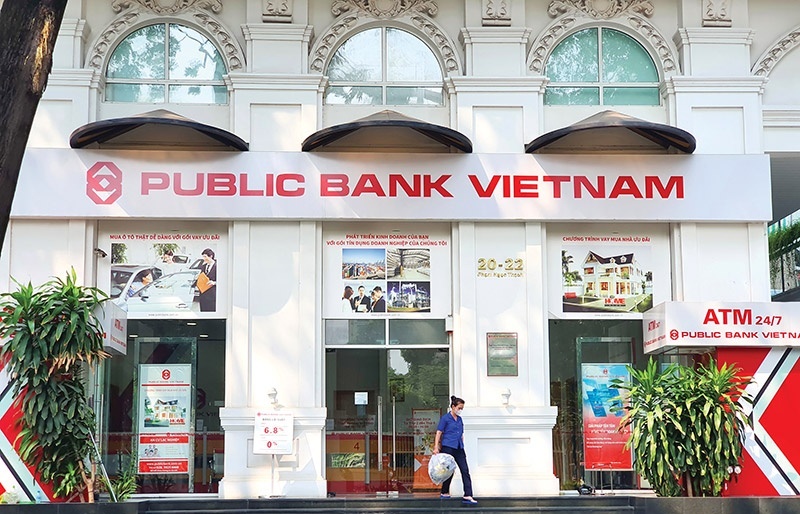
The current list of wholly foreign-owned banks in Vietnam features HSBC Vietnam, Shinhan Vietnam, Standard Chartered Vietnam, Public Bank Vietnam, Woori Vietnam, UOB Vietnam, ANZ Vietnam, Hong Leong Vietnam, CIMB Vietnam, and IBK Vietnam.
IBK’s top leader Chang Min Young noted that the bank was established with the mission of supporting small and medium-sized enterprises (SMEs), with 75 per cent of its lending portfolio dedicated to this segment.
He expressed confidence that IBK’s experience in operating financial mechanisms for SMEs would serve as a valuable asset in advisory and cooperative activities with Vietnam.
“As a wholly foreign-owned bank operating in Vietnam, IBK has committed to quickly stabilising its operations and performing effectively, contributing to strengthening cooperative relations between South Korea and Vietnam,” he said.
At the meeting, Deputy Governor Canh stated that Vietnam considered the development of SMEs a key driver of the national economy, holding an important role in economic growth, job creation, and social welfare.
“The demand for capital to support business development, especially for SMEs in Vietnam, is enormous. With more than 60 years of experience, IBK Vietnam can be serving as a bridge between businesses of the two countries, helping encourage Vietnam’s investment environment to Korean business community, and expand supply chain financing programmes. This, in turn, will help Vietnamese enterprises participate more deeply in global value chains,” he said.
The participation of wholly foreign-owned banks not only increases competition in the market but also creates momentum for domestic banks to improve governance standards, risk management, and service quality.
This group of banks typically has strengths in areas such as trade finance, retail banking, services for foreign-invested enterprises, and cross-border financial services, thereby effectively supporting import-export activities and foreign investment inflows into Vietnam.
In addition, foreign banks play an active role in the digital transformation of the banking sector by introducing advanced technological solutions, modern operating models, and innovative financial products.
At the same time, their compliance with international standards on capital safety, transparency, and corporate governance contributes to enhancing the stability and integration of Vietnam’s financial system in the face of deepening globalisation.
 | Banks address green credit significance Significant progress has been made in the sustainable finance market in Vietnam, with banks actively promoting bonds and loans to facilitate the development of projects aligned with environmental, social, and governance frameworks. |
 | Banks race to divest financial stakes Foreign banks and investors are projected to deepen their foothold in Vietnam’s consumer credit market, driven by low penetration rates compared to the region, favourable policies, and the evolving attitudes of a new generation of borrowers. |
 | From local bank leader to international executive Pham Hong Hai, CEO of OCB, spoke to VIR’s Hong Dung about the difficulties those in banking face in making the right decisions. |
What the stars mean:
★ Poor ★ ★ Promising ★★★ Good ★★★★ Very good ★★★★★ Exceptional
 Tag:
Tag:
Related Contents






Latest News



More News
- From loans to women’s economic empowerment (October 06, 2026 | 17:58)
- VIB named Outstanding Retail Bank 2026, targets transaction banking (October 06, 2026 | 10:52)
- FTSE upgrade paves way for stronger stock market development (October 05, 2026 | 18:44)
- coLoan to empower women through inclusive green finance (October 05, 2026 | 18:42)
- Techcombank CEO: AI no longer a tool but a new operating foundation (October 05, 2026 | 18:11)
- Banks sustain profit growth as funding costs squeeze margins (October 02, 2026 | 22:22)
- Nam A Bank delivers strong breakthrough in 2026 (October 02, 2026 | 19:00)
- Policy credit builds sustainable livelihoods from the grassroots (September 29, 2026 | 07:48)
- VIB deploys Front Arena treasury and foreign exchange trading system on AWS (September 28, 2026 | 16:46)
- Nam A Bank receives $60 million loan from FMO (September 28, 2026 | 12:37)


Latest News



 Mobile Version