
EV charging push unlocks new urban investment opportunities

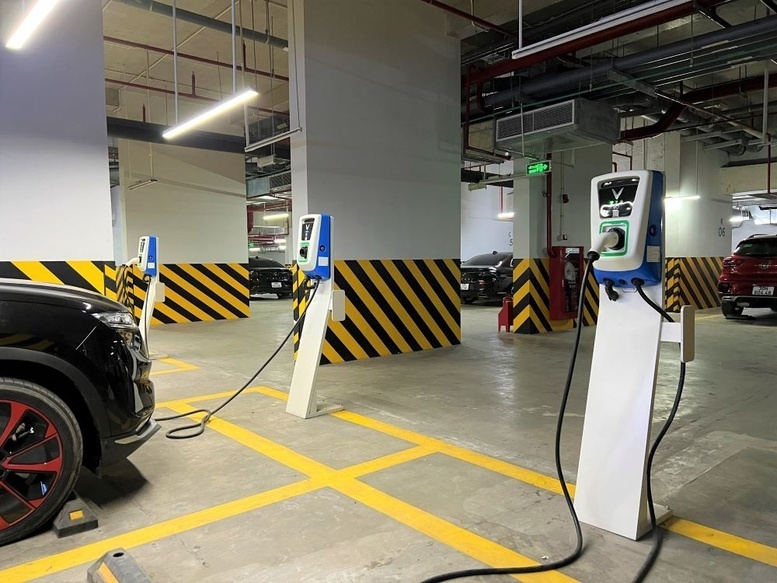 |
On March 31, Prime Minister Pham Minh Chinh issued Dispatch No.27/CD-TTg, instructing ministries, agencies, and local authorities to fast-track the rollout of EV charging stations in residential complexes. The move is seen as a critical step in supporting Vietnam’s broader green, digital, and energy transition agenda.
Despite strong policy momentum, charging infrastructure in urban areas remains fragmented and insufficient. A lack of synchronised planning for parking spaces, charging stations, and battery swapping facilities has placed pressure on internal power systems and raised concerns over fire safety risks.
For investors, the directive signals a turning point. Energy developers and utilities are among the primary beneficiaries, as rising EV adoption will drive electricity demand and open new revenue streams linked to charging services. Vietnam Electricity, in particular, is expected to play a pivotal role in managing load distribution and facilitating grid connections, while private players may increasingly enter the charging infrastructure space.
Real estate developers also stand to gain, especially those with large-scale urban projects. Integrating EV charging infrastructure into residential developments could enhance property value and marketability, particularly as sustainability becomes a key purchasing criterion for homebuyers.
“The policy push will likely favour developers that can quickly adapt their designs to incorporate charging infrastructure in line with new standards,” said an industry expert. “This creates a competitive edge in attracting environmentally conscious buyers and tenants.”
Meanwhile, equipment manufacturers and technology providers are poised to benefit from the upcoming introduction of national technical standards for charging devices and systems, expected to be completed by the Ministry of Industry and Trade in the third quarter of 2026.
The Ministry of Construction has been tasked with finalising urban planning regulations integrating green transport infrastructure, including EV charging stations, by the second quarter of 2026. It will also revise national technical standards for apartment buildings, providing detailed guidance on the design and installation of charging systems to ensure fire safety compliance.
Local authorities are required to review urban planning frameworks and allocate space for charging infrastructure, while coordinating with building investors and management boards to ensure safe and efficient deployment.
Experts caution, however, that execution risks remain. Weak coordination between stakeholders, unclear cost-sharing mechanisms, and safety concerns could slow implementation if not addressed through clear regulatory frameworks and operational standards.
“Investors will be watching closely how quickly the regulatory environment is clarified,” the expert said. “Transparent rules on installation, electricity pricing, and responsibilities between developers, residents, and service providers will be key to unlocking large-scale capital flows.”
What the stars mean:
★ Poor ★ ★ Promising ★★★ Good ★★★★ Very good ★★★★★ Exceptional
 Tag:
Tag:Related Contents




Latest News





More News
- Vietnam’s registered FDI surpasses $50 billion in nine months (October 07, 2026 | 10:30)
- Samsung Electro-Mechanics to add $1.85 billion semiconductor investment in Thai Nguyen (October 06, 2026 | 18:23)
- Electronics funding will be won via a capable ecosystem: SGS (October 06, 2026 | 09:00)
- LNG power plant projects risk falling behind schedule (October 03, 2026 | 09:00)
- Pandora opens world’s largest fine jewellery crafting facility (October 02, 2026 | 22:21)
- An Phat 5 Industrial Park positions for new wave of investment in northern Vietnam (October 02, 2026 | 09:00)
- Hanoi to launch portal to ease hurdles for tech businesses (October 01, 2026 | 09:00)
- Foreign investors to be widened for market access (September 30, 2026 | 17:54)
- Phu Quoc Airport planning adjusted to serve APEC 2027 (September 30, 2026 | 17:35)
- Nearly 200 foreign-invested enterprises in Vietnam to pay global minimum tax (September 30, 2026 | 17:26)


Latest News





 Mobile Version