

Dong Ho folk painting added to UNESCO’s urgent safeguarding list

According to the Department of Cultural Heritage, the decision was adopted at the 20th session of the Intergovernmental Committee for the 2003 Convention, held at the Red Fort in Delhi, India.
UNESCO also recommended that Vietnam integrate the heritage into education to help younger generations understand, value, and take responsibility for preserving traditional craft villages.
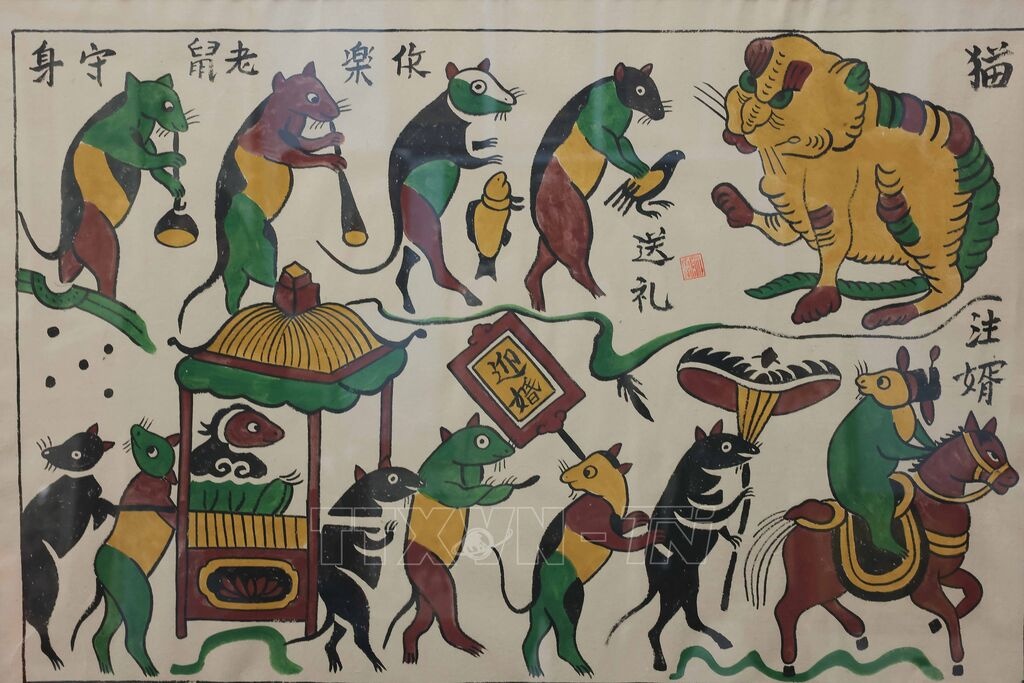 |
| Photo: Ministry of Culture, Sports, and Tourism |
Hoang Dao Cuong, Deputy Minister of Culture, Sports, and Tourism and vice chair of the Vietnam National Commission for UNESCO, said that Vietnam will implement the necessary measures to safeguard and promote the cultural value of Dong Ho painting in contemporary life.
UNESCO recognised that the craft meets all five key criteria for inscription. It remains deeply rooted in Vietnam’s cultural traditions and is associated with major festivals such as Lunar New Year and Mid-Autumn Festival, as well as ancestral and spiritual rituals.
Today, only a few families in Dong Ho village continue to practise the craft and pass it on to younger generations, a key indicator of its vulnerability.
A second criterion reflects the sharp decline in skilled artisans, reduced market demand, and limited interest among younger people. UNESCO also acknowledged Vietnam’s feasible safeguarding plan, which includes training programmes, heritage inventories, new design development, market diversification, improved raw materials, and equipment support for artisans.
The nomination dossier was prepared with extensive participation from local practitioners and craft families. The craft has been included in Vietnam’s national inventory of intangible cultural heritage and is periodically updated with community input.
Dong Ho folk painting, originating around 500 years ago in Dong Khe ward, Thuan Thanh city of Bac Ninh province, is known for its distinctive woodblock printing technique, vibrant natural colours, and themes ranging from worship and blessings to daily life, history, and landscapes. The entire process is handmade, using natural pigments such as indigo leaves for blue, gardenia for yellow, son stone for red, and soot from bamboo leaves for black.
Under UNESCO’s 2003 Convention, recognised intangible heritage is listed under three categories: Representative List of the Intangible Cultural Heritage of Humanity, List of Intangible Cultural Heritage in Need of Urgent Safeguarding, and Register of Good Safeguarding Practices.
The urgent safeguarding list applies to heritage at risk of disappearing without timely protection. Vietnam’s ca tru singing was inscribed in this category in 2009.
Vietnam has 37 UNESCO-recognised heritage elements, including nine world cultural and natural heritage sites, 17 intangible cultural heritage elements, and 11 documentary heritage inscriptions.
Bac Ninh alone holds five intangible cultural heritage elements recognised by UNESCO, including Quan Ho folk singing, Dong Ho folk painting, ca tru, the Worship of Mother Goddesses, and Huu Chap tug-of-war.

What the stars mean:
★ Poor ★ ★ Promising ★★★ Good ★★★★ Very good ★★★★★ Exceptional
 Tag:
Tag:
Related Contents






Latest News



More News
- Sedona SkyRun concludes latest race above Ho Chi Minh City (August 11, 2026 | 08:00)
- What propelled East West Barbershop into world's Top 10 grooming brands? (August 06, 2026 | 09:22)
- Livelihood Transition Training Conference contributes to rabies prevention and food safety development (July 24, 2026 | 17:14)
- Muong Thanh group launches 2026 mooncake collection (July 24, 2026 | 10:52)
- Pan Pacific launches 2026 mooncake collection (July 24, 2026 | 10:51)
- Vietnamese women step up as drivers of national development (July 15, 2026 | 11:54)
- Italy marks anniversary by celebrating women's eight decades of progress (June 23, 2026 | 17:19)
- Innovation expands reach of cultural identity in Hue (June 17, 2026 | 15:57)
- Fusion marks Global Wellness Day with spa promotions across Vietnam (June 06, 2026 | 14:11)
- Fortune names Citi CEO Jane Fraser the Most Powerful Woman in Business for 2026 (June 02, 2026 | 18:42)








 Mobile Version