
Amazon empowering sellers to scale globally

 |
Vietnamese enterprises are entering a critical window of opportunity as cross-border e-commerce continues to reshape global trade dynamics. With the global e-commerce market projected to approach $9 trillion by 2030, digital exports are increasingly becoming a strategic lever for Vietnam’s long-term export growth.
This shift comes as Vietnam continues to strengthen its role in global supply chains. The country has emerged as a competitive manufacturing hub, supported by strong capabilities in sectors such as home and kitchen, apparel, beauty, and personal care. These strengths are translating into tangible results on global platforms.
On Amazon, thousands of Vietnamese businesses, predominantly small- and medium-sized enterprises (SMEs), are reaching hundreds of millions of customers around the world, with product volumes sold rising by 35 per cent on-year. A growing number of sellers are also achieving annual revenues exceeding $500,000 and even $1 million, reflecting increasing maturity in Vietnam’s cross-border e-commerce ecosystem.
Beyond scale, the opportunity lies in value creation. As global consumption shifts towards direct-to-consumer models, branding, customer experience, and product differentiation are becoming decisive factors. This transition allows Vietnamese SMEs to move beyond traditional contract manufacturing and build their own global brands.
However, scaling internationally requires more than marketplace access. Sellers must navigate fragmented logistics systems, evolving regulatory requirements, and increasingly sophisticated consumer expectations. More importantly, they must continuously upgrade capabilities in operations, branding, and market understanding.
This is where structured seller communities are becoming a critical growth infrastructure rather than simply a support layer. By fostering collaboration, mentorship, and peer-to-peer learning, these ecosystems enable Vietnamese businesses to accelerate capability building, reduce risks, and move faster in global markets.
Rather than growing in isolation, SMEs are increasingly leveraging community networks to gain insights, benchmark performance, and build confidence as they expand internationally, laying the foundation for long-term growth.
Strengthening communities
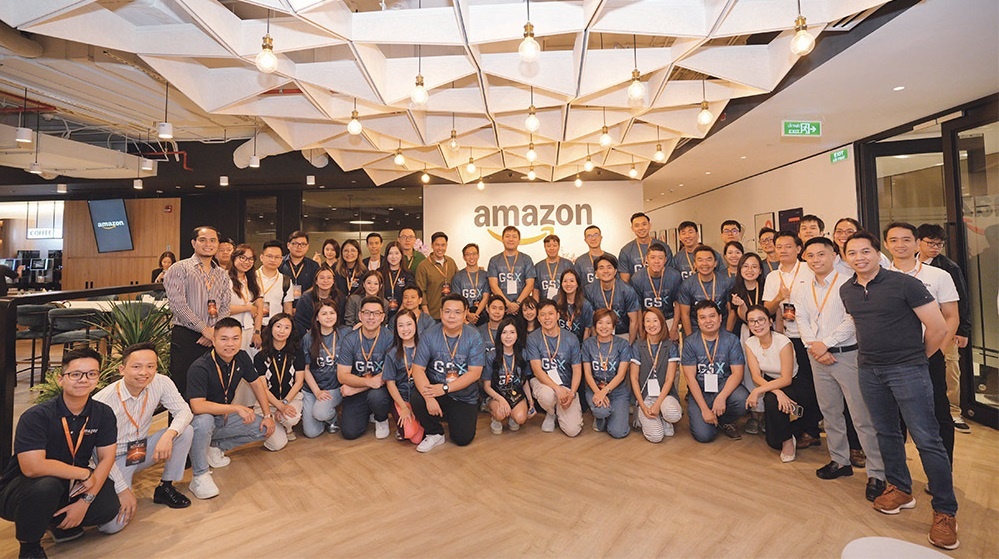
To operationalise this community-driven approach, Amazon Global Selling last month held the Global Growth Summit in Hanoi, positioning it as a regional event that connects Vietnamese sellers with leading entrepreneurs across Southeast Asia and key Asian markets such as Singapore, Taiwan, and China.
More than a conventional business event, the summit functioned as a bridge linking Vietnam’s emerging sellers with the broader regional e-commerce ecosystem, enabling them to engage more directly with cross-border trade activities and best practices.
The event brought together successful regional entrepreneurs, including Ivan Ong, co-founder of Singapore-based KeaBabies, a baby and maternity brand that has scaled into a multi-million-dollar business serving millions of customers worldwide through Amazon.
Drawing from his experience, Ong said that long-term success in cross-border e-commerce depends on building scalable systems rather than relying on short-term tactics.
“Selling on Amazon is not just about listing products. It is about building a system that consistently delivers value and scales with customer demand,” he said.
He further noted that Southeast Asian sellers, including those from Vietnam, possess strong manufacturing advantages but need to invest more in brand building and customer-centric strategies to compete in global markets.
Alongside KeaBabies, brands such as Naoki Matcha shared insights into product positioning and storytelling, offering Vietnamese sellers practical perspectives on building trust and differentiation with international consumers.
The panel discussion explored key themes shaping cross-border e-commerce, including branding strategies, off-Amazon traffic, product selection, hiring and scaling operations, and the role of AI and automation. A notable takeaway was the difference in strategic focus between markets. While Vietnamese sellers often prioritise cost competitiveness and operational efficiency, regional players place stronger emphasis on brand equity, customer lifetime value, and long-term positioning.
Bridging this gap is expected to be crucial for Vietnamese SMEs as they move up the value chain and build global businesses.
Beyond knowledge exchange, the summit highlighted critical enablers that support community-driven growth. Amazon Global Logistics (AGL), Amazon’s official and only self-operated end-to-end logistics service in Vietnam, plays a central role by providing sellers with a fully integrated and reliable shipping solution directly managed by Amazon, helping simplify cross-border operations and improve supply chain efficiency.
AGL manages the entire journey from factory pickup in Vietnam and export procedures to international transportation and final delivery into Amazon’s fulfilment network, removing the fragmentation typically associated with traditional logistics models.
“AGL simplifies what has traditionally been a fragmented logistics process, giving sellers better visibility, cost control, and reliability as they expand globally,” said AGL representative Nhu Pham.
“With direct ocean routes from Ho Chi Minh City and Haiphong to nine major destinations in the US, transit times can be as fast as 17 days, with end-to-end delivery completed within 30–40 days. This enables faster inventory turnover and more responsive supply chains, allowing sellers to better align with global demand,” Pham added.
At the same time, AGL strengthens compliance through its own US-focused customs brokerage team, streamlined one-click clearance process, bond procurement, registration support, and origin pickup service, all operating within Amazon’s system. This helps sellers minimise risks and meet increasingly stringent international requirements without managing multiple third-party providers. Cost efficiency is also improved through transparent pricing and optimisation tools, enabling sellers to scale with greater predictability.
Community-led growth
Alongside logistics, generative AI solutions are empowering sellers to operate more efficiently, supporting everything from product content creation to advertising optimisation and customer insights.
These tools, together with programmes such as SAS Pro – a paid programme by Amazon Global Selling Vietnam to support existing sellers and optimise their accounts – provide sellers with the operational backbone needed to scale globally within a connected ecosystem.
“We are building a collaborative ecosystem where Vietnamese sellers can connect with top regional players, leverage advanced tools, and accelerate their global growth journey,” said Megan Nguyen, head of Seller Growth & Success for Amazon Global Selling Vietnam.
Beyond individual initiatives, Amazon Global Selling is reinforcing its long-term commitment to Vietnam by building a structured, community-led ecosystem that supports sellers at every stage of their journey.
According to Amazon’s Vietnamese SMEs Empowerment Report, thousands of Vietnamese entrepreneurs have benefited from training and community programmes, improving their readiness to participate in cross-border e-commerce and enhancing business performance. These initiatives integrate training, mentorship, and regional collaboration, forming a dynamic support system for e-commerce exporters.
A key pillar of this strategy is the Amazon Titans Club, an exclusive community designed for high-performing sellers aiming to scale from six-figure to nine-figure businesses. Unlike open networks, the club operates as a curated ecosystem, connecting top sellers with industry experts and trusted partners.
Members gain access to premium networking opportunities, advanced training programmes, and exclusive engagement activities that foster deeper collaboration and long-term partnerships. The club also places strong emphasis on leadership development and personal branding, equipping sellers with the mindset required to build global businesses.
This community-first approach reflects a broader shift in how export e-commerce ecosystems are evolving from fragmented individual efforts to interconnected networks that drive collective growth.
Amazon Global Selling will continue to focus on AI-driven innovation, integrated logistics infrastructure, and deeper regional connectivity, further strengthening the foundation for community-led expansion.
As Vietnam moves beyond its role as a manufacturing base, the rise of such ecosystems is positioning the country as an emerging hub for brand-led, cross-border e-commerce exports.
| Quyen Pham, co-founder, BlueStars I started selling on Amazon in 2018, after building a book brand in Vietnam with my co-founder. That early experience shaped how we approached the platform, we have always believed that branding is the foundation. Instead of chasing short-term tactics like multiple accounts or duplicating products, we chose to focus on a single brand and scale properly. Today, we manage around 2,000-3,000 stock-keeping units and have grown into an eight-figure business. A key factor behind that growth is how closely we work with manufacturers. We don’t treat them as vendors but as long-term partners, which allows us to improve product quality, optimise costs, and develop new ideas. That consistency builds trust with customers in the US. They recognise the brand, they come back, and over time that creates strong momentum. Competition on Amazon is intense, every year, thousands of new sellers enter the market. Instead of trying to track every competitor, I focus on what we can control: our own strengths and what makes our products difficult to replicate. At the same time, I still observe competitors as case studies, learning from what they do well and improving on it. For me, growth on Amazon comes down to building a brand that customers trust, maintaining product quality, and continuously evolving. If you get those fundamentals right, the business can scale in a much more stable and predictable way. |
What the stars mean:
★ Poor ★ ★ Promising ★★★ Good ★★★★ Very good ★★★★★ Exceptional
 Tag:
Tag:Related Contents





Latest News




More News
- Expanding education partnerships to drive mutual growth (October 06, 2026 | 16:04)
- VTG 2026 to showcase textile and footwear innovation in Ho Chi Minh City (October 06, 2026 | 16:00)
- Infineon boosts Vietnam footprint with Ho Chi Minh City office (October 06, 2026 | 10:02)
- Vietnam Customs expands priority enterprise scheme to 74 firms (October 03, 2026 | 08:00)
- ASL Law opens Danang office (October 02, 2026 | 22:12)
- Project ACTIVE 2.0 launches in Vietnam to boost cervical cancer care (October 02, 2026 | 22:02)
- Vietnam launches first embodied AI conference to advance robotics ecosystem (October 02, 2026 | 17:00)
- DKSH Performance Materials – A trusted partner in Vietnam’s evolving personal care landscape (October 02, 2026 | 14:28)
- Ghanaian delegation reviews PSL Machinery’s cashew factory-management and implementation roadmap (October 02, 2026 | 10:18)
- People living with chronic kidney disease and diabetes should be aware of infectious disease risks (September 30, 2026 | 18:00)


Latest News



 Mobile Version