


When purpose becomes part of the business: Investing in Vietnam’s future through children

UNICEF Vietnam recently brought together business leaders, investors, foundations, and philanthropists in Ho Chi Minh City for its Business Leadership Dialogue focusing on a fundamental recognition that Vietnam's long-term prosperity will ultimately depend on the children who become tomorrow's workforce, consumers, entrepreneurs, and leaders.
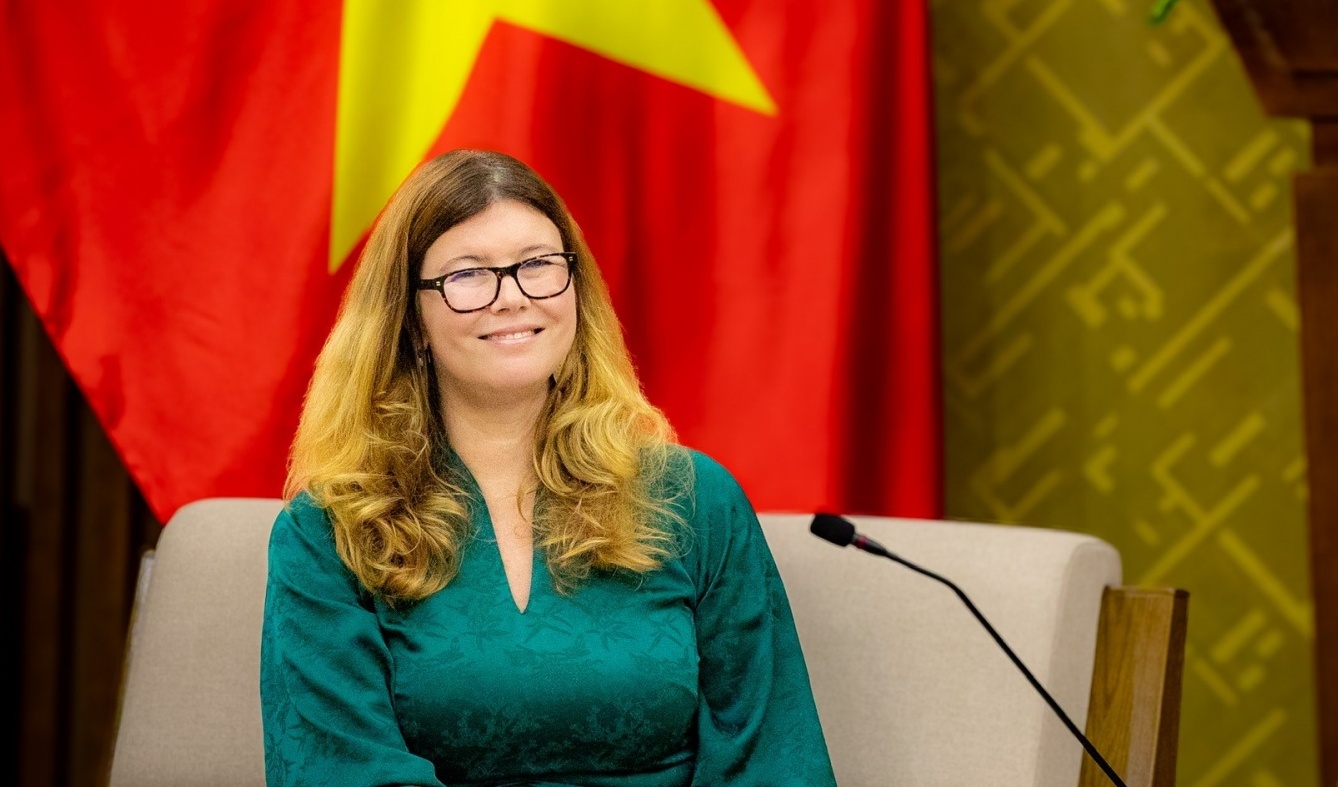
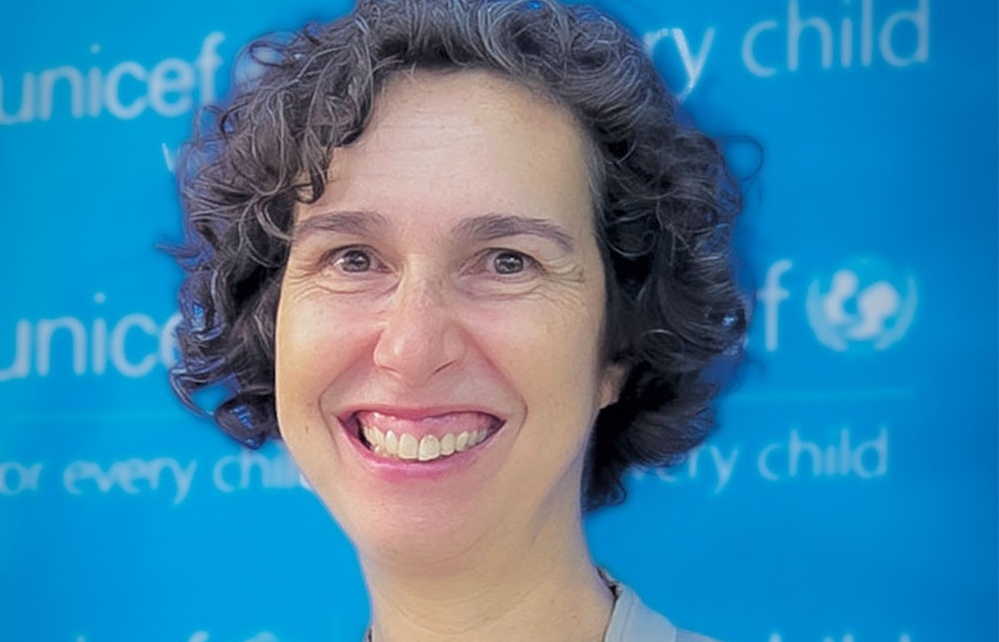
UNICEF’s representative in Vietnam Silvia Danailov connected economic development directly to the investment into children.
“While AI, infrastructures and investment will shape your businesses, what is really the most important is how we invest in people, how we invest in children growing up. They will become the workforce, innovators, entrepreneurs and leaders who define Vietnam’s next chapter. So it is about investing in Vietnam’s future through its children,” she said.
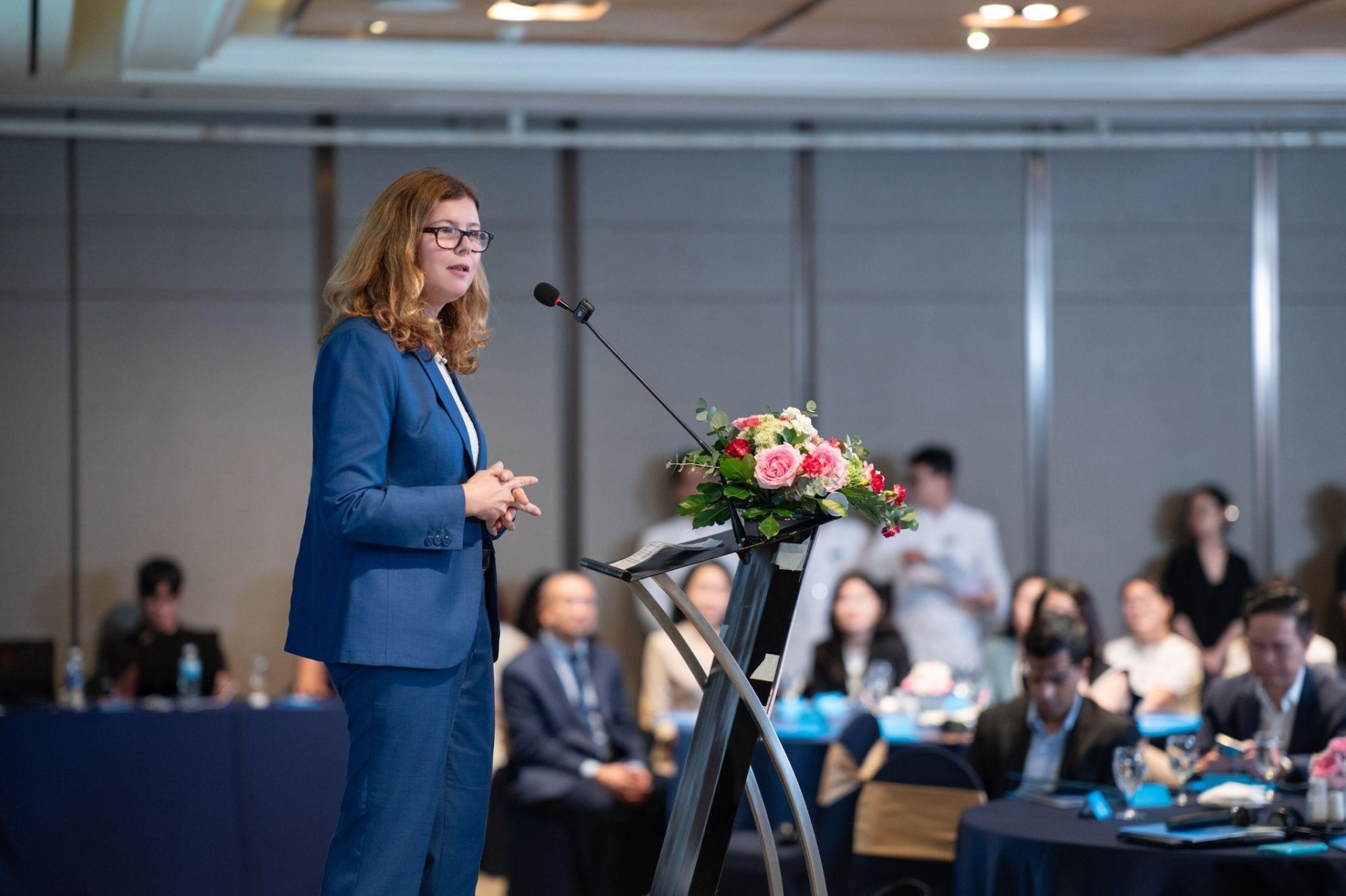 |
| Silvia Danailov, UNICEF’s representative in Vietnam, shared remarks on the future of children in Vietnam. Photo: UNICEF Vietnam |
The case has become more urgent as Vietnam enters a defining decade of demographic ageing, climate change and rapid digitalisation.
A smaller future workforce will need to be more productive, communities will require greater resilience to climate risks, and technological change will demand new skills.
The ability of children to grow up healthy, educated, protected and digitally capable will influence not only their individual prospects but also the strength of the economy they will manage.
This gives businesses a stake in children’s wellbeing that extends beyond philanthropy. Children are connected to the future availability of skilled employees, the resilience of communities and supply chains, and the long-term health of consumer markets.
The question for corporate leaders is how to turn that stake into action that is beneficial to both society and the business.
Turning purpose into a force for sustainable impact
The case studies shared at the dialogue suggested that credible action begins where a social need intersects with a company’s existing capabilities.
For Kimberly-Clark - a global consumer goods company best known for trusted personal care and hygiene brands, maternal health, newborn care and menstrual health are closely connected to the consumers served by brands such as Huggies and Kotex.
The company contributes knowledge of babies, mothers and women, while UNICEF provides technical expertise, public trust, government relationships and the ability to reach underserved communities at scale.
Nitish Gupta, managing director for Southeast Asia and general manager for Vietnam at Kimberly-Clark, argued that the value of the partnership rests on this combination rather than on funding alone.
“Coming together is about more than funding. It is the combination of shared purpose and complementary strengths that can create long-term impact for society,” he said.
According to Gupta, Kimberly-Clark’s investment of more than $2 million aims to provide direct health benefits to 1.3 million babies, children and mothers, while reaching another 2.5 million people through education and behaviour-change activities.
Sustaining that ambition requires companies to look beyond quarterly targets or a single annual programme and build partnerships that can develop knowledge, measure results and expand over several years.
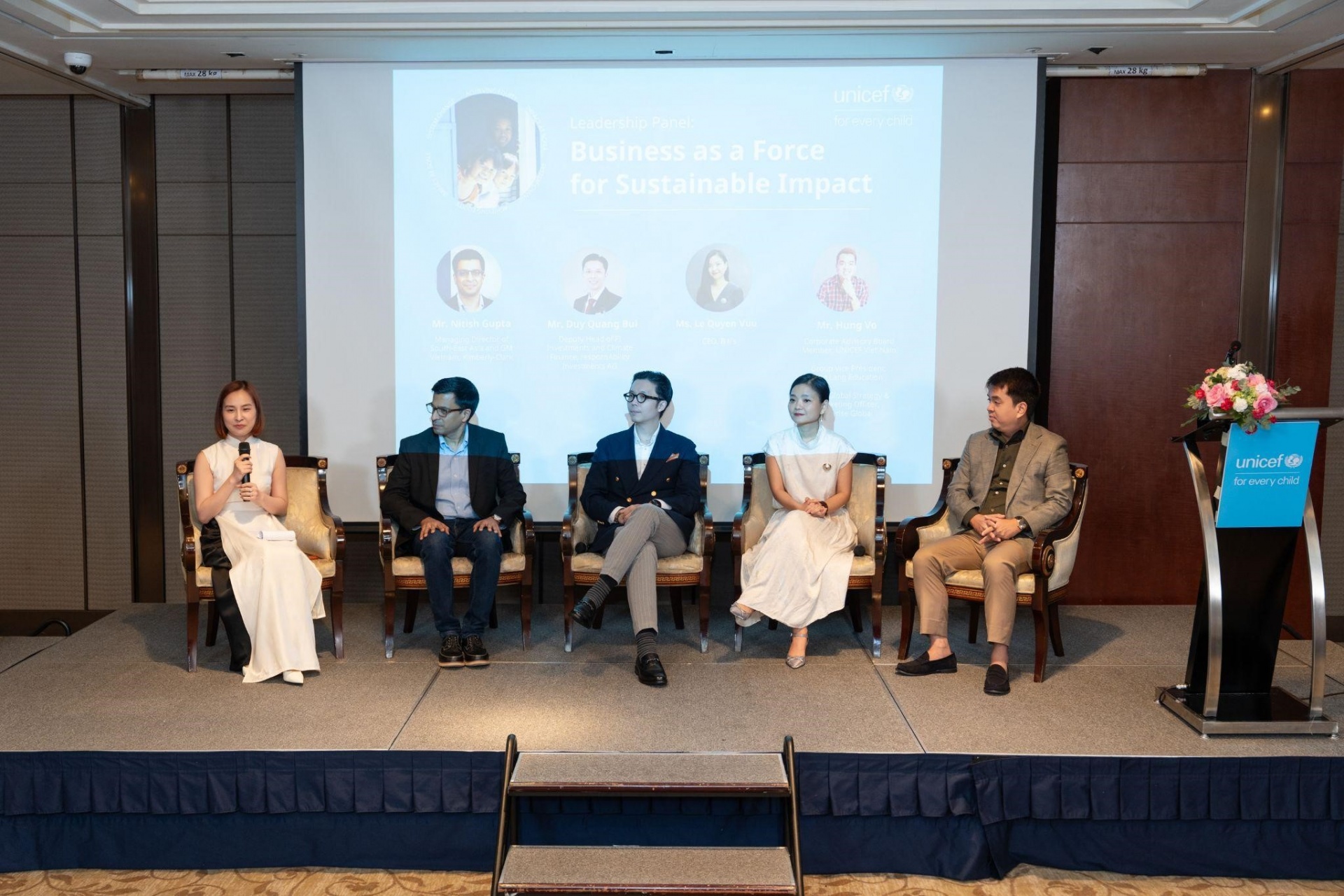 |
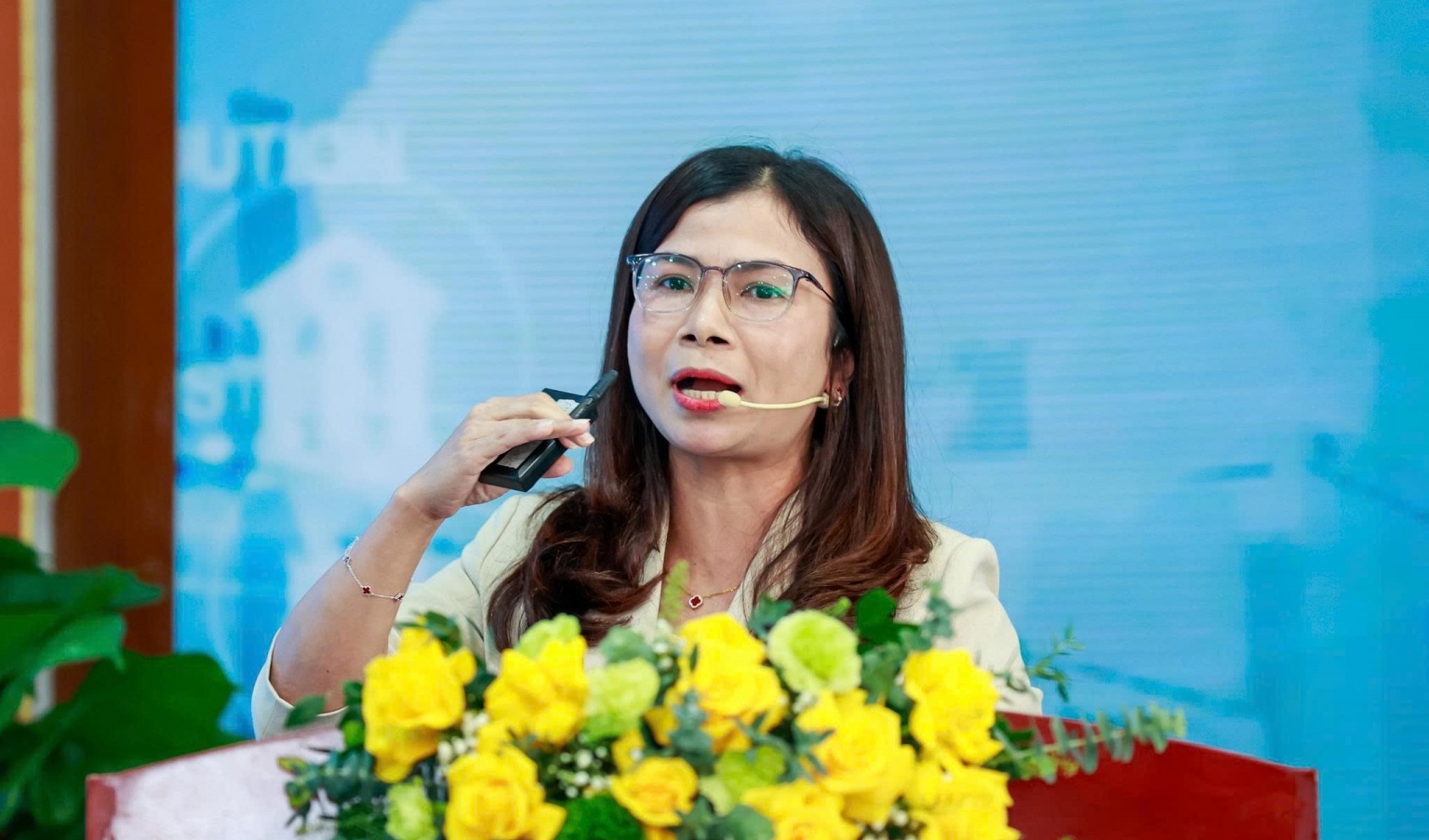
| Panellists spoke about business as a force for sustainable impact. Photo: UNICEF Vietnam |
Biti’s offers a different route to the same destination. Children have been central to the Vietnamese footwear company’s customer base for generations, making the provision of affordable, quality school shoes one way its social purpose is expressed through everyday business.
Le Quyen Vuu, Biti’s CEO, explained that the company subsequently expanded this commitment into mental wellbeing.
Biti’s introduced its Happy Business programme for employees before working with a non-governmental organisation for approximately eight years to support Happy School initiatives at 16 schools in Hue and Hanoi.
“It's very important to invest in the wellbeing of our children because Vietnam can only have sustainable success when we have new, healthy, happy and flourishing human capital,” she said.
From business leadership to family philanthropy
The move towards business-integrated purpose is also changing philanthropy. Ann Putnam Marks, UNICEF’s regional partnerships lead for Asia-Pacific, described a shift from one-off giving towards longer-term partnerships that combine private capital with expertise, networks and operating capacity.
Special guests Techajareonvikul family’s partnership with UNICEF Thailand demonstrates how family capital, corporate reach and UNICEF expertise can reinforce one another.
Through BJC Big C Foundation, the family has applied UNICEF’s knowledge of early childhood development across a major retail business.
Family-friendly workplace policies, office nurseries, breastfeeding spaces and children’s corners bring the partnership into the daily experience of employees and customers, while the Healthy Checkout Lanes initiative extends it to decisions about what shoppers see and buy.
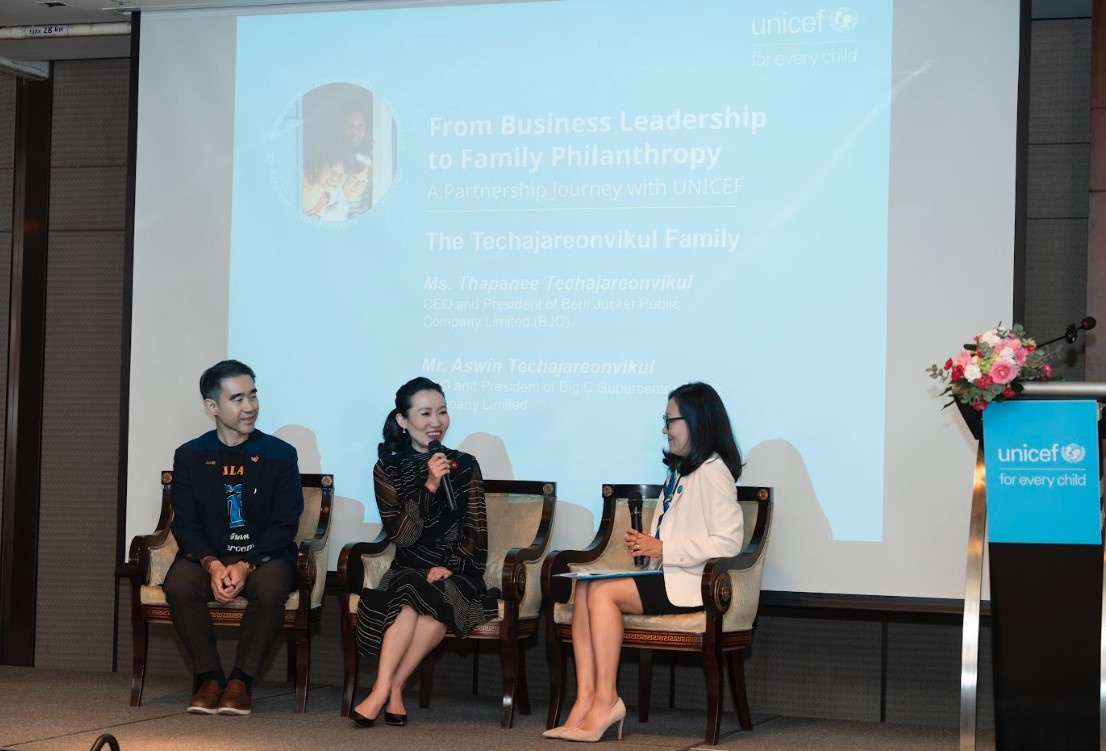 |
| The Techajareonvikul Family were special guests at the dialogue. Photo: UNICEF Vietnam |
The Techajareonvikul Family’s special guests Thapanee and Aswin Techajareonvikul have extended the BJC Big C Foundation - UNICEF partnership into their family by involving their three children, in visits to UNICEF’s global supply, research and headquarters operations. Those experiences connect the values guiding today’s business leaders with the responsibilities that the next generation may inherit.
“Right now, our employees already have the knowledge of what we have learned and what we have appreciated from UNICEF’s guidance. They also know the importance of keeping family members and the family of the community in mind, and they also feel proud," said Thapanee.
“I believe that this healthy environment is the heart and the core of being successful in business, and of being a part of society. And so, it’s really the legacy that we would leave to live on for generations to come, and also for our kids to continue, just like what we have learned from our parents: to give back to society.”
Examples shared in Ho Chi Minh City point to the same conclusion: purpose becomes credible when it changes a business decision. What companies sell, how they support employees, where investors place capital and what business families teach the next generation will help determine whether Vietnam’s present growth develops the human capability required to sustain it.
 | Government launches child protection programme for 2026–2030 The government has issued a national programme on child protection and the prevention of child labour for the 2026–2030 period. |
 | Vietnam strives to build safer digital environment to protect children online The Ministry of Justice and UNICEF, with support from the European Union Delegation through the EU Justice and Legal Empowerment Programme, convened a policy dialogue on child protection in the digital environment on August 21. |
 | Kimberly-Clark and UNICEF strengthen child and maternal healthcare Kimberly-Clark Vietnam and UNICEF renew partnership with a $2.05 million commitment to expand essential care for mothers, newborns, and girls nationwide. |
 | Why child online safety is now a business imperative As Vietnam marks the Month of Action for Children under the theme “Happy, Safe and Confident Children in the Digital World,” Silvia Danailov, UNICEF Representative in Vietnam, shares her views on why child online safety is no longer just a social issue, but a core business responsibility in the digital age. |
What the stars mean:
★ Poor ★ ★ Promising ★★★ Good ★★★★ Very good ★★★★★ Exceptional
 Tag:
Tag:
Related Contents





Latest News



More News
- Vietnam Education Forum opens UK Education Mission's Hanoi visit (October 07, 2026 | 12:27)
- Tax authorities deactivate TINs of nearly 180,000 businesses (October 07, 2026 | 12:08)
- World Bank raises Vietnam's 2026 GDP growth forecast to 7.4 per cent (October 07, 2026 | 11:41)
- Vietstock 2026 to spotlight livestock innovation and green transition (October 07, 2026 | 09:00)
- Vietnam’s GDP grows over 9 per cent in first nine months (October 05, 2026 | 18:45)
- Vietnam earns $56.3 billion from agro-forestry-fishery exports (October 05, 2026 | 18:32)
- DSV balances resilience and decarbonisation in supply chains (October 05, 2026 | 18:20)
- Electronics exports reach $175.4 billion in the first nine months (October 05, 2026 | 18:12)
- SOTRANS targets chemical warehousing growth with Ho Nai project (October 04, 2026 | 09:00)
- Western Australia looks to deepen Vietnam ties beyond trade (October 02, 2026 | 22:15)


Latest News





 Mobile Version