
Vietnam’s seafood exports surpass $11 billion in 2025

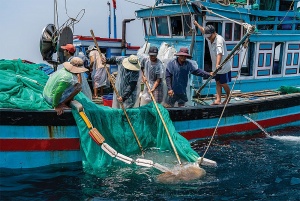
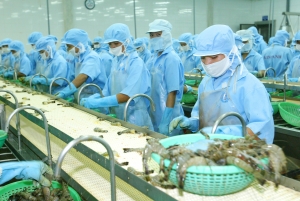
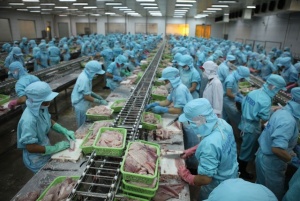
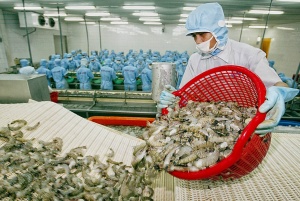
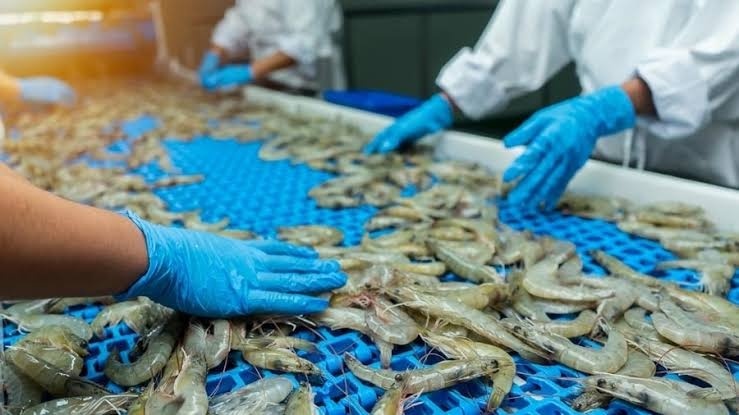
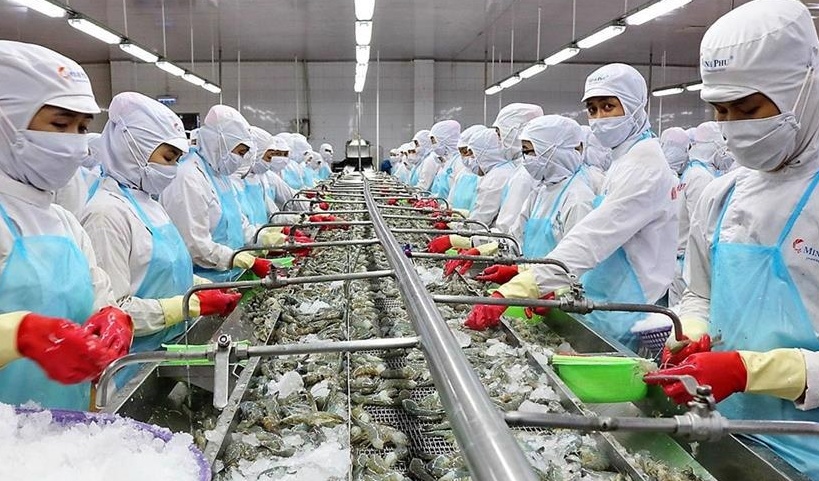
According to the Vietnam Association of Seafood Exporters and Producers (VASEP), export turnover exceeded $11.3 billion in 2025, up 13 per cent on year. Shrimp remained the largest export earner at $4.65 billion, rising 20 per cent from 2024, while lobster exports more than doubled to $817 million, reflecting strong demand across major markets.
 |
| Photo: Hoang Oanh |
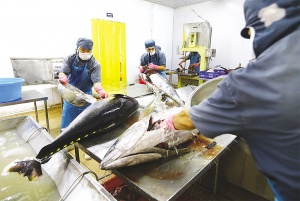
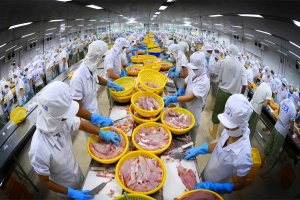
Basa fish ranked second, with exports reaching $2.19 billion, an 8 per cent rise. Other marine fish took in $2.16 billion, up 12 per cent, supported by diversified markets. By contrast, tuna exports declined due to prolonged raw material shortages and tighter regulations related to illegal, unreported, and unregulated (IUU) fishing.
Exports to the United States reached nearly $1.9 billion in 2025, up just 3 per cent amid policy uncertainty, tariff risks, and technical barriers. Growth elsewhere helped offset the slowdown, with China (including Hong Kong), the EU, and markets under the Comprehensive and Progressive Agreement for Trans-Pacific Partnership (CPTPP) emerging as key drivers.
Exports to CPTPP markets and the EU both posted double-digit growth, reaching more than $3 billion and $1.2 billion, respectively. China (including Hong Kong) recorded the strongest increase, up 29 per cent to $2.45 billion, driven by demand for live lobster, crab, shellfish, and clams.
VASEP attributed the sector’s performance to exporter flexibility and effective market timing amid global volatility. A tightening global supply following a period of low prices also helped lift demand.
Looking ahead to 2026, VASEP cautioned that market conditions remain uncertain. US trade policies and technical barriers may continue to prompt exporters worldwide to diversify markets, intensifying competition in the EU, China, ASEAN, and the Middle East. The unresolved IUU yellow card remains a key constraint on access to Western markets.
For basa fish, analysis by Mirae Asset Securities forecasts improved consumption in the United States and stable demand in China. Exports to the EU and Brazil are expected to remain steady in 2026, though competition may intensify as global exporters gradually shift away from the US market.
What the stars mean:
★ Poor ★ ★ Promising ★★★ Good ★★★★ Very good ★★★★★ Exceptional
 Tag:
Tag:Related Contents


Latest News






More News
- Carlsberg underscores long-term Vietnam commitment at Denmark talks (October 22, 2026 | 16:06)
- Brookland Group makes first investment in Vietnam's Miza Corporation (October 21, 2026 | 12:18)
- Petronas, Petrovietnam to expand energy cooperation (October 21, 2026 | 12:13)
- AI in customer experience: Finding the right level of automation (October 21, 2026 | 09:03)
- Fresh graduates fall short on soft skills, employers say (October 19, 2026 | 13:14)
- Ford innovations continue towards sustainable growth (October 19, 2026 | 09:40)
- Preparing professionals for a new business environment (October 19, 2026 | 09:13)
- KN Holdings honoured for ESG efforts in Vietnam (October 18, 2026 | 11:00)
- APEA 2026 Vietnam honours 65 outstanding leaders and enterprises (October 17, 2026 | 10:00)
- MEXC highlights AI-driven trading and broader market access at TOKEN2049 (October 17, 2026 | 09:00)









 Mobile Version