
Vietnam seeks Japanese expertise on financial reform

The meetings formed part of the MoF and the State Securities Commission of Vietnam's (SSC) working visit to Japan and South Korea to study international practices in securities market development, new financial products and regulatory frameworks. The findings will support the drafting of amendments to Vietnam's Law on Securities.
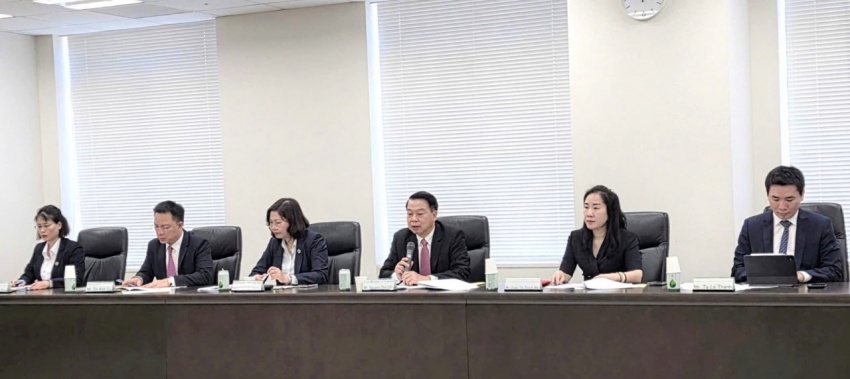 |
| Deputy Minister of Finance Nguyen Duc Chi |
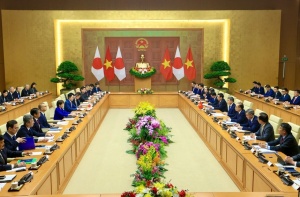
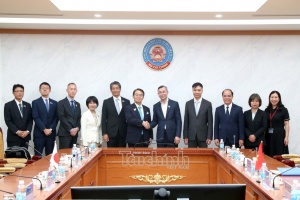
Opening the meeting, Deputy Minister of Finance Nguyen Duc Chi highlighted the strong cooperation between Vietnam and Japan, particularly the support provided by Japan's financial regulators during the nearly three decades of development of Vietnam's stock market.
He said Japan's experience and assistance had made significant contributions to strengthening Vietnam's regulatory framework and supporting the development of its capital market.
Reviewing the progress of Vietnam's securities market, the deputy minister noted that after nearly 30 years of development, it has become an increasingly important medium- and long-term funding channel for the economy. Market capitalisation now exceeds 80 per cent of GDP, while the country's exchanges, securities firms and fund management companies are operating in a stable and secure manner, attracting growing participation from both domestic and foreign investors. Vietnam is also progressing through FTSE's market classification process towards an upgrade from frontier market to emerging market status.
Looking ahead, the deputy minister said Vietnam aims to achieve high and sustainable economic growth, making further development of the capital market essential to mobilising and allocating financial resources efficiently. At the same time, rapid advances in digital technologies, AI and new financial business models require continued improvements to the legal framework and regulatory mechanisms to ensure the market develops in a transparent, safe and internationally aligned manner.
Against this backdrop, he expressed hope that Japan's Financial Services Agency (JFSA) and SESC would share their experience in designing regulatory sandbox mechanisms for innovative financial products and services, market supervision models, human resource development, and policies that boost innovation, technological applications and modern financial services.
"The practical experience of Japan will provide valuable reference for Vietnam as it continues to refine its legal framework and develop a transparent, efficient, sustainable and internationally integrated securities market," he said.
 |
| Hiroshi Okada, deputy commissioner for JFSA's Strategy Development |
Hiroshi Okada, deputy commissioner for JFSA's Strategy Development, welcomed the Vietnamese delegation and praised the longstanding cooperation between the two countries' financial authorities. He reaffirmed that the JFSA places high importance on its partnership with Vietnam's MoF and the SSC and remains ready to share its experience in supporting the development of Vietnam's financial and capital markets.
Okada said the JFSA had prepared discussions focused on Vietnam's priorities, including regulatory sandboxes for innovative financial products and services, market supervision, exchange-traded funds, technology- and algorithm-based financial services, as well as training and developing high-quality professionals for the securities industry.
Sharing Japan's experience with regulatory sandboxes, he explained that while the country actively encouraged financial innovation, investor protection, consumer interests and financial system stability remain the highest priorities. Sandbox participants must therefore comply with existing legal requirements, while regulators work closely with businesses from the concept stage, providing guidance and support throughout the implementation process.
Okada said building a highly skilled workforce has been one of the key drivers of Japan's sustainable capital market development. He noted that developing professionals with strong technical expertise, ethical standards and investor confidence has required decades of collaboration between regulators, financial institutions and the private sector through training, professional certification and continuous capacity building.
He also commended Vietnam's recent progress, particularly its efforts to secure an upgrade to emerging market status and implement reforms that improve access for foreign investors. He expressed confidence that Vietnam's securities market would continue to develop strongly and declared the JFSA's commitment to expanding cooperation and knowledge-sharing with Vietnamese regulators.
Deputy Minister Chi reaffirmed that Vietnam is accelerating efforts to improve its investment environment and create better conditions for foreign capital inflows to support the next phase of capital market development. He described Japan as one of Vietnam's key partners in finance and investment and expressed the hope of strengthening cooperation with Japanese financial regulators, particularly in improving securities market legislation to foster a transparent, efficient market and facilitate greater participation by Japanese investors.
He also thanked the JFSA for hosting the delegation and expressed the hope of welcoming senior JFSA officials to Vietnam in the near future.
During a technical session, JFSA experts presented Japan's experience in designing and operating regulatory sandboxes for innovative financial products and services, as well as the country's Fintech Innovation Hub.
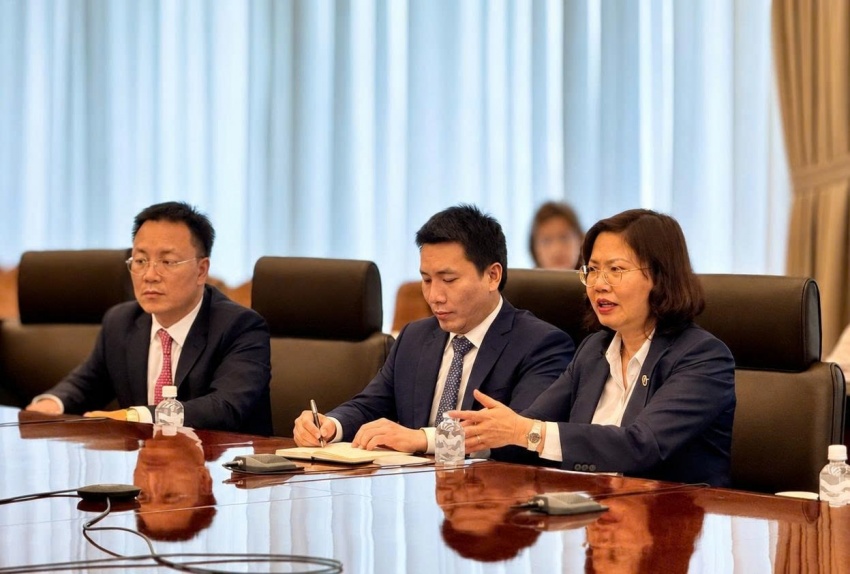 |
| SSC chairwoman Vu Thi Chan Phuong |
SSC chairwoman Vu Thi Chan Phuong and other members of the Vietnamese delegation held in-depth discussions with Japanese counterparts on the legal basis for financial sector sandboxes, the possibility of incorporating successful pilot models into legislation, risk management mechanisms, liability allocation during pilot programmes, and regulatory approaches to AI-powered financial services and digital assets.
Ta Le Thanh, a full-time member of the National Assembly's Committee for Economic and Financial Affairs, also sought Japan's experience in organising, operating and regulating the securities market, with particular interest in strengthening the legal framework. The practical experience shared by the JFSA would provide valuable reference for policy research and the ongoing revision of Vietnam's Law on Securities.
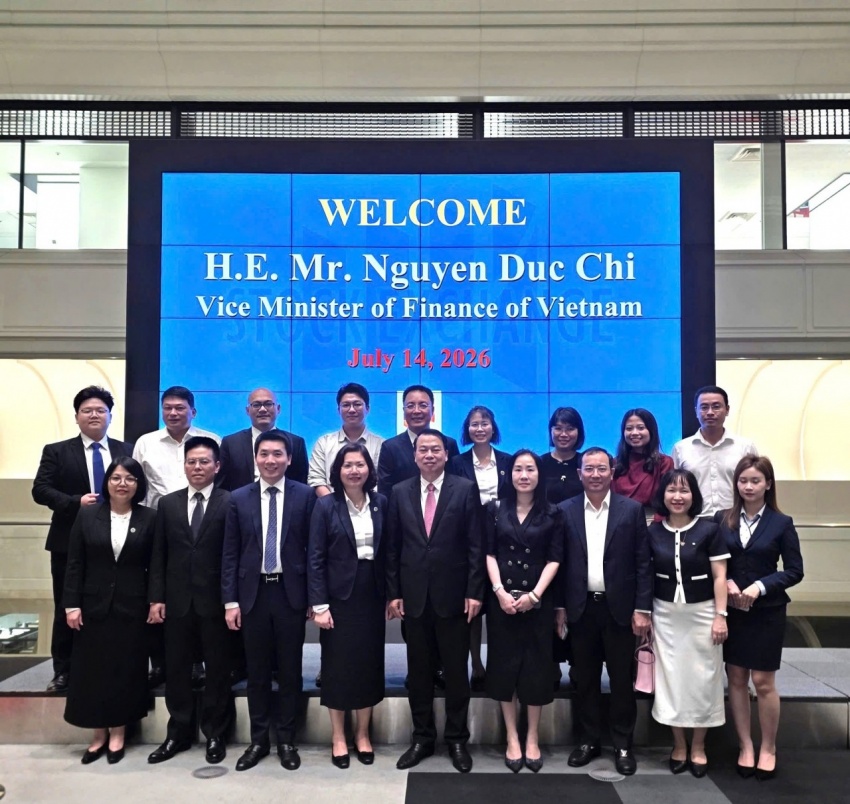 |
Later on the same day, the delegation also met with the Japan Exchange Group to discuss oversight of trading activities involving emerging technologies such as algorithmic trading and AI, as well as the development of electronic trading infrastructure.
The delegation subsequently held talks with the Japan Securities Dealers Association on regulatory policies, professional development for securities practitioners, diversification of brokerage services and the application of new technologies in client services.
What the stars mean:
★ Poor ★ ★ Promising ★★★ Good ★★★★ Very good ★★★★★ Exceptional
 Tag:
Tag:Related Contents


Latest News



More News
- Banks face three-way test as AI reshapes digital finance (October 22, 2026 | 16:21)
- Techcombank posts strongest quarter on record (October 22, 2026 | 12:10)
- Digital asset exchange awaits completion of operational requirements (October 21, 2026 | 14:57)
- TPBank secures $50 million from DEG for green and SME lending (October 21, 2026 | 14:43)
- Citi set for record year across ASEAN Investment Banking (October 19, 2026 | 17:49)
- Vietnam and Switzerland to deepen financial cooperation (October 19, 2026 | 13:24)
- Carbon finance hinges on viable ventures (October 19, 2026 | 09:59)
- AI to transform the future of finance (October 19, 2026 | 09:04)
- Government proposes relaxing IPO conditions (October 19, 2026 | 08:00)
- Citi warns of intensifying competition for capital amid higher rates (October 16, 2026 | 16:54)



Latest News





 Mobile Version