

Vietnam nears investment grade as reforms and growth strengthen outlook

 |
| Vietnam nears investment grade as reforms and growth strengthen outlook |
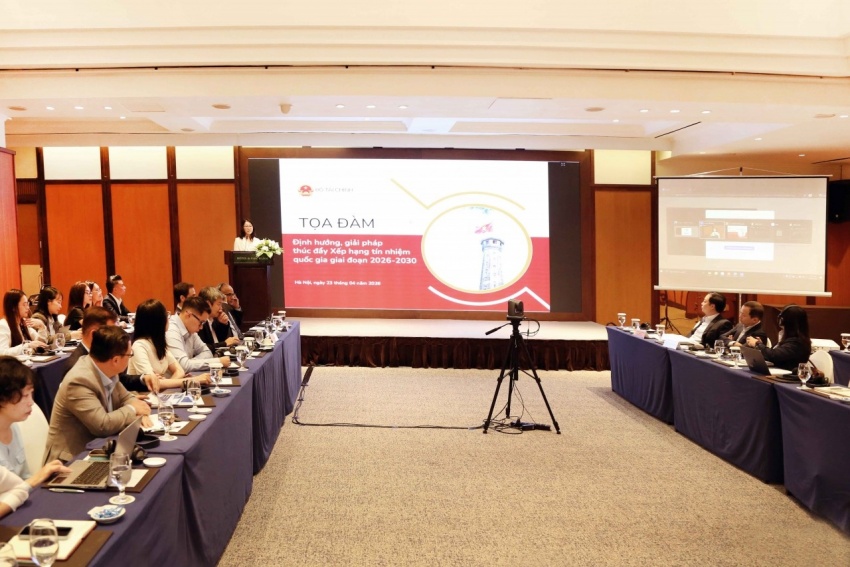
On April 23, the Department of Debt Management and External Finance under the Ministry of Finance (MoF), in collaboration with the Asian Development Bank (ADB), held a hybrid workshop titled “Policy directions and solutions to improve Vietnam’s sovereign credit rating for 2026-2030.”
The event brought together Shantanu Chakraborty, country director of the ADB, alongside representatives from government agencies, international experts from S&P, Standard Chartered, investment banks, credit rating agencies, corporates and commercial banks.
Opening the workshop, Nguyen Quoc Phuong, director general of the department, noted that Vietnam had established formal cooperation with the world’s three leading credit rating agencies, Moody’s, S&P and Fitch.
Recognising the importance of sovereign ratings, the MoF has worked with agencies to implement a national strategy approved in 2022, which targets achieving investment-grade status by 2030.
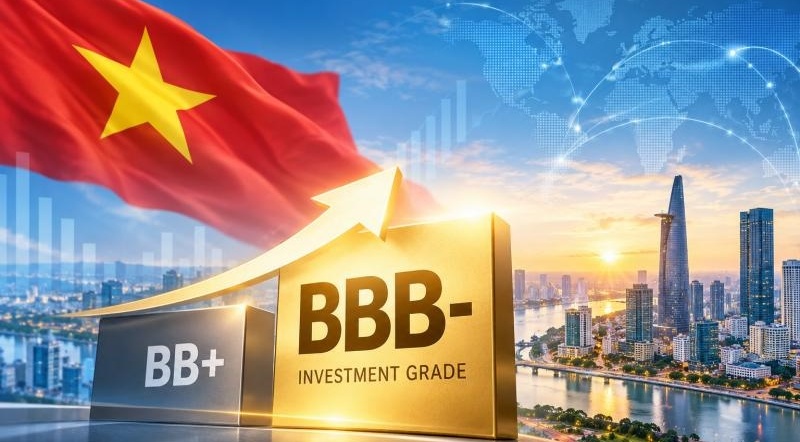
Halfway through the roadmap, Vietnam has recorded encouraging progress. All three agencies have upgraded or reaffirmed the country’s ratings in 2024 and 2025. Vietnam now stands just one notch below investment grade with S&P and Fitch, and two notches below with Moody’s.
However, the global environment remains highly uncertain. Geoeconomic tensions continue to disrupt supply chains and add pressure on import costs and global inflation. For Vietnam, upgraded strategic partnerships with major economies are boosting investment inflows, while also placing higher demands on transparency and governance standards.
At the same time, ongoing institutional reforms, including administrative streamlining, legal revisions and stronger decentralisation, have delivered early positive results, particularly in reducing bureaucratic layers and accelerating procedures.
Strategic policy directions on sci-tech, innovation, private sector development and sustainable energy are also laying the groundwork for Vietnam’s ambition to become an upper-middle-income country by the end of the 2026-2030 period.
Alongside the goal of maintaining macroeconomic stability, controlling inflation and achieving high growth, the government has been tasked with securing an investment-grade sovereign rating within this timeframe.
 |
| Vietnam nears investment grade as reforms and growth strengthen outlook |
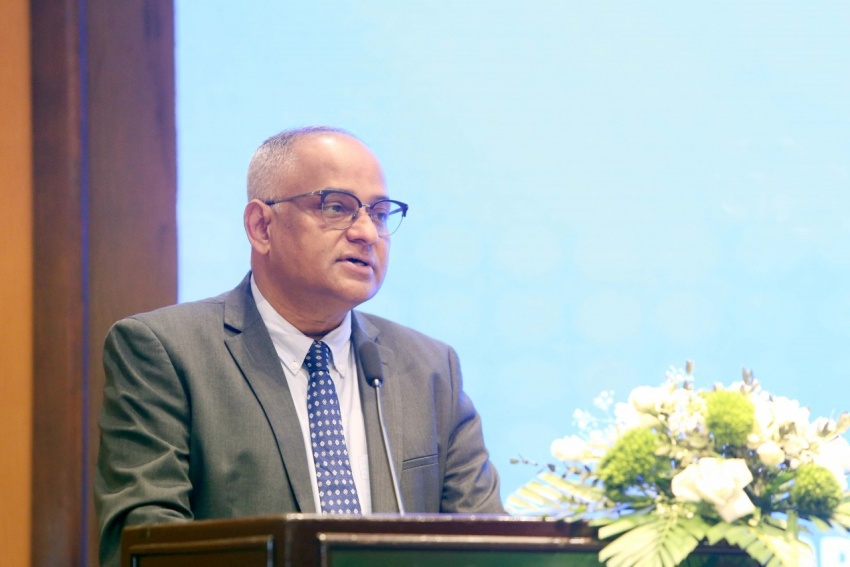
Speaking at the workshop, Chakraborty said Vietnam is approaching upper-middle-income status and has built a solid foundation for its next stage of development.
In the coming decades, as financing needs expand, Vietnam is expected to rely more on external borrowing, from development partners as well as international capital markets.
He highlighted that Vietnam was set to implement a series of large-scale, transformative infrastructure projects, including the North-South high-speed railway, metro systems in Hanoi and Ho Chi Minh City, renewable energy development, grid upgrades, expressways, seaports and airports. These projects will require substantial capital and place higher demands on fiscal management and governance capacity.
In this context, improving sovereign credit ratings is critical. It helps lower borrowing costs, broaden the investor base and strengthen access to international financial markets. Sovereign ratings also serve as a ceiling for domestic corporate ratings.
He added that the establishment of international financial centres in Ho Chi Minh City and Danang in 2025 could support the development of Vietnam’s government bond market. Higher credit ratings would reduce funding costs and attract more investors to Vietnamese bonds.
 |
At the workshop, the MoF provided updates on the implementation of the national rating improvement plan through 2025. Several international indicators have shown notable progress. They include Government Effectiveness: 56.13 in 2023; the Chandler Good Government Index: up 31 places to 48th globally in 2025; the Human Development Index: 0.766, in the high development group; and the E-Government Development Index: up 15 places to 71st out of 193 countries.
Experts from S&P and Standard Chartered presented analyses of Vietnam’s sovereign credit profile, highlighting strengths, challenges and key factors influencing upgrade prospects.
Participants, including financial institutions, corporates and rating advisory firms, shared practical experience and recommendations to support additional refinements in Vietnam’s credit standing.
With a focus on decisive and effective implementation, the Ministry of Finance will consolidate feedback from the workshop to conduct a comprehensive review and propose targeted solutions for the second half of the roadmap.
 | USABC firms explore aviation, seaport, rail investment in Vietnam US businesses are seeking opportunities in transport and construction projects in Vietnam, following a meeting between the US-ASEAN Business Council and the Ministry of Construction |
 | Ho Chi Minh City announces 2026-2030 investment projects Investment opportunities are now opening wider for investors as Ho Chi Minh City has announced the list of projects in 2026-2030. |
 | Vietnam moves to allow pre-licensing capital flows for foreign investors The central bank is proposing a regulatory shift allowing foreign investors to move capital before licensing, streamlining project timelines while tightening oversight of cross-border flows and redefining control thresholds. |
What the stars mean:
★ Poor ★ ★ Promising ★★★ Good ★★★★ Very good ★★★★★ Exceptional
 Tag:
Tag:Related Contents






Latest News




More News
- From loans to women’s economic empowerment (October 06, 2026 | 17:58)
- VIB named Outstanding Retail Bank 2026, targets transaction banking (October 06, 2026 | 10:52)
- FTSE upgrade paves way for stronger stock market development (October 05, 2026 | 18:44)
- coLoan to empower women through inclusive green finance (October 05, 2026 | 18:42)
- Techcombank CEO: AI no longer a tool but a new operating foundation (October 05, 2026 | 18:11)
- Banks sustain profit growth as funding costs squeeze margins (October 02, 2026 | 22:22)
- Nam A Bank delivers strong breakthrough in 2026 (October 02, 2026 | 19:00)
- Policy credit builds sustainable livelihoods from the grassroots (September 29, 2026 | 07:48)
- VIB deploys Front Arena treasury and foreign exchange trading system on AWS (September 28, 2026 | 16:46)
- Nam A Bank receives $60 million loan from FMO (September 28, 2026 | 12:37)


Latest News







 Mobile Version