
Bank credit sustains livelihoods on Ly Son Island

Nguyen Van Nhat, director of Phu Sinh Trading and Services, said that when he launched his business in 2021 amid the COVID-19 pandemic, the company started with a loan of approximately $40,000 from Agribank to develop raw material zones and pilot processed garlic products.
The island is one of Vietnam's most strategic offshore outposts, where economic vitality is directly linked to national security and long-term population stability.
“Today, the company has established partnerships with around 85 farming households and developed more than 39 hectares of cultivation areas under a model that reduces chemical inputs, increases the use of biological products, and strengthens production management standards,” said Nhat. “The company currently maintains outstanding loans of approximately $120,000 with Agribank, primarily used for equipment investment, production expansion, and raw material procurement.”
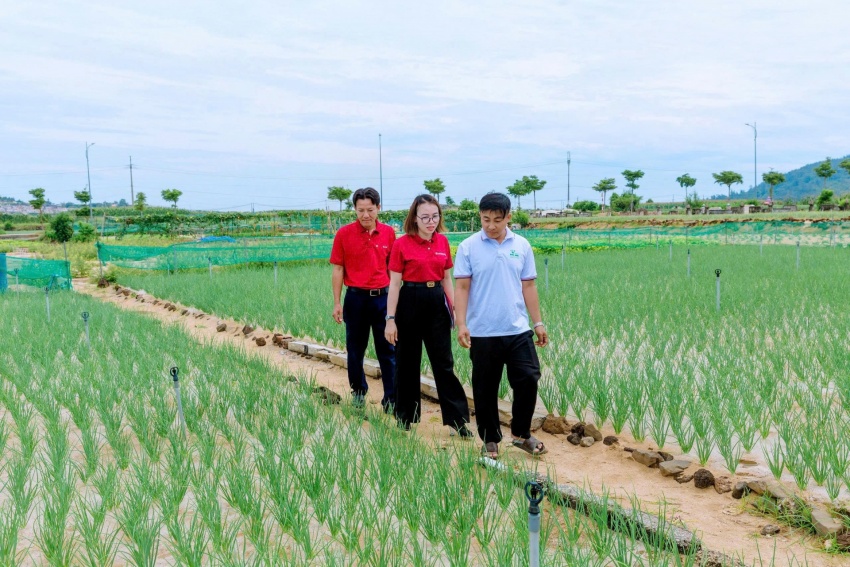 |
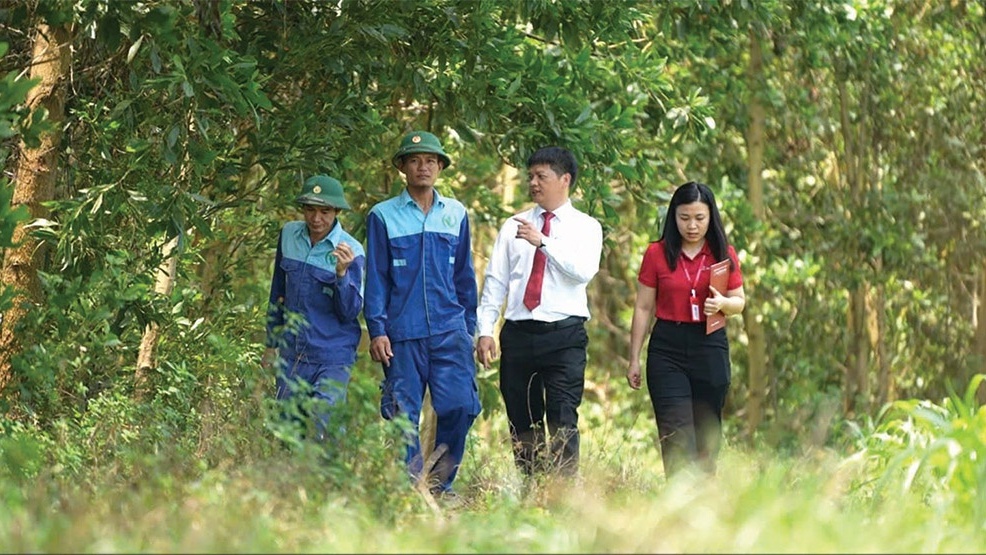
| Nguyen Van Nhat, director of Phu Sinh Trading and Services, visits onion fields in Ly Son with Agribank officials |
According to Nhat, the challenge of agricultural production on an island extends beyond harsh natural conditions to include organising production and preserving the reputation of Ly Son garlic.
“For that reason, we work closely with farmers, provide technical support, and guarantee product purchases. However, to sustain this model, businesses must maintain sufficient working capital to buy products immediately at harvest time. After months of labour, what farmers need most is prompt payment,” he explained.
“Farmers cannot afford to wait while businesses seek financing. Without available liquidity, it is extremely difficult to build sustainable supply-chain linkages. Agribank’s financing therefore plays a crucial role in maintaining procurement activities, contract farming arrangements, and the operation of the entire production chain during each harvest season,” he added. “On an island, opportunities emerge quickly. If financing is delayed, those opportunities disappear just as fast.”
Aquaculture has also become a vital source of income for many households in Ly Son, including Huynh Ngoc Thao from Dong An Hai village.
Thao initially raised lobsters before shifting to cobia farming. His family now operates two fish rafts with 75 cages. The total investment amounts to roughly $80,000, half of which was financed through Agribank loans.
According to Thao, a single production cycle lasts nearly a year. Fingerlings must be sourced from Nha Trang, while feed consists mainly of fresh marine fish, making costs substantial.
“Feed expenses alone range from $8,000 to $12,000 per month. Without bank financing, maintaining cage-farming operations would be nearly impossible,” he said. “Fish farmers can enjoy several successful harvests in a row, but they can also lose everything after a single disease outbreak. During the most recent outbreak, only about 1,000 of our 5,000 cobia survived.”
On some days, bank staff do not leave until completing loan disbursements for onion and garlic planting seasons or ensuring timely financing for fish-feed purchases.
Le Thi Cua, director of Agribank’s Ly Son Branch, said the branch currently employs just 11 staff members but serves more than 1,200 customers, with total deposits of approximately $26.6 million and outstanding loans of around $28.1 million.
“These figures reflect the realities of a remote island district. Demand for production capital remains extremely high, while local savings capacity is limited. As a result, lending resources continue to be supplemented from the mainland,” said Cua.
“Most Agribank employees here are local residents. They grew up alongside Ly Son’s garlic fields and fishing seasons. They know which households suffered crop losses from drought, which fish farms have been affected by disease, and which families need financing to begin a new production cycle,” she added.
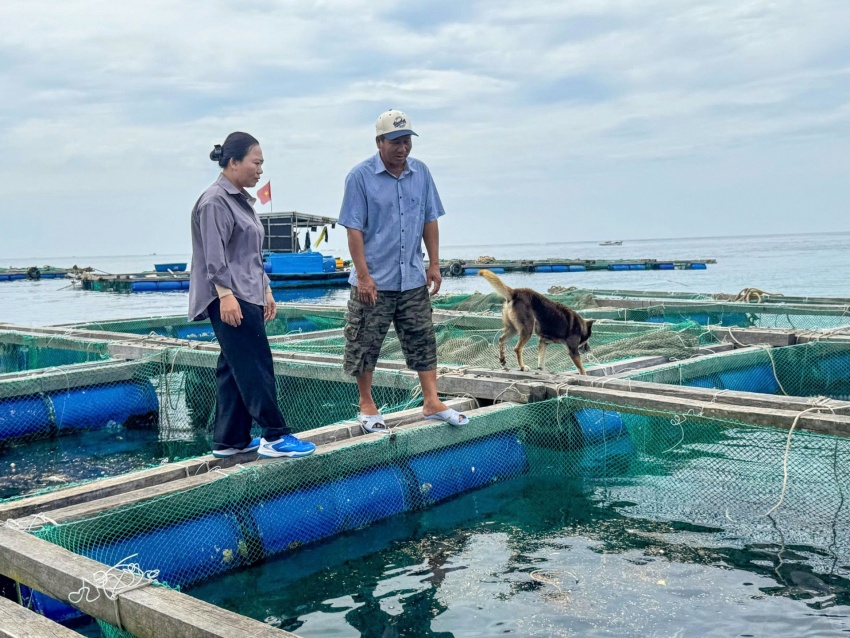 |
| Le Thi Cua, director of Agribank’s Ly Son Branch, visits the fish cages of Huynh Ngoc Thao from Dong An Hai village |
She explained that on many mornings, as fishing boats return from overnight voyages, bank officers are already at the harbour discussing catch volumes, market prices, and financing needs for the next trip. Some households simultaneously cultivate garlic, raise seafood, and operate tourism services. To properly assess loan applications, credit officers must understand both seasonal production cycles and each family’s cash flow.
“As a result, many lending decisions in Ly Son are based not just on collateral, but also on an understanding of local livelihoods and relationships built over years of trust. For island residents, Agribank officers are not merely lenders but long-term partners in sustaining livelihoods at the nation’s maritime frontier,” added Cua.
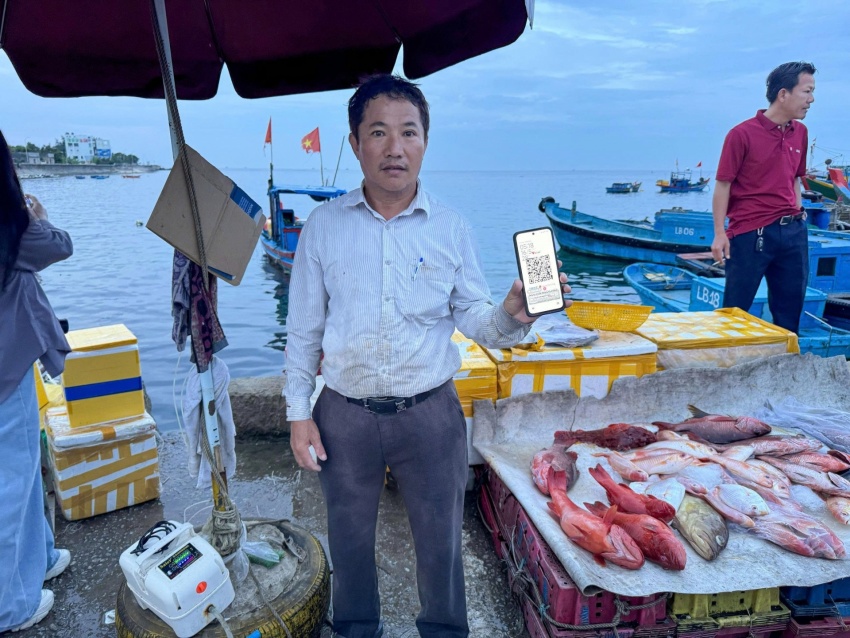
Beyond lending, Agribank’s Ly Son Branch has become an integral part of the island’s economic infrastructure, expanding digital banking and cashless payment services for locals. At Ly Son Port, seafood trader Nguyen Ngoc Hiep now sells products nationwide using a simple Agribank QR code, allowing customers to order remotely and pay via bank transfer upon delivery.
Nguyen Van Huy, Chairman of the People’s Committee of Ly Son Special Administrative Zone, noted that Agribank has played an important role in local economic development by providing financing for households and businesses, particularly in agriculture, rural development, and the marine economy.
“Beyond lending, the bank has worked closely with local authorities to implement interest-rate support programmes, assist residents affected by natural disasters, promote digital payments, and expand access to modern financial services across the island,” Huy said.
Agribank’s credit footprint in Quang Ngai
Agribank’s Quang Ngai Branch currently manages outstanding loans of approximately $680 million, more than 70 per cent of which are concentrated in agriculture, rural development, and local production and business activities. Quang Ngai’s geography stretches from mountainous regions and lowland plains to offshore islands, meaning credit activities serve not only as a source of capital but also as a tool for stabilising livelihoods and supporting local economic development. In Ly Son district, one of Agribank Quang Ngai’s most distinctive operating areas, total outstanding loans currently stand at approximately $81.5 million, representing growth of nearly 9 per cent compared with the end of the previous year, with more than 6,000 active borrowers. Around 72 per cent of the loan portfolio is concentrated in agriculture and fisheries. For aquaculture households, especially those engaged in cage fish farming, the bank provides not only initial investment loans but also working capital financing to purchase feed and sustain operations throughout production cycles that can last nearly a year. Beyond agriculture and fisheries, Agribank Quang Ngai is also expanding lending to small and medium-sized enterprises, One Commune, One Product businesses, agricultural processing companies, community-based tourism ventures, and marine economy projects. Several local enterprises have used bank financing to invest in factories, move further up the value chain through deeper processing, and gradually expand into export markets. |
 | Q1 bank earnings surge on credit recovery, but market risks loom Many banks posted strong first-quarter profits as lending and fee income rebounded sharply, though exchange-rate volatility and rising funding costs threaten to test growth sustainability in the months ahead. |
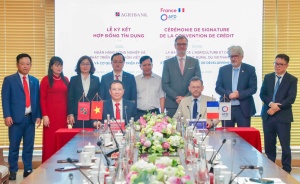 | Agribank and AFD sign climate finance deal to boost green growth Agribank and the French Development Agency have signed a climate finance credit facility, marking a new step in international financial cooperation to promote green growth in Vietnam. |
What the stars mean:
★ Poor ★ ★ Promising ★★★ Good ★★★★ Very good ★★★★★ Exceptional
 Tag:
Tag:Related Contents

Latest News




More News
- Vietnam and Switzerland to deepen financial cooperation (October 19, 2026 | 13:24)
- Carbon finance hinges on viable ventures (October 19, 2026 | 09:59)
- AI to transform the future of finance (October 19, 2026 | 09:04)
- Government proposes relaxing IPO conditions (October 19, 2026 | 08:00)
- Citi warns of intensifying competition for capital amid higher rates (October 16, 2026 | 16:54)
- Banks poised for Q3 profit growth amid margin pressure (October 16, 2026 | 16:51)
- Eximbank to strengthen corporate governance structure (October 16, 2026 | 11:32)
- Citi honours 13 banks with 2025 STP Awards (October 15, 2026 | 16:01)
- Green transition requires realistic roadmap (October 14, 2026 | 17:31)
- VIR workshop explores credit policy and carbon market development (October 14, 2026 | 11:22)







 Mobile Version