
Vietnam Customs accelerates AI and digital transformation

On the afternoon of May 15, Minister of Finance Ngo Van Tuan held a working session with the Department of Customs to review performance in the first four months of 2026 and outline key tasks for the remainder of the year.
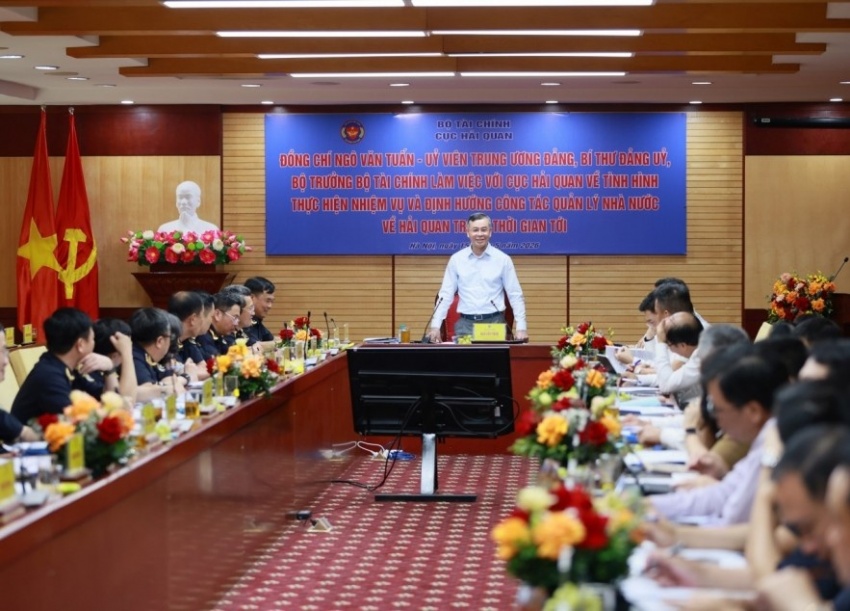 |
At the meeting, customs officials reported achievements in state budget collection, anti-smuggling operations, trade fraud prevention, institutional reform, IT and centralised customs clearance.
During the first four months of 2026, despite ongoing volatility in the global economy and international trade, Vietnam’s customs sector continued facilitating trade, with total import-export turnover reaching $345.68 billion, up 24.7 per cent on-year.
State budget revenue from imports and exports reached VND166.3 trillion ($6.4 billion), equivalent to 36.9 per cent of the annual target and up 16.5 per cent on-year. As of May 7, total revenue had risen to $6.7 billion, equal to 38.5 per cent of the annual estimate.
The results reflected the effectiveness of revenue management measures, anti-tax-loss efforts and proactive forecasting closely aligned with market developments. Customs authorities also closely monitored the impact of US reciprocal tariff policies, energy price fluctuations and trade defence measures to ensure timely budget management.
Alongside revenue collection, customs control measures have been further tightened as smuggling and trade fraud become increasingly sophisticated, particularly through e-commerce, express delivery services and international logistics channels.
The customs sector has also deployed professional enforcement measures, strengthened risk management systems and expanded the application of data analytics and modern technical equipment, focusing on high-risk routes, locations and commodities.
By mid-April, customs authorities had detected, arrested and handled 7,029 violation cases involving goods worth approximately $250 million. Authorities prosecuted four cases and recommended prosecution for 43 others, while contributing around $11 million to the state budget through enforcement activities.
In anti-drug operations, customs forces led or coordinated the detection of 63 cases, arresting 81 suspects and seizing around 307kg of narcotics.
Major achievements
At the meeting, Minister Tuan acknowledged the customs sector’s contributions throughout more than 80 years of development, while highlighting seven key achievements.
First, regarding institutional reform, the customs sector has improved the legal framework governing customs activities, particularly amid the implementation of Vietnam’s new two-tier local government model.
Second, in administrative reform, customs authorities have significantly streamlined procedures while still ensuring effective supervision and facilitating the movement of goods, services and vehicles, especially across borders. According to the report, the sector has cut 33 out of 39 procedures and fully digitised 120 out of 216 administrative procedures.
Third, on digital transformation, the customs sector has aggressively implemented digitalisation initiatives to meet the demands of Vietnam’s deepening global economic integration. “Accelerating digital transformation allows us to keep pace with the world and meet the requirements of the Fourth Industrial Revolution,” the minister said.
Fourth, the customs sector has performed strongly in budget collection, maintaining high revenue growth rates.
Fifth, customs authorities have been recognised for their efforts in combating smuggling, trade fraud, counterfeit goods, intellectual property violations and drug trafficking.
Sixth, regarding organisational restructuring, the customs sector has streamlined its apparatus significantly, reducing organisational units by 53.77 per cent, a result the minister described as highly commendable.
Seventh, in international integration, Vietnam Customs has established relations with 187 countries and maintained close cooperation with major partners such as the US, China and South Korea, enabling the sector to learn from advanced international customs management models.
Accelerating digitalisation
Despite these achievements, Minister Tuan stressed that the customs sector must address remaining shortcomings while prioritising major tasks, including institutional reform, digital transformation, administrative reform, anti-smuggling efforts and anti-corruption measures.
At the meeting, the minister noted that Vietnam’s logistics costs remain high, accounting for 18-20 per cent of GDP, compared to around 8 per cent in Singapore, 15.5 per cent in Thailand and over 12 per cent in Malaysia. Transport costs alone currently account for approximately 60 per cent of total logistics expenses.
He also pointed out that the capacity of domestic logistics firms remains limited and fragmented. However, one of the key contributors to rising costs is compliance expenses, particularly those related to specialised inspections and regulatory procedures. “In trade activities, time is money for businesses,” the minister said.
Minister Tuan instructed the customs sector to urgently revise and supplement the Customs Law for submission to the National Assembly during its October 2026 session. He also called for more flexible implementing regulations to facilitate business operations, accelerate cargo circulation and support Vietnam’s target of achieving double-digit economic growth.
The minister particularly emphasised the need to effectively deploy digital customs systems and strongly apply AI and automation technologies to better serve businesses and citizens amid surging customs clearance demand and increasingly complex cargo management requirements.
At the same time, he urged the sector to strengthen the processing capacity of IT systems and ensure sufficient funding for cybersecurity and network safety to prevent attacks on critical systems.
Minister Tuan expressed confidence that the customs sector would continue encouraging innovation to fulfil its assigned tasks, thereby contributing to trade facilitation, enhancing national competitiveness and supporting Vietnam’s economic development goals in the new phase.
Nguyen Van Tho, director general of the Customs Department, pledged the sector would focus on implementing key priorities and strive to exceed 2025 revenues by 10 per cent in 2026.
"Vietnam Customs is shifting decisively towards a governance model based on data, risk management and enterprise compliance levels, while accelerating the development of digital and smart customs systems," he said.
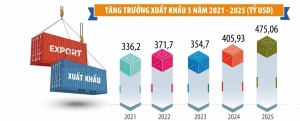 | Vietnam among the world’s top 15 trading nations Goods import-export activity over 2021-2025 has emerged as a major bright spot, with total trade turnover for the entire period reaching nearly $3.8 trillion, the highest level ever recorded. |
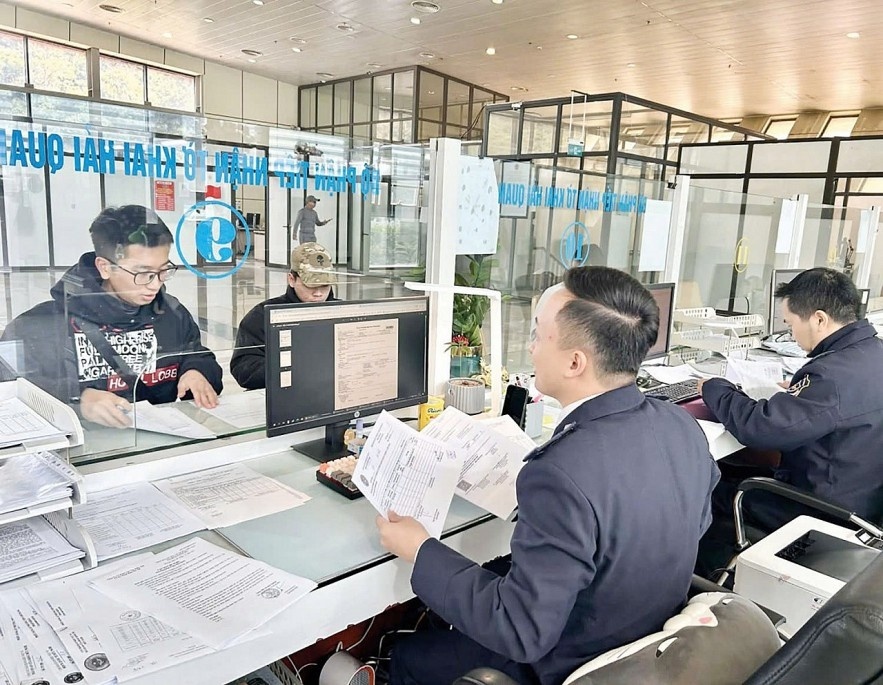
 | Customs reforms strengthen business confidence, support trade growth Customs reforms are strengthening business confidence and trade efficiency, with deeper and more substantive changes expected to support exports, investment, and double-digit economic growth in 2026. |
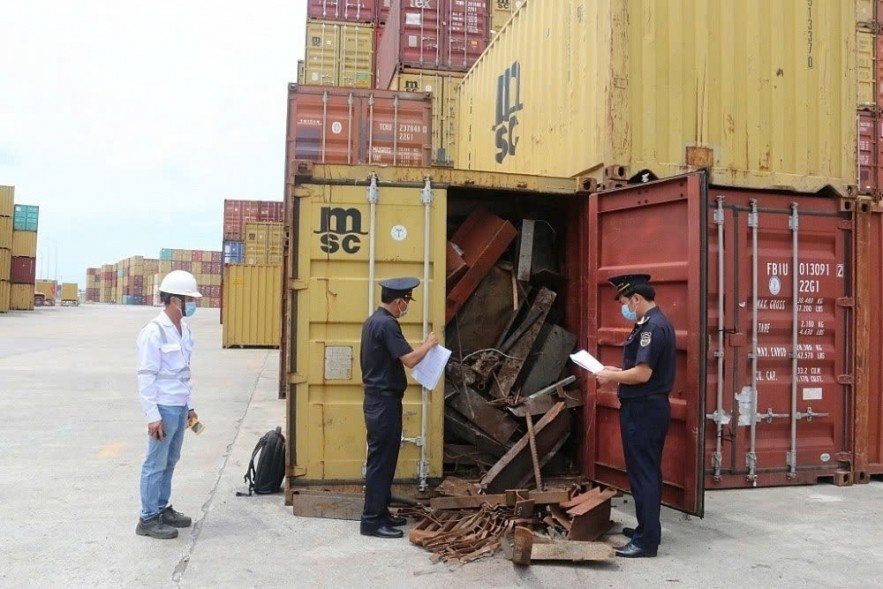
 | Vietnam moves to repeal inter-agency scrap import regulation Vietnam’s Ministry of Finance is proposing to repeal a key inter-agency scrap import regulation as environmental rules mature, and the government pushes to simplify overlapping administrative procedures. |
What the stars mean:
★ Poor ★ ★ Promising ★★★ Good ★★★★ Very good ★★★★★ Exceptional
 Tag:
Tag:Related Contents




Latest News




More News
- Government proposes relaxing IPO conditions (October 19, 2026 | 08:00)
- Citi warns of intensifying competition for capital amid higher rates (October 16, 2026 | 16:54)
- Banks poised for Q3 profit growth amid margin pressure (October 16, 2026 | 16:51)
- Eximbank to strengthen corporate governance structure (October 16, 2026 | 11:32)
- Citi honours 13 banks with 2025 STP Awards (October 15, 2026 | 16:01)
- Green transition requires realistic roadmap (October 14, 2026 | 17:31)
- VIR workshop explores credit policy and carbon market development (October 14, 2026 | 11:22)
- Stronger carbon market needed to unlock climate finance (October 14, 2026 | 11:00)
- Carbon market opens new avenues for green finance (October 14, 2026 | 10:00)
- VPBank and Western Union enhance digital remittance experience (October 13, 2026 | 15:44)








 Mobile Version