
Rising rates squeeze bank profits, slow bond issuance

According to the Vietnam Bond Market Association (VBMA), banks that successfully raised capital through bond issuance in April had to accept exceptionally high interest rates.
MSB, Bac A Bank and Techcombank offered bond yields reaching 8.4–8.9 per cent, per year. During the same period last year, Techcombank and MSB only had to pay 5.2–5.3 per cent, per year on their bonds.
Rising interest rates are the main reason why bank bond issuance has sharply declined during the first four months of this year.
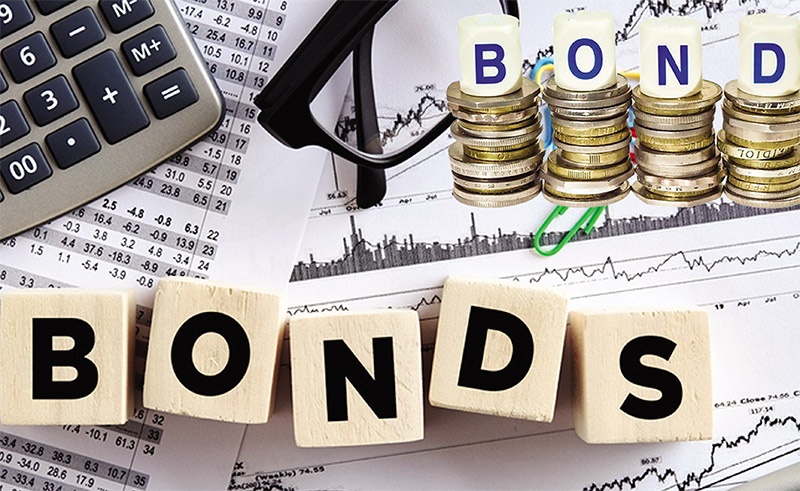 |
According to VBMA statistics, while banks accounted for 100 per cent of all corporate bond issuance in the market in the first quarter (Q1) of 2025, by Q1 of 2026, bank bonds represented only 30 per cent, with real estate bonds surging to take the top position at 60 per cent.
Latest data from VNDirect Securities show that the average issuance interest rate for privately placed bonds by banks in April 2026 climbed to 8.5 per cent per year, up 1.6 percentage points from the end of 2025 and 3.1 percentage points on-year, reflecting significantly higher liquidity pressure and funding costs across the banking sector.
A report from the State Bank of Vietnam shows that the average lending rate among domestic commercial lenders, updated to March 2026, stood at 7.4–9.7 per cent, per year, up 0.3 percentage points from February and 0.7 percentage points from the end of 2025.
Analysts at financial data and information services provider FiinGroup noted that current bond issuance rates have approached lending yields, narrowing profit margins and becoming a key reason behind the decline in bond issuance among banks.
Although bonds remain an important instrument for supplementing medium- and long-term funding sources for banks, experts said higher interest rates have put pressure on funding costs and profit margins, meaning bank bond issuance is likely to remain cautious in Q2 rather than accelerating sharply as seen in the previous years.
In Q1/2026, despite periods of intense capital pressure – particularly to meet demand during the Lunar New Year holiday – banks mainly prioritised flexible funding sources such as deposits, interbank borrowing and open market operations to address liquidity stress instead of turning to the bond channel, resulting in subdued corporate bond issuance activities within the sector during the quarter.
Higher interest rates also explain why public bond issuance during the period saw the rise of many non-financial businesses, such as Transimex Corporation, Coteccons Construction JSC, and BAF Vietnam Agriculture JSC.
The growing diversity of issuers in the public bond market has also partly resulted from Decree 245/2025/ND-CP, which took effect from last September, enabling companies across multiple sectors to turn to bond issuance as a fundraising channel.
Statistics compiled from Q1/2026 financial statements of 27 listed banks show that nearly half experienced declines in capital mobilisation and had to rely more heavily on alternative funding channels, including bond issuance and the interbank market.
Experts, however, warned that the interbank channel is also approaching its limits, while bond interest rates have become increasingly expensive, a development that will further affect funding costs.
Dr. Can Van Luc, chief economist at BIDV and a member of the National Financial and Monetary Policy Advisory Council, noted, “Banks that want capital for lending have to mobilise funds from various sources, including bond issuance. Moreover, when banks provide long-term loans, risks are higher, requiring them to increase provisioning ratios, which in turn raises funding costs.”
According to FiinGroup, the bond market typically accelerates in the second and third quarters each year as demand for production and project implementation rises, while credit institutions step up capital mobilisation to support credit growth and ensure liquidity safety ratios.
This year, however, amid persistently high interest rates, market activity is likely to remain subdued among both manufacturing enterprises and banks. Issuers are expected to proceed more cautiously with fundraising plans while waiting for clearer signals on interest-rate management and broader macroeconomic conditions.
“High interest rates continue to push issuance costs to elevated levels, which could slow down corporate fundraising plans. However, the extent to which interest rates affect corporate bond issuance plans will depend on each company’s profile,” FiinGroup said in its analysis.
Although experts believe caution will dominate the corporate bond market in the coming period, they also noted that tighter controls on real estate credit this year will force property developers to rely more heavily on corporate bonds to compensate for reduced access to bank credit.
 | Banks conducting massive bond issuances Besides attracting deposits to meet the heightened credit demand at the end of the year, banks are racing to issue bonds to replenish capital sources. |
 | Corporate bond issuances surge as firms accelerate capital restructuring Vietnam's corporate bond market saw a surge in new issuances and early redemptions in mid-October, signalling active capital restructuring by businesses amid stable interest rates and improved liquidity. |
 | Vingroup set for $350 million international bond issuance Vingroup plans to issue up to $350 million in international bonds, with listing documents submitted to the Vienna Stock Exchange. |
What the stars mean:
★ Poor ★ ★ Promising ★★★ Good ★★★★ Very good ★★★★★ Exceptional
 Tag:
Tag:






Latest News




More News
- Eximbank to strengthen corporate governance structure (October 16, 2026 | 11:32)
- Citi honours 13 banks with 2025 STP Awards (October 15, 2026 | 16:01)
- Green transition requires realistic roadmap (October 14, 2026 | 17:31)
- VIR workshop explores credit policy and carbon market development (October 14, 2026 | 11:22)
- Stronger carbon market needed to unlock climate finance (October 14, 2026 | 11:00)
- Carbon market opens new avenues for green finance (October 14, 2026 | 10:00)
- VPBank and Western Union enhance digital remittance experience (October 13, 2026 | 15:44)
- Eximbank’s next chapter: Richa Goswami on purpose, relevance and trust (October 13, 2026 | 10:52)
- Vietnam and Luxembourg sign MoU to strengthen financial cooperation (October 13, 2026 | 10:20)
- Vietnam seeks stronger cooperation with Fitch Ratings to improve sovereign credit rating (October 13, 2026 | 10:07)



Latest News







 Mobile Version