
Ministry of Finance finalises land use tax report after delegate request

In a recent response to National Assembly delegate Doan Thu Ha on May 11, the Ministry of Finance confirmed it has finalised a research report evaluating the socioeconomic impacts of current land use taxes. The delegate had requested a review of the non-agricultural land use tax's effectiveness and a study into a possible property tax law.
The assessment, which covers both non-agricultural and agricultural land use duties, has been submitted to the Ministry of Justice for review before being presented to the government.
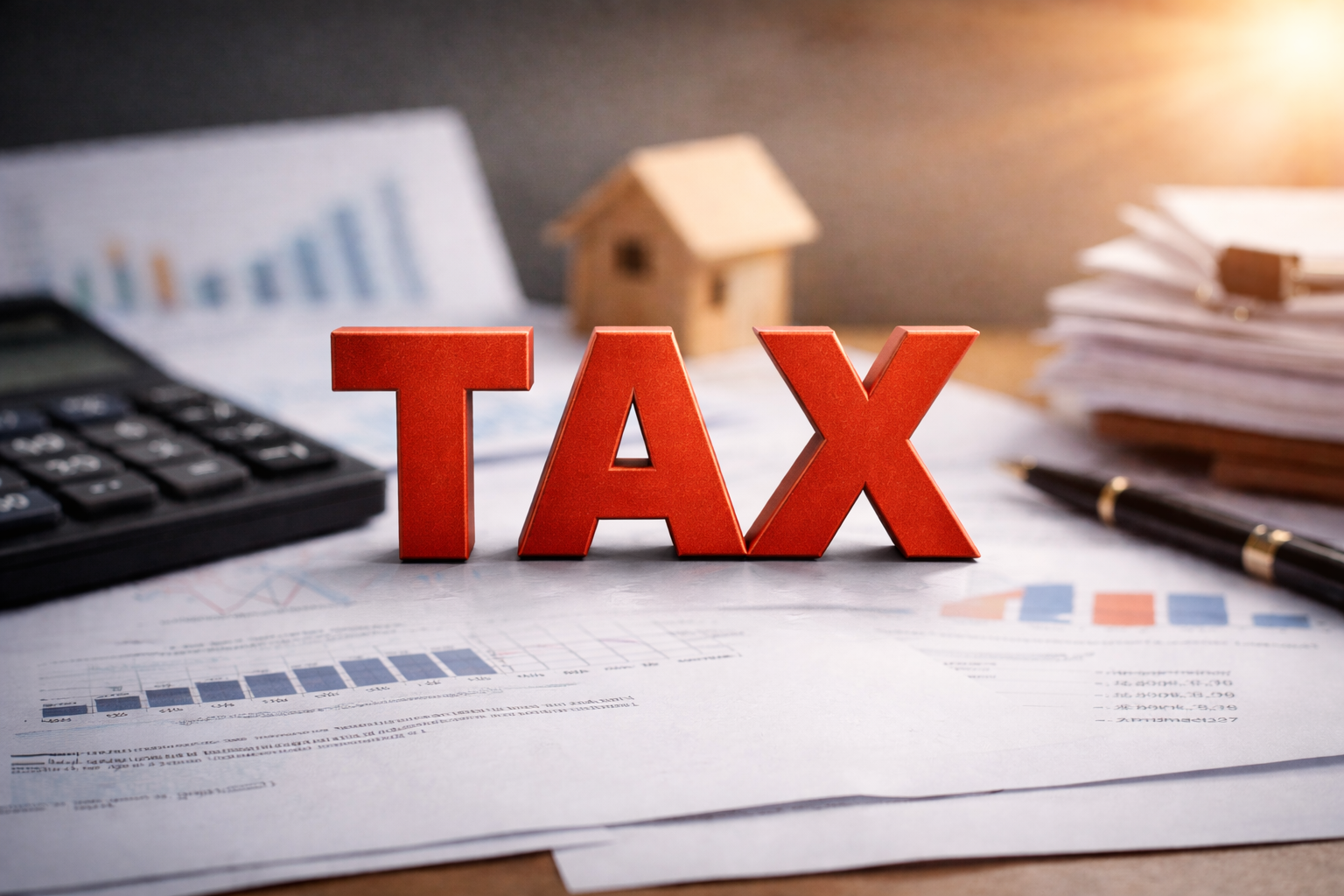 |
Ha’s petition urged the MoF to replace the existing fragmented system with a unified Property Tax Law, which seeks to eliminate geographical and quota restrictions to more effectively regulate high-value assets and land resources, while simultaneously bolstering the state budget.
Data from the MoF shows that between 2012 and 2021, the Non-Agricultural Land Use Tax generated an average annual revenue of $68 million, maintaining a steady annual growth rate of 11.2 per cent. While providing a stable stream for the state budget, officials acknowledge the need for policy refinement to discourage land hoarding.
The proposed law is anticipated to have a far-reaching impact on the public, the business community, and property market stability. Consequently, the MoF has urged a cautious research process, including a deep dive into international experiences to ensure the new Law suits the country’s specific socioeconomic conditions.
The roadmap for these changes is becoming clearer, with the MoF planning to submit a proposal to the National Assembly by October. This follows formal approval from the prime minister in 2024 to begin developing a comprehensive property tax.
Beyond revenue collection, reforms aim to increase land use efficiency and potentially introduce taxes on buildings and second homes to limit speculative behaviour. Progressive tax rates for abandoned projects or idle properties are also under consideration to increase housing supply and normalise market prices.
As the MoF refines its proposal, it is also addressing valuation concerns to prevent tax evasion through under-reported contract prices. Furthermore, the Ministry of Construction has voiced support for taxing price differences in transactions to curb artificial market bubbles.
However, establishing a complete system remains challenging due to incomplete legal data, market structure, and the prevailing social sentiment.
Property remains a central financial asset for the Vietnamese citizens to accumulate wealth, often leading to intense public debate surrounding these new tax proposals.
 | Ministry of Finance tightens fiscal discipline amid global pressures Facing mounting inflation, trade and investment pressures, the Ministry of Finance is stepping up institutional reforms, tightening fiscal discipline and accelerating policy action to safeguard growth momentum and macroeconomic stability. |
 | Tokenised asset market could begin operations in Q3 Vietnam is expected to see the first official activities of its tokenised asset market as early as the third quarter, as the government accelerates efforts to build a legal framework for digital finance and strengthen trust in the country’s digital economy. |
 | FDI a crucial component to double-digit growth Foreign investment is considered a crucial component contributing to the economic prosperity, especially the realisation of double-digit growth across 2026-2030. |
What the stars mean:
★ Poor ★ ★ Promising ★★★ Good ★★★★ Very good ★★★★★ Exceptional
 Tag:
Tag:
Related Contents









Latest News





More News
- From loans to women’s economic empowerment (October 06, 2026 | 17:58)
- VIB named Outstanding Retail Bank 2026, targets transaction banking (October 06, 2026 | 10:52)
- FTSE upgrade paves way for stronger stock market development (October 05, 2026 | 18:44)
- coLoan to empower women through inclusive green finance (October 05, 2026 | 18:42)
- Techcombank CEO: AI no longer a tool but a new operating foundation (October 05, 2026 | 18:11)
- Banks sustain profit growth as funding costs squeeze margins (October 02, 2026 | 22:22)
- Nam A Bank delivers strong breakthrough in 2026 (October 02, 2026 | 19:00)
- Policy credit builds sustainable livelihoods from the grassroots (September 29, 2026 | 07:48)
- VIB deploys Front Arena treasury and foreign exchange trading system on AWS (September 28, 2026 | 16:46)
- Nam A Bank receives $60 million loan from FMO (September 28, 2026 | 12:37)


Latest News






 Mobile Version