
Shifting from attracting capital to building national investment platform

Speaking at the Fortune Southeast Asia 500 Summit 2026, held on November 3 in Ho Chi Minh City, Deputy Minister of Finance Le Tan Can said that Vietnam prioritises investors with foundational and core technologies, modern management capabilities, and commitments to technology transfer, while boosting green and digital transformation.
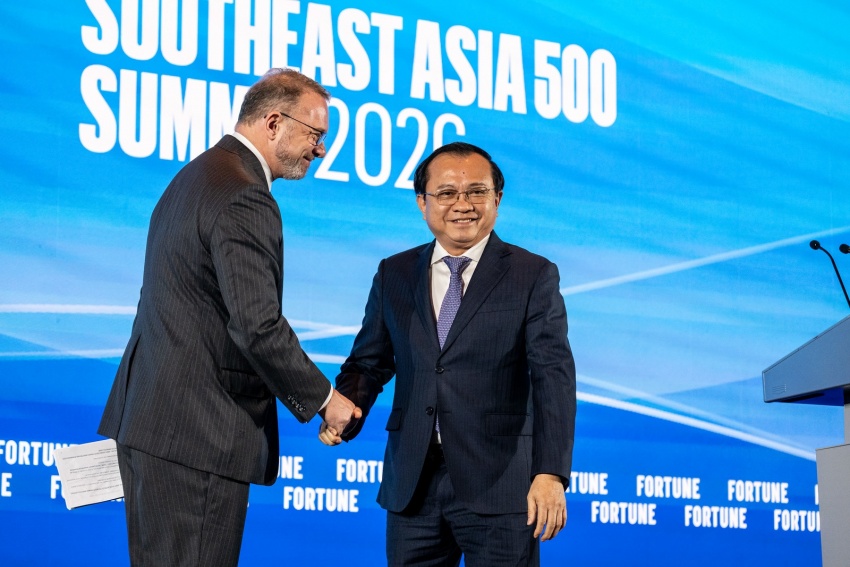 |
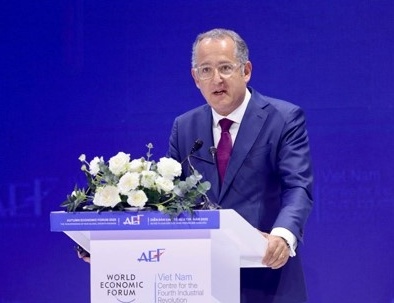
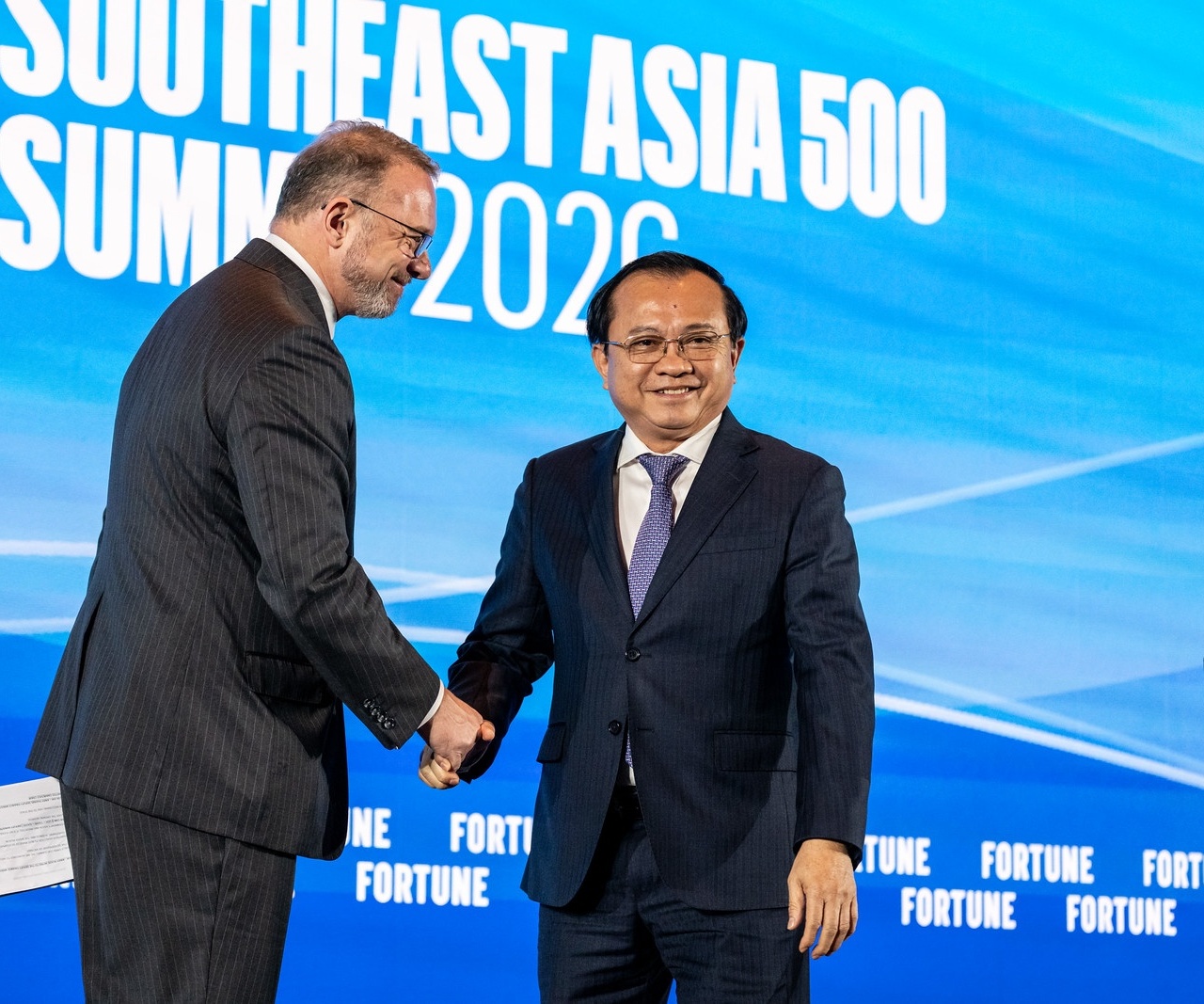
| Andrew Staples, co-chair of the Southeast Asia 500 Summit and editorial director for Asia at Fortune (left) and Deputy Minister of Finance Le Tan Can at the Fortune Southeast Asia 500 Summit 2026. |
"Vietnam is not only welcoming manufacturing facilities but is also preparing its infrastructure and institutional framework to become a destination for data centres, AI centres, and research and development hubs operated by multinational corporations, and international financial institutions," Can said.
To realise this vision, Vietnam is focusing on developing an integrated next-generation investment ecosystem that closely connects foreign-invested enterprises with domestic businesses, while developing logistics, data, and clean energy infrastructure, as well as a high-quality workforce. At the same time, the country is seeking to harness new growth drivers from capital markets, free trade zones, and international financial centres.
“For Vietnam, science and technology, innovation, and digital transformation have been identified as key drivers of growth. The economy is making a strong shift towards a development model based on productivity, quality, and higher added value, while encouraging the role of the private sector,” he said.
Can outlined different major areas of cooperation that Vietnam hopes to advance with the business community and foreign investors in the coming years.
These include joint research, development, and mastery of technologies, with priority given to areas where both sides have potential and shared advantages, such as AI, semiconductors, biotechnology, clean energy, and smart technologies.
He also called for the establishment of more research centres, laboratories, and technology development programmes, alongside stronger investment in Vietnam’s priority strategic sectors, including high technology, semiconductors, electronics, AI, data, digital infrastructure, modern logistics, clean energy, biotechnology, advanced materials, and high-value-added services.
At the summit, Andrew Staples, co-chair of the Southeast Asia 500 Summit and editorial director for Asia at Fortune, said that the latest Fortune Southeast Asia 500 ranking, which recognises the region’s largest companies by revenue, showed that the 500 companies on the list generated combined revenue of $1.9 trillion this year, up 3.4 per cent from the previous year.
However, the 72 Vietnamese companies featured in the ranking recorded a combined revenue increase of 10.5 per cent compared with last year’s list, three times the regional average.
“The continued growth and development of Vietnam’s economy is one of the reasons why we decided to host the Fortune Southeast Asia 500 Summit here today. Vietnam is the fastest-growing economy in the region, with a population of more than 100 million and annual growth of around 8 per cent,” he said.
“The global economy is changing, creating new risks and opportunities while becoming increasingly complex and costly. Geopolitical factors, rather than efficiency and productivity alone, are now also shaping trade and investment flows. The development of the AI ecosystem and the application of this technology are both major drivers of economic growth and sources of risk and uncertainty,” he noted.
At the conference, Andrew Staples, co-chair of the Southeast Asia 500 Summit and editorial director for Asia at Fortune, said that the latest Fortune Southeast Asia 500 ranking, which recognises the region’s largest companies by revenue, showed that the 500 companies on the list generated combined revenue of $1.9 trillion this year, up 3.4 per cent on-year.
Meanwhile, the 72 Vietnamese companies featured in the ranking recorded a 10.5 per cent increase in combined revenue compared with last year’s list, three times the regional average.
“Vietnam’s continued economic growth and development is one of the reasons why we decided to bring the Fortune Southeast Asia 500 Summit here today. Vietnam is the fastest-growing economy in the region, with a population of more than 100 million and annual growth of around 8 per cent,” he said.
“The global economy is changing, creating new risks and opportunities, while becoming increasingly complex and costly. Geopolitical factors, rather than efficiency and productivity alone, are now shaping trade and investment flows. The development of the AI ecosystem and the adoption of this technology are both important drivers of economic growth and sources of risk and uncertainty.”
According to the Ministry of Finance, despite volatility in the global economy and geopolitical landscape, Vietnam has demonstrated resilience and maintained positive growth momentum. In recent years, GDP growth has remained high, at 7-8 per cent, driven in large part by manufacturing and processing, services, and exports.
GDP grew by 9.01 per cent in the first nine months, providing a foundation for the country to gradually pursue its target of achieving double-digit growth during the 2026-2030 period.
Vietnam has also remained an attractive destination for FDI, with investment increasingly shifting towards high-tech industries, semiconductors, and green energy.
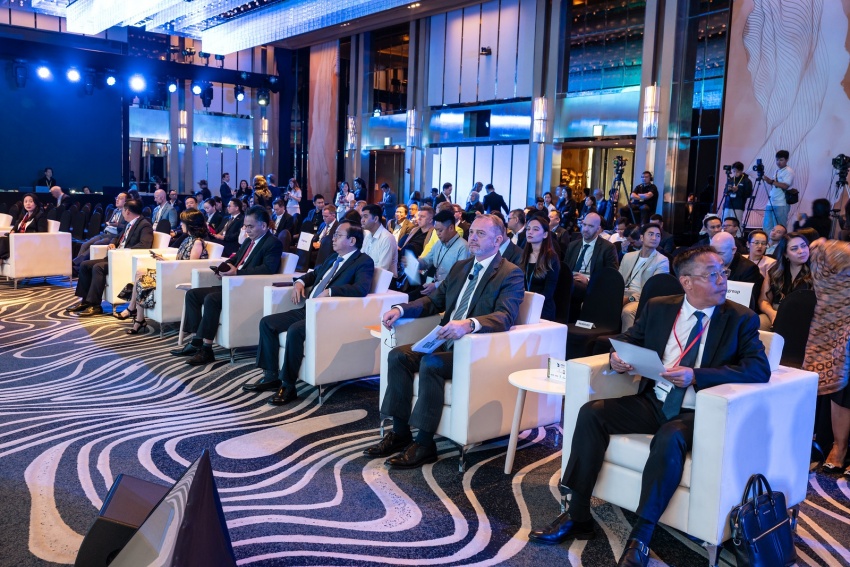 |
| Fortune Southeast Asia 500 Summit 2026, held on the morning of November 3 in Ho Chi Minh. |
What the stars mean:
★ Poor ★ ★ Promising ★★★ Good ★★★★ Very good ★★★★★ Exceptional
 Tag:
Related Contents

Latest News
More News
- Ho Chi Minh City eyes chip design as US tech firms look to Vietnam (November 03, 2026 | 11:10)
- Hung Yen speeds up reform to boost investment appeal (November 03, 2026 | 11:02)
- Carlsberg Vietnam values long-term investment (November 02, 2026 | 17:06)
- Danish garment maker Spectre opens fourth factory in Hung Yen (November 02, 2026 | 14:07)
- Vietnam manufacturing growth eases in October as export orders fall (November 02, 2026 | 13:35)
- UK-Vietnam Business Forum focuses on high-value economy by 2045 (October 30, 2026 | 08:00)
- From resilience to intelligence: how Vietnam can strengthen its role in Asia-Europe supply chains (October 29, 2026 | 19:15)
- More than $13 billion in projects approved at AEF 2026 (October 29, 2026 | 16:38)
- Vietnam seeks deeper role in emerging global value chains (October 29, 2026 | 16:36)
- Keppel joins Vietnam International Financial Centre as inaugural member (October 29, 2026 | 11:10)




 Mobile Version