
New programme addresses changing startup landscape

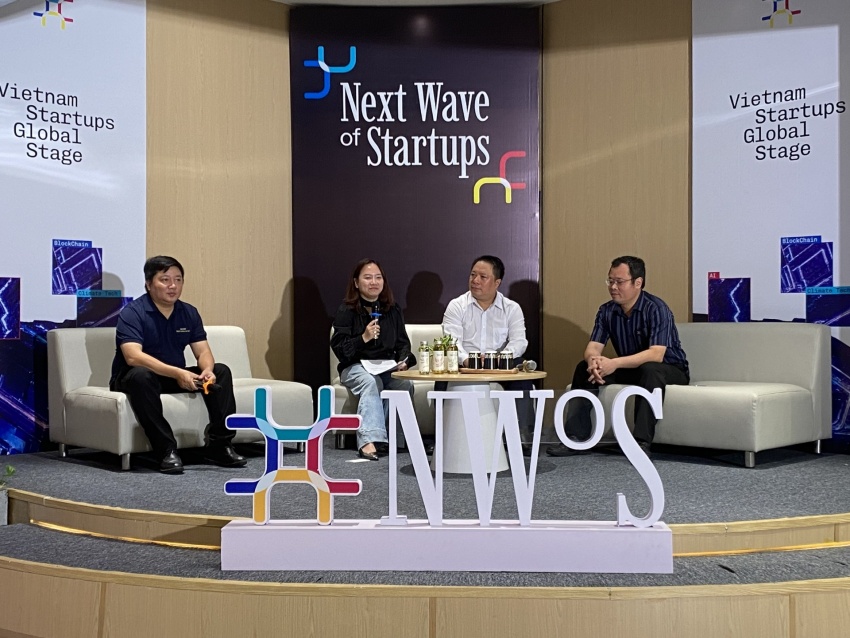
The Next Wave of Startups (NWoS) Incubation Program 2026 was announced at the Founders' Meetup #1 policy seminar in Ho Chi Minh City on July 31.
The event provided a comprehensive overview of Vietnam's policies supporting startups and innovation, while offering practical guidance on how startups can effectively access resources across the innovation ecosystem.
According to Dinh Xuan Tu, acting director of the Technology Incubation Centre under the Department of Startups and Technology Enterprises at the Ministry of Science and Technology (MoST), developing a vibrant startup and innovation ecosystem, particularly technology spin-off enterprises, is increasingly important as science and technology, innovation, and digital transformation become key drivers of economic growth and national competitiveness.
"Under new resolutions and relevant directives, the Department of Startups and Technology Enterprises has led the formulation of key policies to foster innovation and technology enterprise development," Tu said.
According to the MoST, Vietnam's innovation startup ecosystem has made significant progress, with around 4,000 innovative startups, nearly 210 venture capital funds, close to 200 incubators, and approximately 1,000 enterprises certified as sci-tech businesses. In addition, more than 40 technology spin-offs have been established from research institutes, universities, and corporations.
However, from a public administration perspective, Tu noted that the number of technology spin-offs in Vietnam remains well below the country's research and innovation potential.
“The commercialisation of research outcomes continues to face significant challenges. Limited access to capital, expert support, markets, and government support policies remains a major obstacle for many startups and technology spin-offs. These are also the issues that policymakers are working to address by refining mechanisms to create a more enabling environment for innovation and enterprise development in the years ahead,” he said.
Nguyen Dac Binh Minh, deputy director general of the National Academy for Advanced Techonogy and Innovation under the MoST, said Vietnam needs to foster a new entrepreneurial mindset, encouraging young people to seek employment after graduation and become founders and leaders of future technology enterprises and corporations.
According to Minh, the government is shifting from a regulatory mindset to a development-oriented, enabling approach that recognises businesses and innovation as key drivers of economic growth.
“Alongside the new legal framework, the government is introducing a range of policies to strengthen the innovation ecosystem. These include regulations on the National Venture Capital Fund, financial mechanisms for science, technology and innovation, public-private partnerships in sci-tech, technology market development, as well as policies to support startups and innovation networks,” Minh said.
Following its inaugural edition in 2025, the Next Wave of Startups initiative, launched by WorkFlow, the Open Innovation & Technopreneur Institute, and partners to support Vietnam's and the region's startup ecosystem, has entered a new phase with the launch of the NWoS Incubation Program 2026.
While the 2025 edition focused on identifying and selecting promising startups through a competition format, the 2026 programme marks a shift towards a comprehensive incubation model. The initiative is designed to support startups in refining their business models, expanding into new markets, and strengthening their long-term growth potential.
The 2025 NWoS offering attracted nearly 200 applications, bringing together almost 40 local and international experts and mentors, as well as more than 1,000 participants, including representatives from organisations, businesses, and international partners. These outcomes reflected the strong interest of the startup community while providing organisers with valuable insights into the evolving needs of Vietnamese startups as they move into their next stage of development.
As Vietnam's innovation ecosystem continues to mature, an increasing number of startups have progressed beyond the ideation stage, with early products already in the market. They are now facing more complex challenges, including validating business models, acquiring enterprise customers, expanding into new markets, and preparing for fundraising rounds. In response, the programme has evolved into an incubation model focused on providing long-term, hands-on support, rather than limiting its role to identifying and selecting promising startups.
 |
 | Private capital market shifts from growth-at-all-costs to patient capital As Vietnam's private capital market matures, investors are shifting their focus from aggressive expansion to long-term, sustainable growth. At the VIPC Summit on May 28, Nguyen Thanh Thao, CEO of Thien Viet Securities (TVS) explained why 'patient capital' – capital focused on governance, operational resilience, and sustainable value – is becoming the new benchmark. |
 | Capital concentrated in later-stage startups, leaving funding gaps for early ventures Capital remains available for Vietnam's innovation economy, but it is becoming increasingly concentrated in later-stage companies, exposing critical funding and exit gaps that could constrain the next generation of startups. |
What the stars mean:
★ Poor ★ ★ Promising ★★★ Good ★★★★ Very good ★★★★★ Exceptional
 Tag:
Tag:Related Contents




Latest News





More News
- Petronas, Petrovietnam to expand energy cooperation (October 21, 2026 | 12:13)
- AI in customer experience: Finding the right level of automation (October 21, 2026 | 09:03)
- Fresh graduates fall short on soft skills, employers say (October 19, 2026 | 13:14)
- Ford innovations continue towards sustainable growth (October 19, 2026 | 09:40)
- Preparing professionals for a new business environment (October 19, 2026 | 09:13)
- KN Holdings honoured for ESG efforts in Vietnam (October 18, 2026 | 11:00)
- APEA 2026 Vietnam honours 65 outstanding leaders and enterprises (October 17, 2026 | 10:00)
- MEXC highlights AI-driven trading and broader market access at TOKEN2049 (October 17, 2026 | 09:00)
- EuroCham confidence index holds at 78.3 despite operational hurdles (October 16, 2026 | 17:27)
- Shrimp and rice firms face rising standards in export markets (October 16, 2026 | 09:00)









 Mobile Version