
Tourism and infrastructure fuel Vietnam's real estate growth

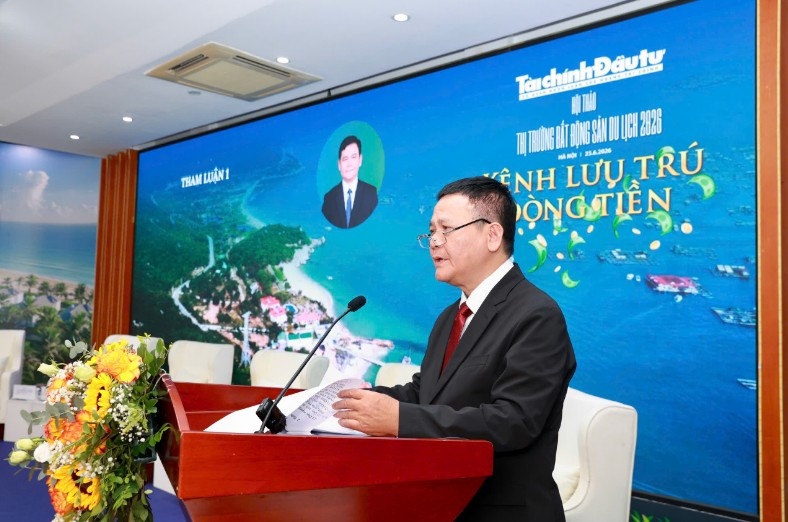 |
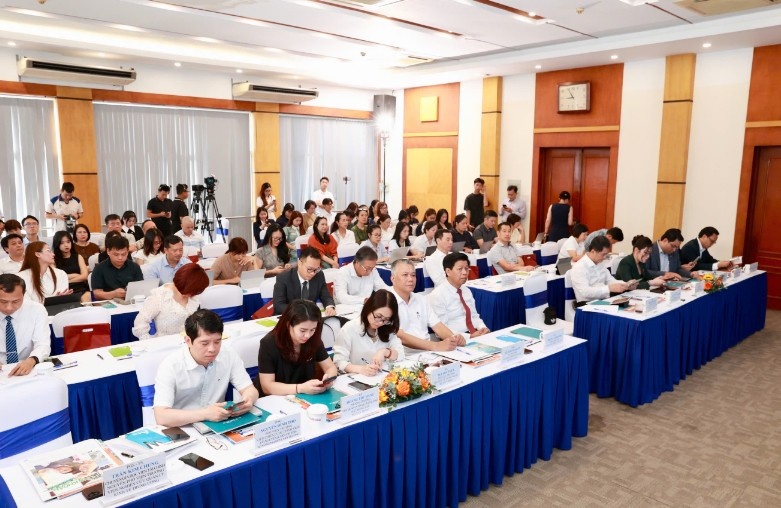
The information was shared by Assoc. Prof. Dr. Tran Kim Chung of the Academy of Finance when he delivered a keynote speech at the VIR seminar, 'Tourism Real Estate Market 2026: Where Hospitality Meets Cash Flow' on June 23.
According to Chung, 2026 is considered a pivotal year as the Vietnamese economy enters a new development phase with a series of new policies on socioeconomic development, planning, and infrastructure investment. Against the backdrop, the real estate market is facing significant opportunities to enter a new development cycle.
There has been strong progress in institutional reform with amendments to the Land Law, the Law on Housing, and the Law on Real Estate Business to create a more synchronised legal framework for the real estate market. As a result, many impediments that have existed for many years have been removed.
In addition, local authorities are accelerating planning adjustments following the administrative reorganisation process and the implementation of national, regional, and provincial master plans. This lays an important foundation for the real estate market to develop in a more professional and sustainable manner.
“While the 2022-2024 period was characterised by market consolidation, 2026 marks the beginning of a new phase focused on quality growth. Among them, planning, infrastructure, and institutional reforms are set to play a decisive role,” Chung said.
“After a prolonged period of stagnation, the real estate market has recorded more positive signs across most segments in the first six months of 2026. Tourism real estate is the bright spot in the given period,” Chung added.
The national tourism master plan has laid an important foundation for the tourism real estate market. Development orientations are outlined in the marine economy development strategy, the tourism system planning for the 2021–2030 period, and the implementation plans for the national tourism master plan.
Under the master plan, Vietnam will establish three national tourism growth poles in Hanoi, Ho Chi Minh City, and Danang, while developing key tourism areas stretching from the north to the south. In addition, a network of national tourism centres will be developed, including Halong, Ninh Binh, Hue, Hoi An, Quy Nhon, Nha Trang, Dalat, Vung Tau, Can Tho, and Phu Quoc.
“The changes in planning are reshaping Vietnam’s tourism real estate landscape,” Chung noted.
 |
Previously, tourism ventures were mainly standalone hotels or resorts. Today, there is an increasing number of large-scale, multi-functional complexes integrating accommodation, shopping, entertainment, conferences, healthcare, and education. Some developments span thousands of hectares, with some reaching 6,200 ha. These ventures are gradually forming new tourism cities.
The market is also witnessing strong product diversification, ranging from resort apartments, beachfront villas, and shophouses to new models that integrate hospitality, wellness, entertainment, and remote working.
Selling prices continue their upward trend. The high-rise segment recorded asking prices ranging from VND39–200 million ($1,500–7,700) per square metre, an increase of approximately 10 per cent from the previous year.
Destinations such as Phu Quoc and Halong continue to be a magnet to investments thanks to their advantages in infrastructure, tourism, and planning.
Many people are heading to Phu Quoc to buy condotels, while households are flocking to Halong to invest in hotel rooms. This reflects the strong investor interest in these tourism markets. Meanwhile, some other localities are facing the need to recalibrate their development strategies following the administrative restructuring process.
“In terms of products, Vietnam has emerged as one of the four leading markets for branded real estate. Six-star branded real estate projects have made their debut in Vietnam,” Chung said.
 | Sweden’s Peak Education eyes $60 million eco-resort in Quang Ngai On June 8, Sweden-based Peak Education Limited has proposed the construction of a carbon-neutral eco-resort in Quang Ngai with a total investment of $60 million. |
 | Resort developers carry out adjustments Despite tourism real estate seeing widespread benefits as the country grows, the market is currently facing greater challenges than at any point in recent memory. |
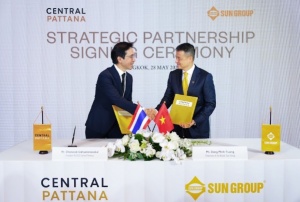 | Sun Group partners with Central Pattana to build retail complexes Sun Group has signed a strategic cooperation agreement with Thailand's Central Pattana to develop new-generation retail and mixed-use complexes in Vietnam. |
What the stars mean:
★ Poor ★ ★ Promising ★★★ Good ★★★★ Very good ★★★★★ Exceptional
 Tag:
Tag:
Related Contents




Latest News
More News
- HoREA proposes new framework for affordable commercial housing (October 08, 2026 | 17:01)
- Hong Hac City event to explore Bac Ninh's urban transformation (October 08, 2026 | 15:27)
- Onsen in the heart of the city: a new experience at the shopping mall (October 08, 2026 | 08:00)
- Enterprises honoured as Outstanding Provider of Green Industrial Solutions (October 06, 2026 | 18:03)
- MIK Group launches House of MIK in Ho Chi Minh City (October 03, 2026 | 17:00)
- Vietnam hospitality shifts towards integrated mixed-use developments (October 03, 2026 | 10:00)
- Stavian IP accelerates its modern expansion (October 02, 2026 | 14:00)
- ESG for future-ready industrial success (October 02, 2026 | 09:00)
- Green Future Awards honour five leading industrial park developers (October 01, 2026 | 22:20)
- Green transition leaders honoured at Green Future Awards 2026 (October 01, 2026 | 22:10)







 Mobile Version