


Sojitz in Vietnam: 40 years from individual projects to a business cluster 'KATAMARI'

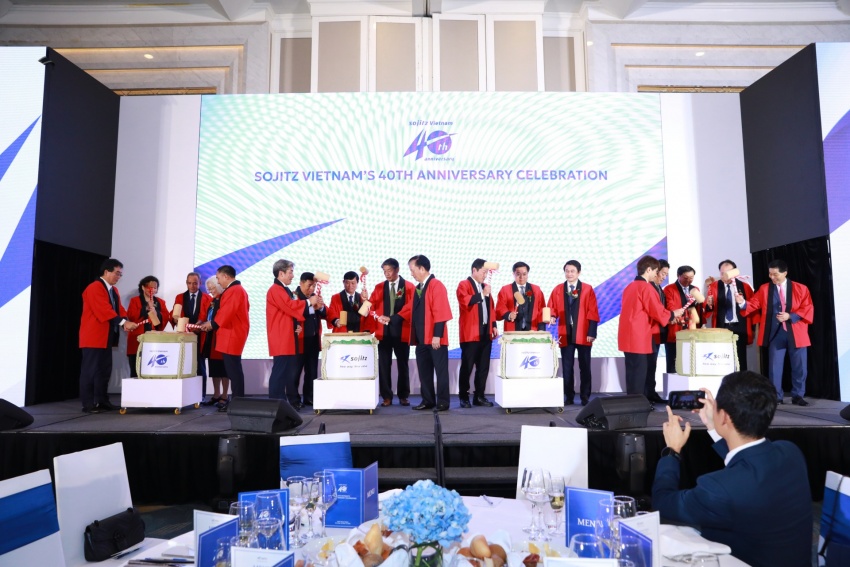 |
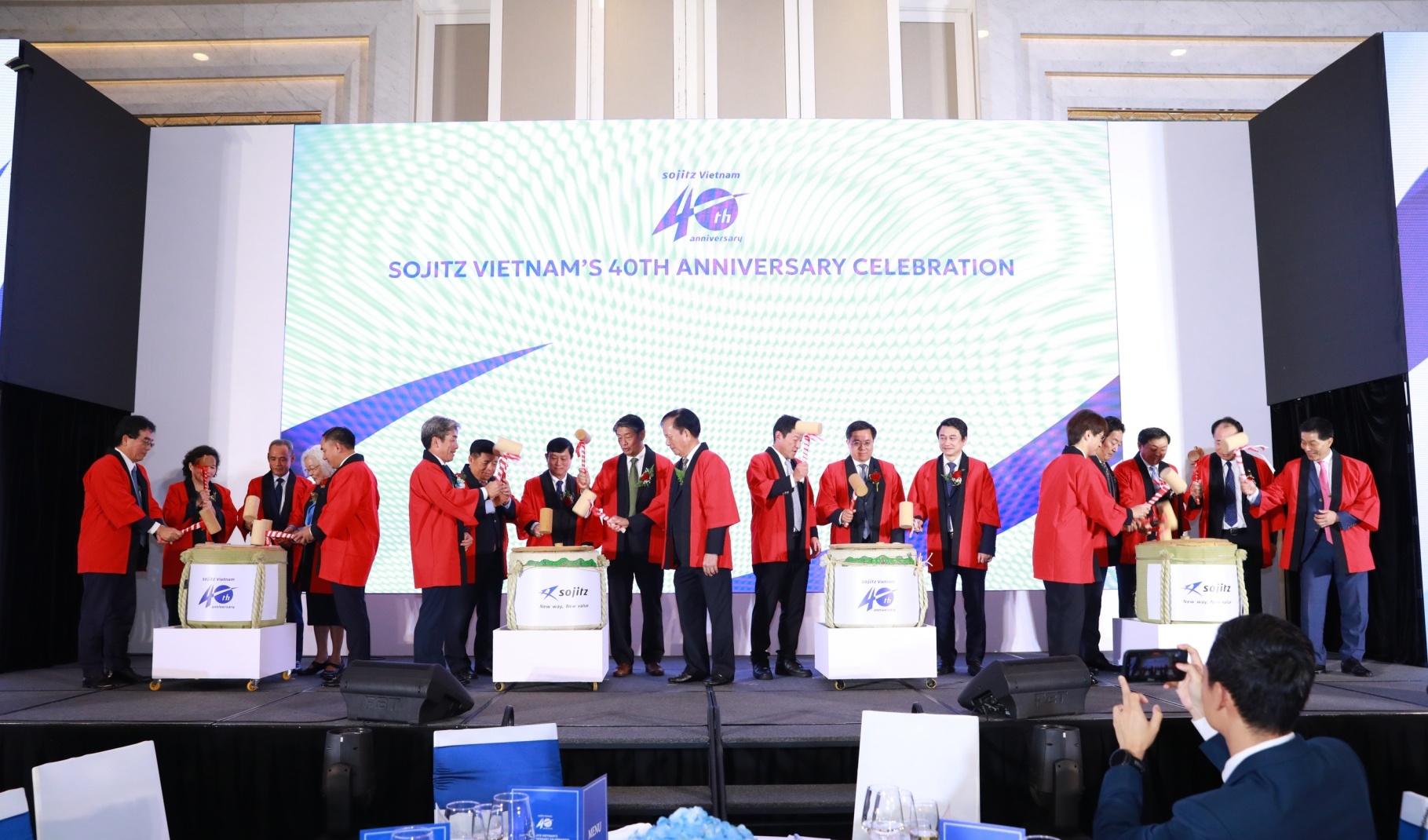
| 40th anniversary of Sojitz Corporation in Vietnam. Photo: Duc Thanh |
On October 5, Sojitz marked 40 years of operations in Vietnam, spanning a period of profound transformation in the country's economy. Today, Japanese trading and investment company Sojitz Corporation and its group companies operate more than 30 subsidiaries and joint ventures in Vietnam, employing around 8,400 people.
The figures reflect the scale of Sojitz's presence and its evolution from individual investments into a diversified business portfolio, with a growing focus on connecting businesses and projects to create new opportunities for growth.
Four decades alongside Vietnam's economic transformation
In 1986, as Vietnam embarked on its Doi Moi economic reforms, Nissho Iwai, a predecessor of Sojitz, opened a liaison office in Hanoi. It was the first Japanese company to establish such an office in Vietnam after the war, laying the foundations for operations that would expand over the following decades.
In its early years, Sojitz focused on production and domestic resources, including forestry plantations, wood chip processing and fertilizer production. Vietnam-Japan Chip Corporation (Vijachip) and Japan Vietnam Fertilizer Company (JVF) are among the investments dating from this period.
As foreign direct investment grew, the group expanded into industrial infrastructure. In 1996, Sojitz became involved in the development of Loteco Industrial Park in Dong Nai province, followed by Long Duc Industrial Park. These projects have provided production space for domestic and foreign companies, particularly Japanese investors.
In the energy sector, Sojitz participated in the Phu My 3 build-operate-transfer (BOT) power plant project, with a capacity of approximately 720MW, contributing to Vietnam's electricity supply. Over time, the group's portfolio expanded from raw materials and basic production into industrial infrastructure, energy and consumer-focused sectors.
As incomes and consumption rose, Sojitz moved into retail, paper, livestock and food processing. The group developed a convenience store chain, invested in Saigon Paper Corporation and expanded its activities across the food supply chain.
One example of this increasingly integrated approach is Japan Vietnam Livestock Company (JVL), a joint venture established in 2021 between Sojitz and Vietnam Livestock Corporation (Vilico), a subsidiary of Vinamilk. The project is developing an integrated beef production chain covering livestock farming, processing and distribution.
In December 2024, JVL began operating its beef processing plant in Tam Dao, Phu Tho province. According to Sojitz, the facility can process approximately 30,000 cattle annually, with targeted output of around 10,000 tonnes of finished beef products a year. Products are distributed through cold-chain logistics and DaiTanViet's network of hotel and restaurant clients. DaiTanViet is a food distribution business within the Sojitz group.
Connecting livestock farming, processing, storage and distribution can help maintain quality, secure supply and serve customers with more demanding requirements. The model also illustrates how the capabilities of Vietnamese partners can be combined with Sojitz's international network and operational experience.
Kosuke Uemura, President and CEO of Sojitz Corporation, said the group's achievements over the past four decades had not been built alone.
“The story we celebrate today is not simply Sojitz's story. It is a story written together with our customers, partners, government leaders and generations of colleagues who believed in Vietnam's future. Throughout these 40 years, Sojitz has been privileged to grow alongside Vietnam,” Uemura said.
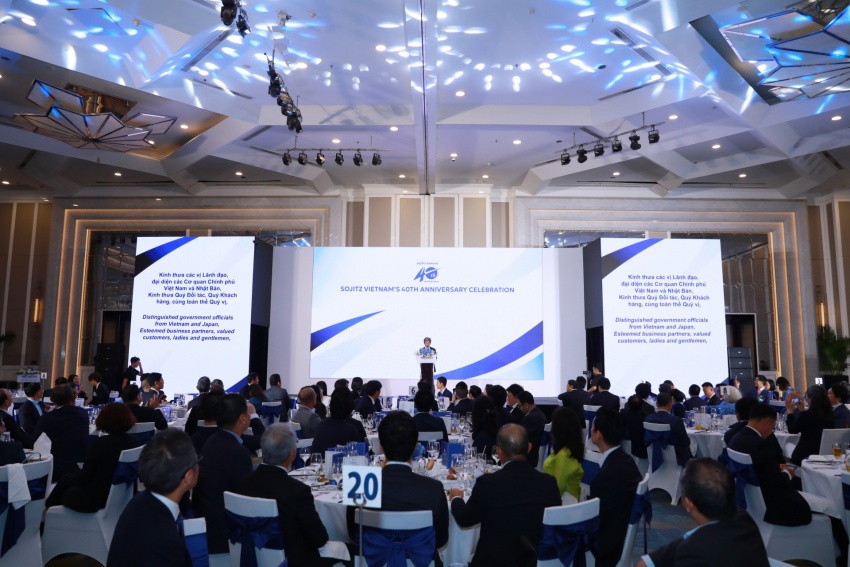 |
| Kosuke Uemura, president and CEO of Sojitz Corporation |
Building KATAMARI and expanding opportunities for cooperation
Looking ahead, Sojitz plans to shift its focus from developing individual projects towards building more interconnected business clusters. Under this approach, investments will be assessed not only on their individual performance but also on their potential to generate opportunities for other businesses across the value chain.
In agriculture and food, the group aims to connect activities ranging from fertilizers and animal feed to livestock farming, food processing, cold-chain logistics, wholesale, retail, and restaurant services. In industry, its industrial park platform could be expanded through manufacturing support services, logistics, and energy solutions.
Rising electricity demand and pressure to reduce emissions are also creating opportunities for clean energy solutions, including rooftop solar power for industrial facilities. Meanwhile, digital transformation and technology offer potential applications in manufacturing, supply chain management, and distribution.
These priorities align with Vietnam's long-term development ambitions for 2045, as the country continues to pursue industrialisation, infrastructure modernisation, digital transformation, and green transition. Progress in these areas will require capital, technology, management expertise, and participation from domestic and international business networks.
Japanese Ambassador to Vietnam Naoki Ito said Sojitz had contributed to efforts to position Vietnam as an important link in global supply chains, including by attracting high-quality investment into high-value-added industries such as semiconductors and pharmaceuticals.
“The 40th anniversary is the significant milestone. At the same time, it is a new starting point. Building upon the 40 years of experience, and guided by its slogan ‘New way, New value’, I look forward to Sojitz continuously exploring new possibilities and contributing to the economic and social development for Vietnam,” Ito said.
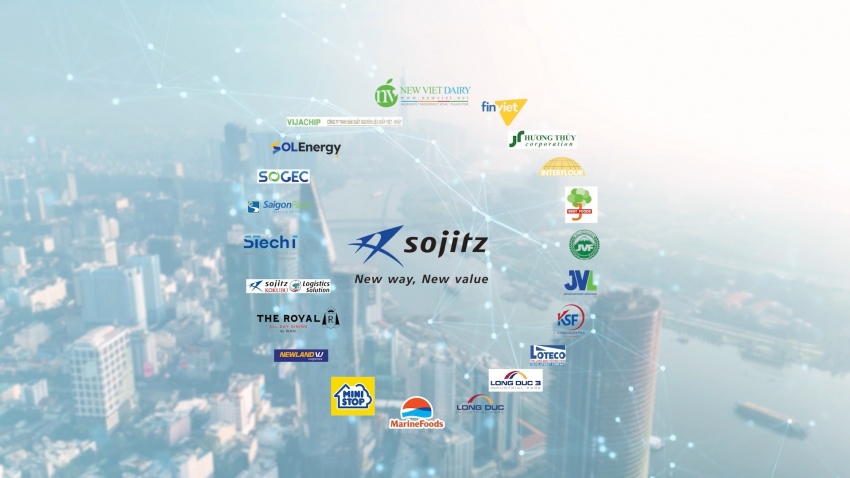 |
| Sojitz ecosystem in Vietnam. Photo: Sojitz Corporation |
Uemura said Sojitz remained optimistic about Vietnam's prospects, highlighting innovation and sustainable development as priorities for the group's future strategy.
“Looking ahead, we will continue to create new value, not only through trade and investment but also by addressing social challenges and supporting sustainable growth through digital transformation, green transformation, infrastructure business, and beyond,” he said.
Cooperation with Vietnamese businesses will be important to delivering this strategy. Manufacturers could find opportunities to join the supply chains of international investors, while agricultural and food businesses could collaborate on processing, quality standards, and distribution. Technology companies, meanwhile, could develop digital solutions for manufacturing and logistics.
Combining Vietnamese businesses' understanding of the local market and execution capabilities with Sojitz's international network and investment experience could provide a foundation for developing business models that can be scaled up.
After 40 years in Vietnam, Sojitz is preparing for a new phase of development in which opportunities will come not only from expanding its investment portfolio but also from connecting its established businesses with the changing needs of the Vietnamese economy. The quality of partnerships and the value they generate for businesses, workers, and the wider economy will be important in shaping the group's next chapter in Vietnam.
What the stars mean:
★ Poor ★ ★ Promising ★★★ Good ★★★★ Very good ★★★★★ Exceptional
 Tag:
Tag:Related Contents





Latest News
More News
- Coteccons targets 'Quality Growth' with 25 per cent dividend plan (October 07, 2026 | 13:00)
- Vietnam Education Forum opens UK Education Mission's Hanoi visit (October 07, 2026 | 12:27)
- Tax authorities deactivate TINs of nearly 180,000 businesses (October 07, 2026 | 12:08)
- World Bank raises Vietnam's 2026 GDP growth forecast to 7.4 per cent (October 07, 2026 | 11:41)
- Vietstock 2026 to spotlight livestock innovation and green transition (October 07, 2026 | 09:00)
- Vietnam’s GDP grows over 9 per cent in first nine months (October 05, 2026 | 18:45)
- Vietnam earns $56.3 billion from agro-forestry-fishery exports (October 05, 2026 | 18:32)
- DSV balances resilience and decarbonisation in supply chains (October 05, 2026 | 18:20)
- Electronics exports reach $175.4 billion in the first nine months (October 05, 2026 | 18:12)
- SOTRANS targets chemical warehousing growth with Ho Nai project (October 04, 2026 | 09:00)





 Mobile Version